Is Spain headed for another property bubble?
-
 Loading...
 - Amelia Poulin
- 19 Jan 2022
- 428 Views
- 0 Like
- 0 Comment
There has been an uptick in prices in the Spanish real estate market, but it can’t be classified as a bubble. Or at least not yet, in an opinion that is widely shared by market analysts and academics.
Housing will continue to get more expensive in 2022 in line with economic growth and inflation. Though the European Central Bank (ECB) has flagged up the sector’s “exuberance” – a term used to substitute “bubble” – it appears to be referring to the housing market in other countries rather than in Spain. But in a sector increasingly exposed to global investment trends, a degree of contamination cannot be ruled out.
According to Ignacio de la Torre, chief economist at the asset management firm Arcano Partners, the current situation is linked to affordability. In a bid to assess the risk of a bubble, he suggests analyzing the so-called effort rate: the portion of income a household allocates to housing payments. “Anything above 35% means we have a stressed market, and Spain was at 46% in 2006,” he explains in reference to the peak of Spain’s previous housing bubble. Right now, with that percentage lying between 30% and 32%, it’s a different scenario. “The problem is when houses go up in price,” he adds. “If they go up 9% as in Germany, or 20% as in the US, it leads to a bubble.”
Housing has become more expensive in Spain in 2021, contrary to what many experts were predicting a year ago. The National Statistics Institute (INE) will not publish the official data until March, but the annual growth rate up to the third quarter stood at 4.2%, showing a clear upward trend. Meanwhile, CaixaBank’s research service, which quantified the average rise in 2021 at 1.9% (well below other sources), believes that the rate will double and reach 4% in 2022.
“There are some worrying symptoms,” says Gonzalo Bernardos, director of the Master’s degree in Real Estate Consultancy, Management and Development at Barcelona University. However, he sees the risk of no more than a “light bubble” and makes it clear that the situation is very different from the 2008 global downturn: “If there is no financial crisis and the banks are not in big trouble, there would only be a market freeze and prices would fall,” he says. At the root of what could lead to a bubble is, he says, the imbalance between the supply of new houses and growing demand, but he stresses that a bubble of whatever dimensions would not, in any case, happen until 2024.
More construction, sales and mortgages
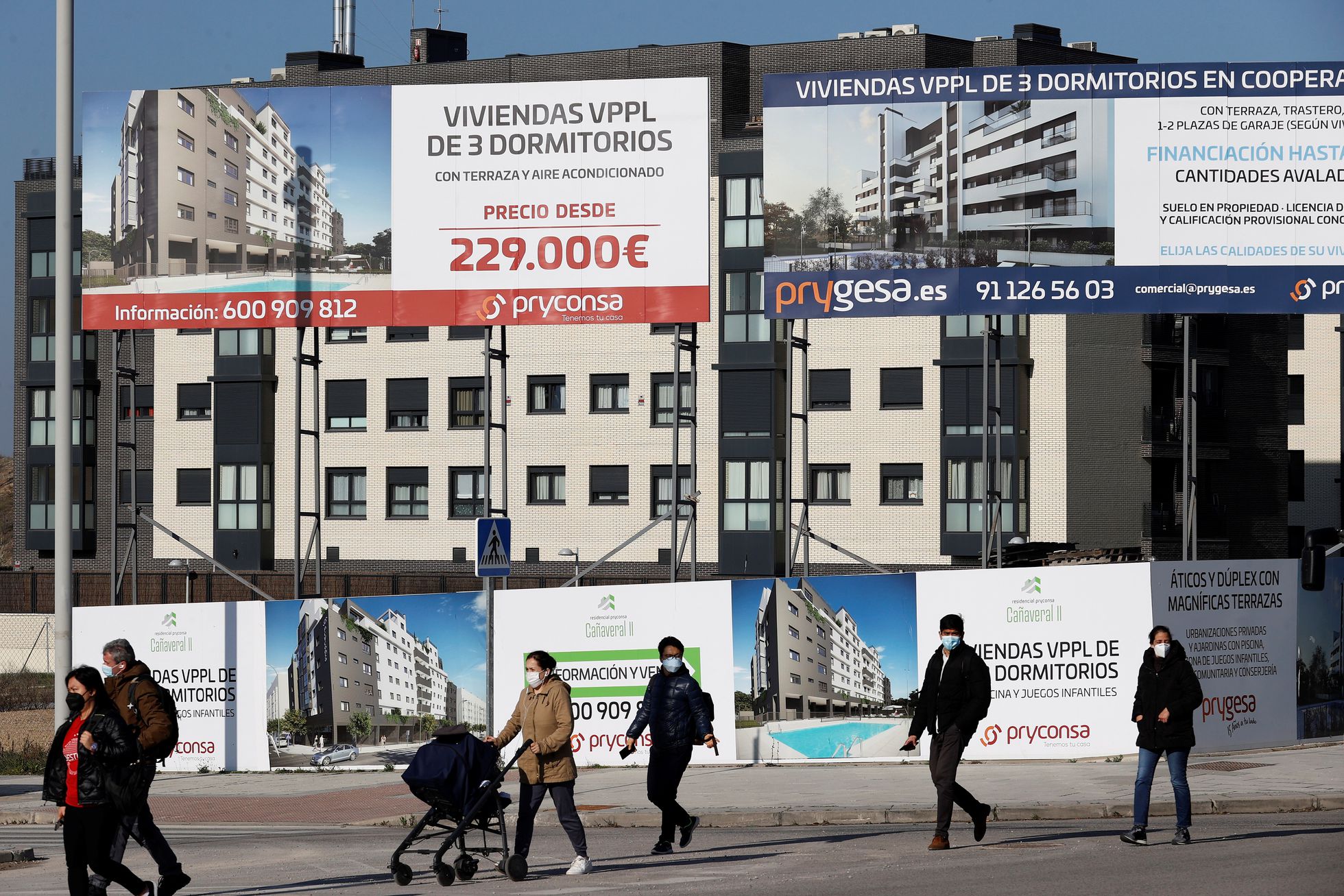
There were around 100,000 housing starts in 2021, similar to pre-pandemic figures but far from the excesses at the beginning of the century; the year 2006 saw the number of new units soar to more than 750,000. In Bernardos’ opinion, the current number is inadequate. “A low housing starts figure raises prices and many buyers resort to the resale home sector, which can generate unjustified price increases there,” he says. Since last summer, both home sales and mortgages have reached levels not seen in more than a decade. The question is whether this rise is merely due to market paralysis in the early days of the coronavirus pandemic.
Paloma Taltavull, who teaches applied economics at Alicante University, also points to a shortage of supply. “Construction has been minimal since 2008,” she says. This has sparked market tensions in areas such as regional capitals and centers of strong economic activity, she notes. But Taltavull all but rules out the possibility of a bubble: from her perspective, this could only apply in a situation in which rises are not linked to explanatory factors. And in her opinion, right now there are plenty of reasons for the price hike, such as the tendency among homeowners to move due to lifestyle changes triggered by the pandemic, a trend “that is happening all over the world and must be one of the reasons why prices have shot up in some countries,” she says.
However, the international outlook is bleak. As early as mid-2021, a Bloomberg analysis concluded that “real estate prices around the world are flashing the kind of bubble warnings that haven’t been seen since the run-up to the 2008 financial crisis.” Later in the year, supervisory bodies such as the ECB and the Federal Reserve warned of “exuberance” and “vulnerabilities” in housing markets. Read More…