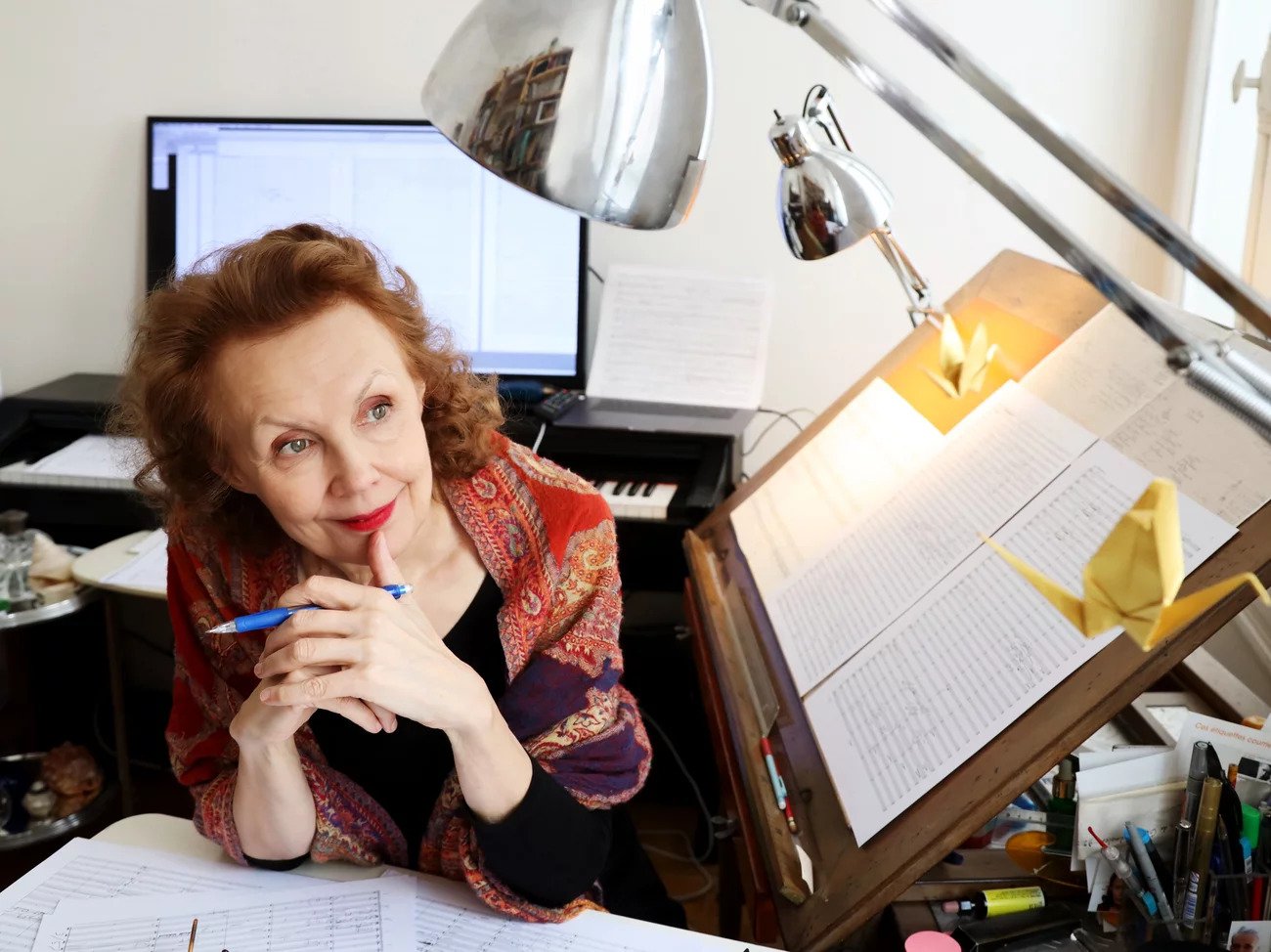
Kaija Saariaho, a composer with ears wide open
-
 Loading...
 - Rehema Abbas
- 21 Jul 2022
- 107 Views
- 0 Like
- 0 Comment
As a youngster, when Kaija Saariaho laid down in bed at night, she couldn't stop the music churning in her head. She'd ask her mother to "turn off" the pillow, thinking the sounds were emanating from there — but this music was her own invention, an early mark of a teeming imagination.
The Finnish composer, who will turn 70 this year, says music still swirls inside her. She became a master at harnessing it into some of the most colorful, dreamlike and arresting compositions to be heard over the past four decades. Her operas are staged in the most prestigious houses, her orchestral and chamber music is heard worldwide and her broad range of work is well-represented on recordings.
As a shy student who nonetheless pushed her way into a composition class at Helsinki's Sibelius Academy, Saariaho decided early on that life would be meaningless if she didn't pursue composing. After the Academy, she went to Germany to study, and in the early 1980s landed in Paris at IRCAM (Institute for Research and Coordination in Acoustics/Music), founded by Pierre Boulez, where she began to develop one of her signature sonic landscapes — a seamless blend of electronic and acoustic orchestration. Saariaho's blossoming career got an extra boost in 2000 when her debut opera, L'Amour de loin, directed by Peter Sellars, premiered to significant acclaim at the Salzburg Festival. The work would later be staged at New York's Metropolitan opera, only the second opera by a woman heard there since 1903.
From her home in Paris, where she's mainly lived since the early 1980s, Saariaho sat down to talk about the challenges along her path to success — including sexist professors, conservative institutions and plain old low self-esteem — and the profound love of sound that drives her desire to compose. Her mantra, korvat auki (ears open), is taken from the name of a group of like-minded composers she co-founded back in the 1970s. It was a plea for music presenters and listeners alike to embrace the widest variety of music. It's still good advice today. Read More...