‘La Palisiada’ Review: An Elliptical Ukrainian Drama Set in 1996
-
 Loading...
 - Conor Murphy
- 11 Dec 2024
- 34 Views
- 0 Like
- 0 Comment
Ukraine’s Oscar submission, La Palisiada, directed by Philip Sotnychenko, presents an unsettling police procedural that delves into a pivotal moment in the country’s history. The film explores the complexities of history, illustrating that it is often a muddy and muddled affair, devoid of neat narratives or happy endings.
Set in 1996, shortly after Ukraine gained independence from the Soviet Union, La Palisiada opens with a shocking gunshot that sets the stage for a flashback. This initial act of violence is not the central focus of the film; rather, it serves as a catalyst for a deeper exploration of the roots and consequences of violence in a nation grappling with its identity. The year is significant, as it marks Ukraine's commitment to the European Convention on Human Rights, which banned the death penalty—a detail that becomes increasingly relevant as the story unfolds.
The narrative follows forensic psychiatrist Oleksandr (Andrii Zhurba) and his detective friend Ilhar (Novruz Pashayev) as they investigate the murder of a colonel. As they delve into the case, they find it increasingly difficult to distinguish fact from fiction, navigating a bureaucratic landscape that demands a scapegoat, regardless of the evidence. The investigation feels more like a formality, lacking clarity and purpose, reflecting the chaotic state of a country still haunted by its Soviet past.
Sotnychenko captures the essence of a nation in transition, questioning whether 1996 represents a pivotal moment or merely a crease in history. The film poses profound questions about Ukraine's ability to shed its past without being condemned to repeat it, and whether the echoes of history can ever truly fade. These abstract inquiries anchor the narrative, as Oleksandr and Ilhar grapple with the bloodied work of untangling a complex web of violence and state-sanctioned brutality.
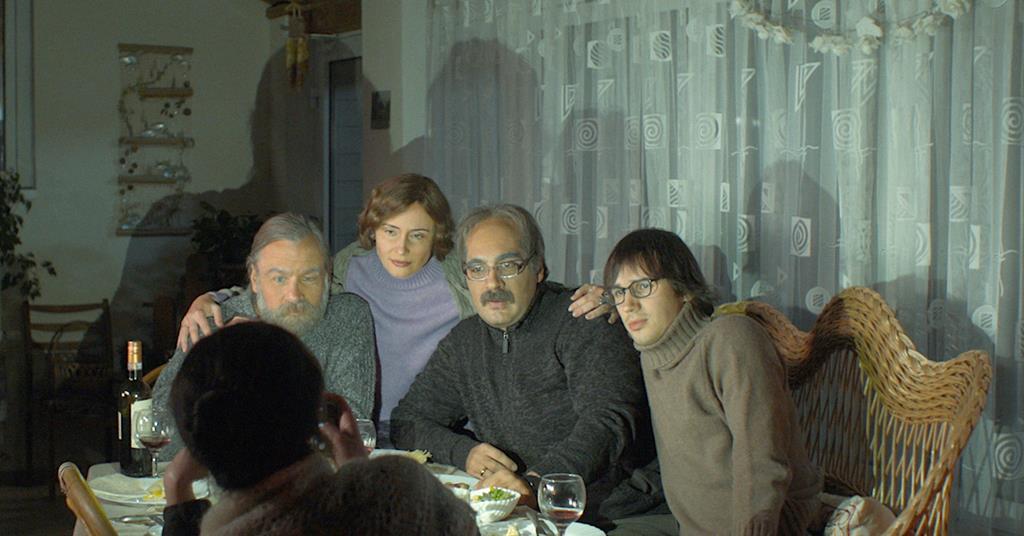
The film's form is as compelling as its content, employing long, still scenes that feature characters in silence, punctuated by music from a record player. Handheld cinematography evokes the aesthetic of a 1990s home video, blurring the lines between recorded witness accounts and the unfolding drama. This technique creates a sense of paranoia and urgency, emphasizing the film's exploration of truth and power. The splicing of various recorded materials into the narrative serves to highlight the constructed nature of reality, suggesting that what is seen and recorded may not align with the truth.
As the investigation progresses, the film adopts an elliptical, dream-like logic that disorients the viewer, prompting questions about the solidity of what is being observed. The more the audience learns about the murder, the less clear the narrative becomes, reflecting the complexities of history and its generational reverberations.
The title La Palisiada cleverly plays on the terms “lapalissade” (a comically obvious truism) and “policiada” (police story), encapsulating the film's exploration of obvious truths obscured by layers of complexity. While the film may challenge viewers with its mysterious turns, it ultimately rewards attentive engagement, revealing itself as a ghost story about the lingering effects of past violence on the present.
In conclusion, La Palisiada is a disquieting provocation that invites audiences to reflect on the murky waters of history and the haunting specters of violence that continue to shape contemporary Ukraine. Through its intricate storytelling and innovative filmmaking, it stands as a powerful commentary on the struggle for identity and truth in a nation still grappling with its past.