Latvian Scientists Studying Cells in Their Natural Conditions
-
 Loading...
 - Kissa Darwish
- 28 Mar 2025
- 83 Views
- 0 Like
- 0 Comment
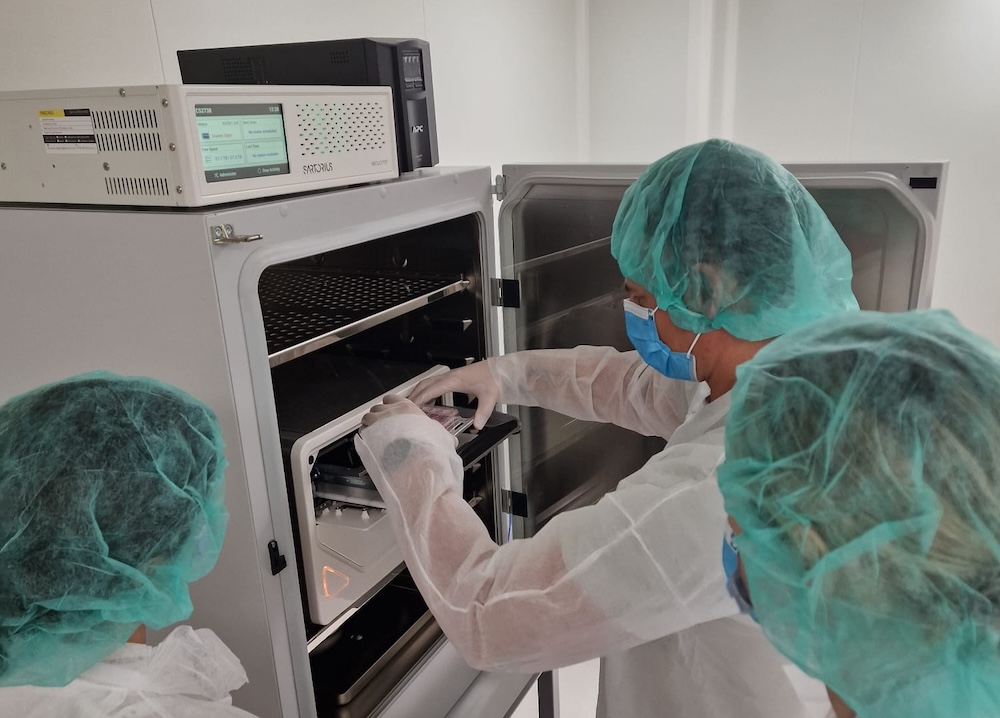
Latvian scientists are making significant strides in cell biology research with the introduction of advanced live-cell analysis systems, which allow for real-time monitoring of cells in their natural conditions. This innovative technology, reported by Labs of Latvia, combines the functionalities of a powerful microscope, a spectrophotometer, and a cell incubator, providing researchers with a comprehensive tool for high-level investigations.
Capabilities of Live-Cell Analysis Systems
The live-cell analysis systems are equipped with artificial intelligence capabilities, enabling a wide range of applications. These include:
- Cell Viability Studies: Assessing the health and survival of cells under various conditions.
- Division Activity Monitoring: Observing how cells divide and proliferate over time.
- Cell Migration Analysis: Tracking the movement of cells, which is crucial for understanding processes like wound healing and cancer metastasis.
- Protein Quantification: Measuring the levels of specific proteins within cells.
- Vascular Formation Studies: Investigating how blood vessels form and function.
- Micro-Tumor Research: Analyzing small tumor models to understand cancer behavior.
Detection methods employed by these systems range from basic phase contrast microscopy to more advanced techniques such as absorption, fluorescence, and luminescence detection. This versatility allows researchers to conduct a broad spectrum of studies, from examining biologically active substances for cosmetics to investigating medical devices and pharmaceuticals with various mechanisms of action.
Enhancing Research Capacity
The availability of this cutting-edge equipment significantly enhances the capacity of Latvian scientists to participate in competitive research project programs. Notably, this is the only device of its kind in Latvia, making it a unique asset for the scientific community.
Mārtiņš Borodušķis, the project manager, emphasizes that the new device serves as a starting point for utilizing the cleanroom facilities at the research institution. The Incucyte S3 system is already being employed in multiple studies at the University of Latvia (LU). One particularly noteworthy project, led by Dr. pharm. Vadims Parfejevs at the Department of Pharmaceutical Sciences, focuses on the role of the peripheral nervous system in tumor behavior. This research aims to understand how tumor cells and peripheral nerve components migrate toward each other, a mechanism that is crucial for understanding tumor metastasis.
Implications for Cancer Research
Understanding the mechanisms of tumor cell invasion is vital for developing strategies to limit tumor progression and reduce mortality rates among cancer patients. The live-cell analysis systems enable real-time monitoring of tumor spheroids—three-dimensional structures that more accurately reflect tumor architecture—allowing researchers to observe their progression and responses to various substances being studied.
Borodušķis notes that the first data obtained using the Incucyte S3 will soon be included in international scientific publications, highlighting the potential impact of this research on the global scientific community. The system is already being utilized by researchers from LU’s Faculty of Medicine and Life Sciences, particularly within the Microbiology and Biotechnology Institute’s Cell and Tissue Test System Laboratory, the Department of Pharmaceutical Sciences, and the Institute of Atomic Physics and Spectroscopy’s Advanced Biomaterials and Biophysics Laboratory.
The project, titled "Acquisition of the Live-Cell Analysis System Incucyte S3 for High-Level Cell Biology Research," received €314,600 in funding through the MikroTik project competition, which supports initiatives in the fields of natural sciences, technology, and medical sciences.
As this project progresses, it is expected to contribute significantly to the understanding of cellular processes and the development of new therapeutic strategies, particularly in the field of cancer research. The integration of advanced live-cell analysis systems into Latvian research facilities marks a promising advancement in the country’s scientific capabilities, positioning Latvian scientists at the forefront of cell biology research.