Earth as a Planet
-
 Loading...
 - Petra Vogel
- 02 Apr 2025
- 66 Views
- 0 Like
- 0 Comment
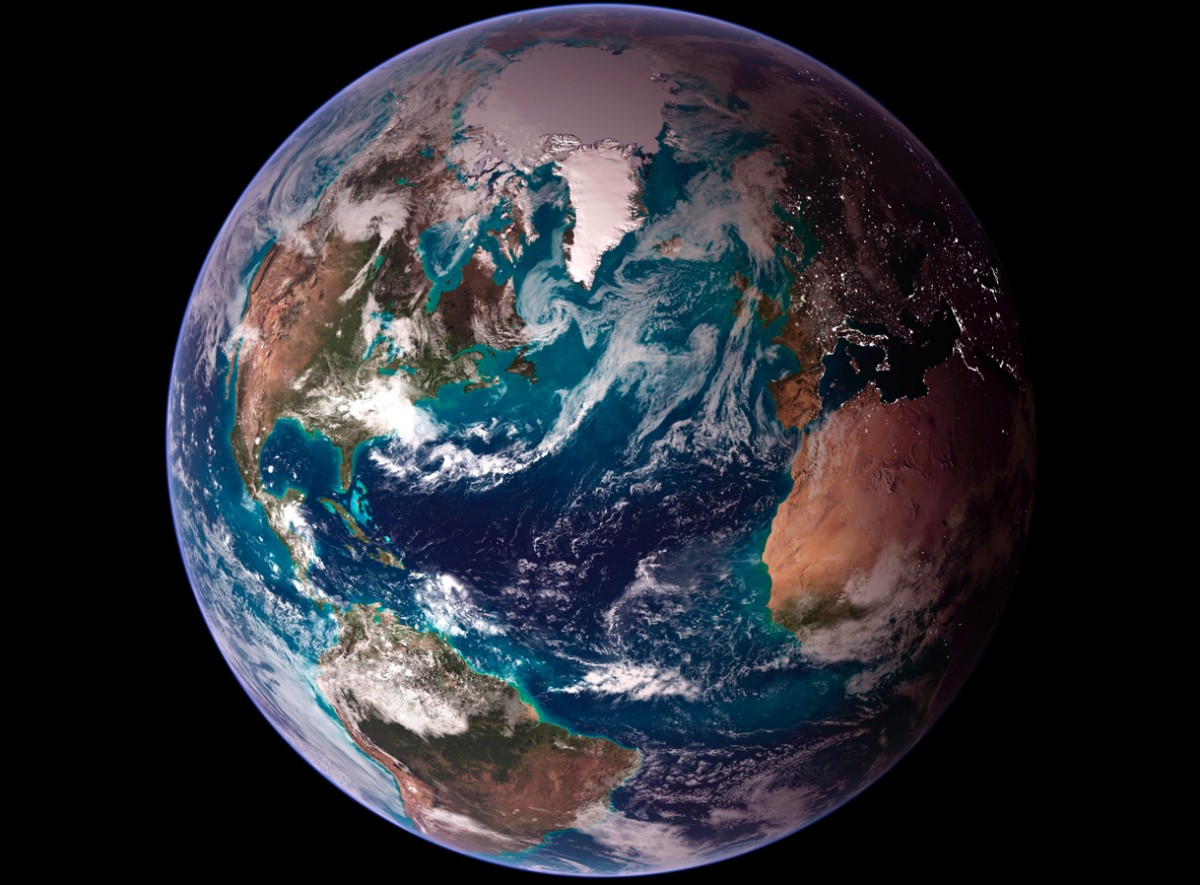
Earth, the third planet from the Sun, is a unique and dynamic celestial body that supports a diverse range of life. It is approximately 93 million miles (150 million kilometers) away from the Sun and has a diameter of about 7,917.5 miles (12,742 kilometers). Earth orbits the Sun in an elliptical path, completing one revolution every 365.25 days, which defines a year. Its rotation on its axis occurs once every 24 hours, leading to the cycle of day and night.
The structure of Earth consists of several layers. The outermost layer, the crust, is solid and relatively thin, encompassing both continental and oceanic regions. Beneath the crust lies the mantle, composed of semi-solid rock that flows slowly over geological time, driving tectonic activity. The outer core is a liquid layer made primarily of iron and nickel, which generates Earth’s magnetic field, while the innermost layer, the inner core, is solid and extremely hot.
Earth’s atmosphere is a thin layer of gases that surrounds the planet, essential for life. Composed mainly of nitrogen and oxygen, the atmosphere protects the surface from harmful solar radiation and meteoroids, while also regulating weather patterns and climate through the greenhouse effect. About 71% of Earth’s surface is covered by water, primarily in the form of oceans, which play a vital role in sustaining life and regulating temperature.
As the only known planet to support life, Earth boasts a vast array of ecosystems, from deserts to rainforests. The biosphere encompasses all living organisms and their interactions with the environment, highlighting the diversity of life and the essential ecosystem services that nature provides, such as pollination and water purification.
Earth’s surface is divided into tectonic plates that float on the semi-fluid mantle. The movement of these plates leads to geological phenomena such as earthquakes and volcanic eruptions, shaping the planet’s landscape over time.
In the context of the solar system, Earth is unique for its ability to support life. Its position in the "Goldilocks Zone" allows for liquid water to exist, which is essential for life as we know it. The planet’s magnetic field and atmosphere further protect it from solar and cosmic radiation.
In summary, Earth is a remarkable planet characterized by its diverse environments, complex systems, and ability to sustain life. Understanding its structure, atmosphere, and ecosystems is crucial for addressing global challenges such as climate change and resource management, as we continue to explore and study our planet for insights into its past, present, and future.