Liberia’s Education System Faces Persistent Challenges Despite High Hopes
-
 Loading...
 - Kumi Mintah
- 20 Dec 2024
- 60 Views
- 0 Like
- 0 Comment
When former President Ellen Johnson-Sirleaf took office in 2005, there was widespread optimism regarding her commitment to improving Liberia's educational standards. However, by 2013, she publicly acknowledged the dire state of the education system, labeling it a “mess.” As her presidency concluded in 2019, many stakeholders noted that the educational landscape had not significantly improved since her initial term.
Benjamin Wehye, a prominent educator and president of Licosess College of Education, reflected on the challenges faced during President Sirleaf’s administration. He highlighted the alarming statistic that in 2013, approximately 25,000 Liberian students failed to pass the West African Examination Council (WAEC) exams and the University of Liberia entrance exams. This dismal performance prompted a cabinet retreat aimed at reforming the education system, yet the efforts did not yield the desired results.
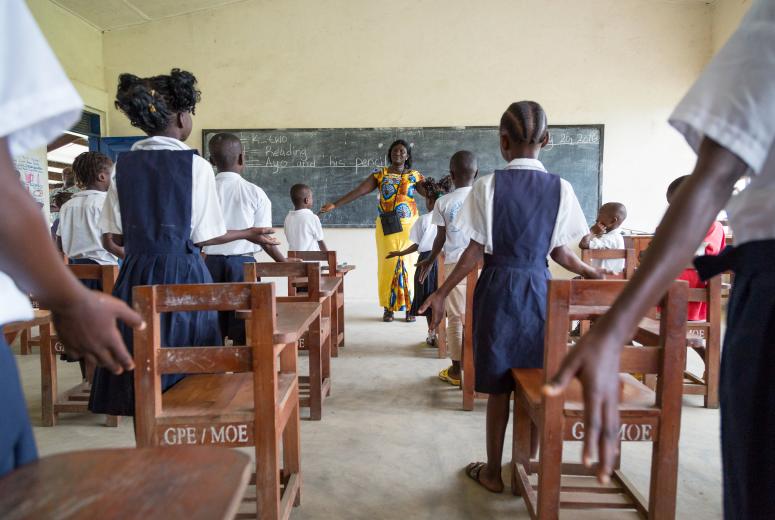
Liberia's participation in the WAEC exams for the first time in 2013 marked a significant moment, but it also exposed the systemic issues plaguing the education sector. Stakeholders have since grappled with a myriad of challenges, including outdated teaching methods, untrained teachers, low salaries, and policy inconsistencies.
Wehye attributes the current struggles of Liberia's education system to a flawed foundation established in the curriculum since the country’s independence in 1847. He pointed out that early schools were often run by freed slave schoolmasters who were themselves poorly educated, leading to a legacy of inadequate literacy.
Today, Liberia has one of the highest illiteracy rates globally, with an adult literacy rate of just 48.3%, compared to a global average of 84.7%. The youth literacy rate stands at 77.46%, significantly below the global average of 91.68%. Current enrollment figures show that 434,475 students attend public schools, while 518,865 are in private institutions, with additional enrollments in community and faith-based schools.
Wehye also criticized the failure of policymakers to adopt modern teaching methods, such as the introduction of science laboratories and technology in schools. A recent report indicated that out of 640 junior and senior public and community secondary schools, only 15% have functional science laboratories, highlighting significant disparities in educational resources across the country.
The lack of political will to allocate sufficient budgets for education has been a recurring theme. For the fiscal year 2024, Liberia allocated 108.4 million euros to the education sector, representing only 15% of the total budget. However, only 11 out of 32 institutions receiving government subsidies have received disbursements, with a total of 370,381 euros distributed so far.
The education system also faces challenges regarding the qualifications of teaching staff. Liberia has 6,192 volunteer teachers, with 80% being male. Many of these teachers possess only high school credentials and “C” certificates, with a significant number teaching higher grades for which they are not certified. Minister of Education Jarso Maley Jallah has prioritized transitioning these teachers onto the government payroll, but substantial investment is needed to train them adequately.
Stakeholders agree that addressing the disparities between urban and rural schools is crucial for improving literacy rates. According to the 2022 Liberia Population and Housing Census, only 40.7% of students attend school in urban areas, compared to 27.2% in rural regions. The dropout rate is also higher in rural areas, underscoring the need for targeted interventions.
In response, Minister Jallah has initiated an enrollment drive focused on rural areas, distributing school supplies directly to students to encourage attendance. She emphasized the need for "small, smart, and scalable solutions" and leadership that transcends partisan politics to address systemic gaps.
Local stakeholders advocate for partnerships with international education organizations to provide technical support and resources. Such collaborations, bolstered by funding from local businesses, could help build libraries, equip science labs, and enhance extracurricular programs, ultimately improving the educational landscape in Liberia.
Despite the high hopes that accompanied the leadership of Ellen Johnson-Sirleaf, Liberia's education system continues to face significant challenges. The need for comprehensive reforms, adequate funding, and modern teaching methods is critical to transforming the educational landscape. By addressing these issues and fostering partnerships, Liberia can work towards a more equitable and effective education system that serves all its citizens.