The Most Essential Back-to-School Supply in Mozambique? Water.
-
 Loading...
 - Ejo Boamah
- 19 Dec 2024
- 61 Views
- 0 Like
- 0 Comment
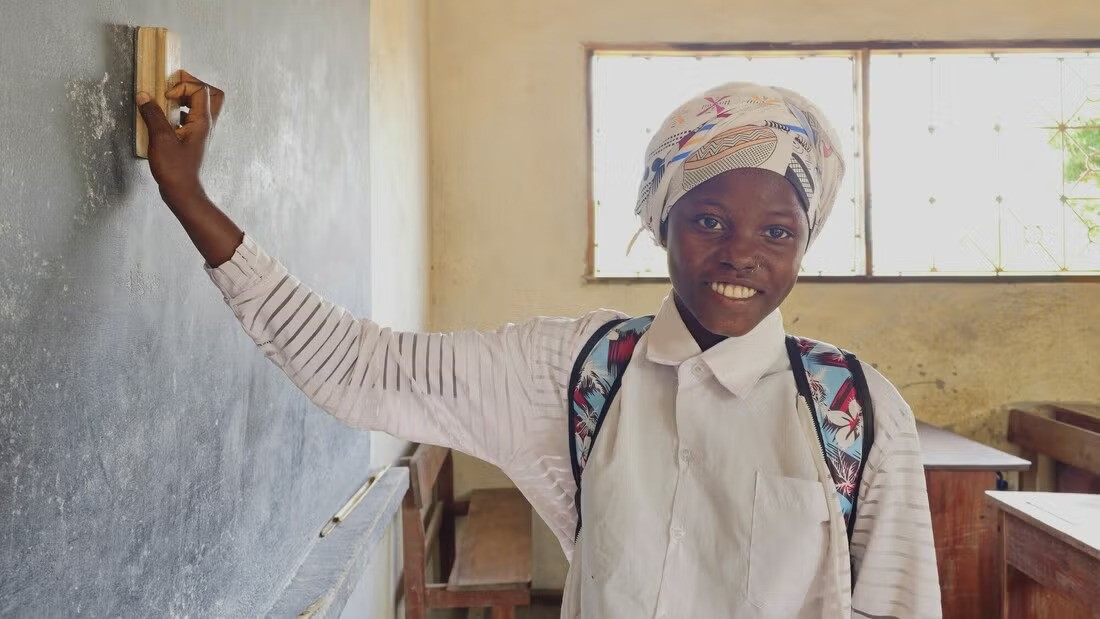
In northern Mozambique, particularly in Cabo Delgado, classrooms are bustling with activity, yet they are overcrowded, with as many as 100 students crammed into a single small room, often sharing benches with four children per seat. The school accommodates 1,072 students, splitting them into two shifts: one in the morning and the other in the afternoon. Despite the challenges, teachers express gratitude that students have a school to attend amidst the ongoing conflict that has displaced hundreds of thousands of families.
The educational landscape in Cabo Delgado is marked by significant challenges. Classes extend up to the seventh grade, but many students, including 15-year-old Farsana, face uncertainty about their future education due to the lack of higher-level schools nearby. Farsana dreams of becoming a doctor to help others, but the distance and financial constraints make this dream seem distant. She and her 18-year-old brother attend school in the afternoon after helping their parents with agricultural work in the mornings.
One of the most pressing issues facing these students is the lack of access to clean water. The school does not have running water; instead, they rely on collecting rainwater during the rainy season, which is insufficient to meet their needs throughout the year. The school’s director estimates that on hot days, they would require at least 250 gallons of water daily for drinking, handwashing, and latrine use.
Farsana articulates the struggle: “It is not easy. Some weeks we have no water at all. We cannot wash our hands. We have no water to drink. We then have to go and find water somewhere in the village. It is so difficult to concentrate when I don’t have any water to drink.”
To address the water shortage, the school has implemented a system where classes take turns bringing water to school. When it is Farsana’s class’s turn for “water duty,” she uses her mother’s bucket to transport five gallons of water to the school’s tank. This often involves searching for waterholes, rivers, or even purchasing water when necessary.
The lack of water also poses significant hygiene challenges, particularly for female students. The school’s latrines do not have water access, complicating menstrual hygiene management. Farsana explains, “Especially for the girls on their period, not having access to water is a problem.” She has learned to manage her menstrual hygiene with the help of a CARE volunteer, receiving a menstrual hygiene kit that includes underwear, washable cloth pads, and a cycle tracker.
Farsana reflects on her previous methods of managing menstruation, stating, “Before I used the traditional way, where we tie parts of our capulanas around our legs. But that was not clean or safe, and you could not sit comfortably like that. Now it is a lot easier for me.” Capulanas, traditional Mozambican cloths, serve multiple purposes, including as skirts or baby carriers, highlighting the cultural significance of these materials in daily life.
In Cabo Delgado, the essential back-to-school supply is not just pencils or notebooks, but water—an indispensable resource for learning, hygiene, and health. The challenges faced by students like Farsana underscore the critical need for sustainable water solutions in schools, particularly in regions affected by conflict and resource scarcity. As these students strive for education amidst adversity, access to clean water remains a fundamental requirement for their success and well-being.