Machine learning reveals hidden components of X-ray pulses
-
 Loading...
 - Kisi Adomako
- 10 Aug 2022
- 73 Views
- 0 Like
- 0 Comment
Ultrafast pulses from X-ray lasers reveal how atoms move at timescales of a femtosecond.
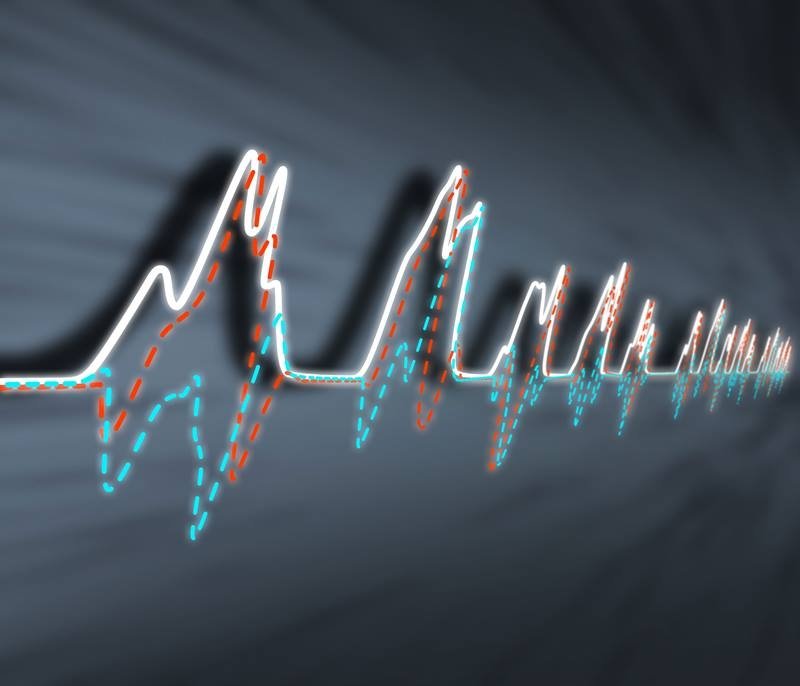
Ultrafast pulses from X-ray lasers reveal how atoms move at timescales of a femtosecond. That's a quadrillionth of a second. However, measuring the properties of the pulses themselves is challenging. While determining a pulse's maximum strength, or 'amplitude,' is straightforward, the time at which the pulse reaches the maximum, or 'phase,' is often hidden. A new study trains neural networks to analyze the pulse to reveal these hidden sub-components. Physicists also call these sub-components 'real' and 'imaginary.' Starting from low-resolution measurements, the neural networks reveal finer details with each pulse, and they can analyze pulses millions of times faster than previous methods.
The new analysis method is up to three times more accurate and millions of times faster than existing methods. Knowing the components of each X-ray pulse leads to better, crisper data. This will expand the science possible using ultrafast X-ray lasers, including fundamental research in chemistry, physics, and materials science and applications in fields such as quantum computing. Read More...