Martian meteorite contains large diversity of organic compounds
-
 Loading...
 - Bennani Beni
- 07 Feb 2023
- 55 Views
- 0 Like
- 0 Comment
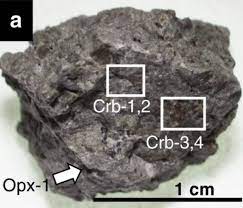
The Martian meteorite Tissint contains a huge diversity of organic compounds, found an international team of researchers led by Technical University of Munich and Helmholtz Munich's Philippe Schmitt-Kopplin and including Carnegie's Andrew Steele. Their work is published in Science Advances.
Tissint, which crash landed in Morocco more than 11 years ago, is one of only five Martian meteorites that have been observed as they fell to Earth. Pieces of it were found scattered around the desert about 30 miles from the town after which it is named.
This sample of Martian rock was formed hundreds of millions of years ago on our next-door planetary neighbor and was launched into space by a violent event. Unraveling the origin stories of the Tissint meteorite's organic compounds can help scientists understand whether the Red Planet ever hosted life, as well as Earth's geologic history.
"Mars and Earth share many aspects of their evolution," said lead author Schmitt-Kopplin. "And while life arose and thrived on our home planet, the question of whether it ever existed on Mars is a very hot research topic that requires deeper knowledge of our neighboring planet's water, organic molecules, and reactive surfaces." Read More…