Mata Ortiz: a tiny town with a big reputation for its pottery
-
 Loading...
 - Fransen Joanna
- 17 Feb 2023
- 61 Views
- 0 Like
- 0 Comment
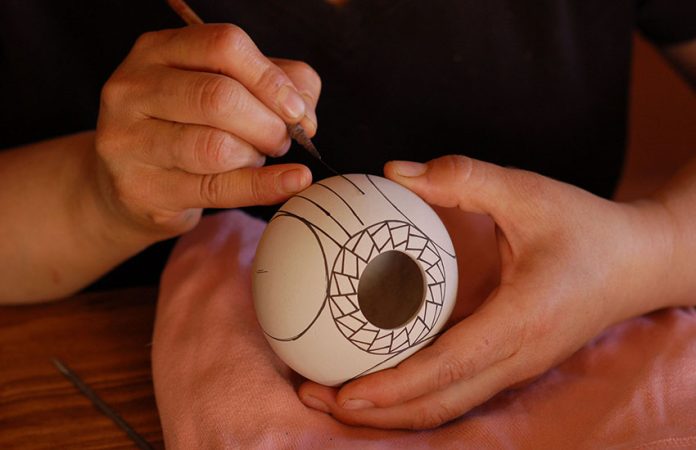
Mata Ortiz may be a tiny village in northwestern Chihuahua, but it’s world-famous for its pottery, featuring intricate designs that are inspired by pre-Hispanic symbols or art from the ruins at the ancient city of Paquimé.
The civilization at Paquimé — which bears both Mesoamerican and Southwestern traits, flourished in the area from around A.D. 700 until the mid-1400s. The Spanish renamed Paquimé Casas Grandes, or “big houses,” because the structures there stood several stories high. You can still visit the ancient city site just outside Mata Ortiz.
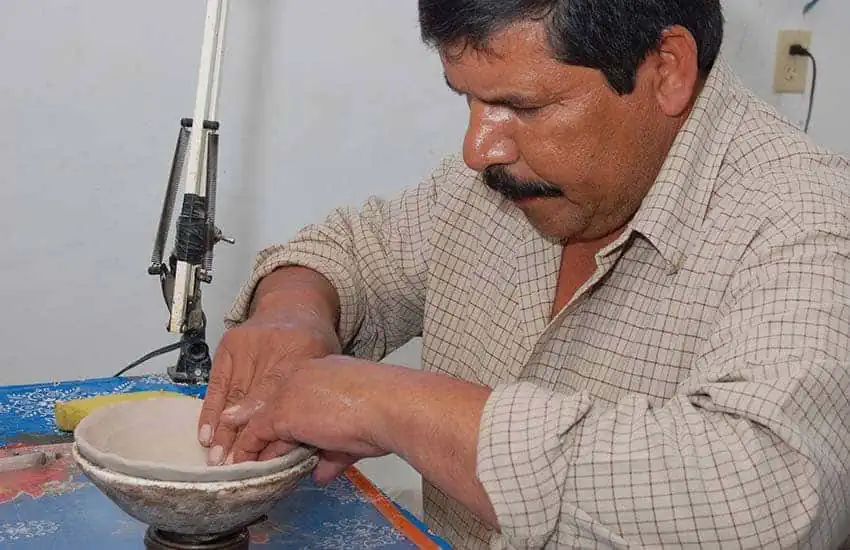
Mata Ortiz potter Pilo Mora pressing his clay “tortilla” into the bowl. Many potters won’t share where they get their best clay from in town.
Modern residents of Mata Ortiz often found (and still find) ancient pottery shards. But the techniques used to make this beautiful, intricately painted pottery were lost for over 500 years until one resident named Juan Quezada painstakingly worked to rediscover the lost art.
As a boy, Quezada was intrigued by the shards he’d find in the hills near his hometown. One day, more than 60 years ago, he came across an undisturbed, likely pre-Hispanic burial cave and found three intact pots. So taken was he by their beauty that he vowed to learn how to make them.
It took him 16 years of trial and error before he finally succeeded in making a pot he found satisfactory.
At first, Quezada either traded his pots for goods or sold them for a few dollars. Some of his pots made their way to the United States, where they were discovered by Spencer MacCallum, who had purchased a 14th-century pot from Paquimé he’d found at a yard sale in the early 1970s.
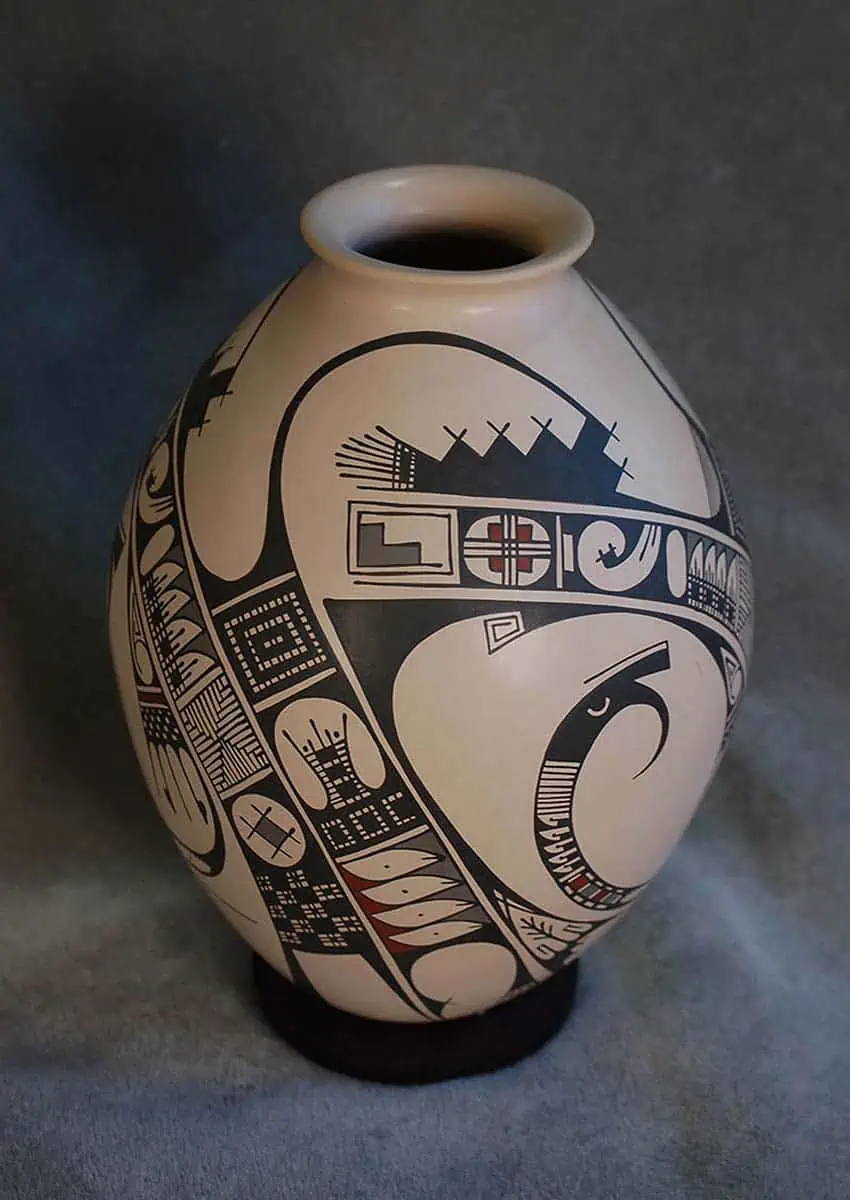
Mata Ortiz pottery exists today because of one man, Juan Quezada, who became fascinated by the ancient remains of pottery from the Paquimé ruins near his village and decided to recreate it.
Several years later, when he saw Quezada’s pots in a store in New Mexico, he knew they had their roots in the ancient culture from Paquimé. But when he asked where the pots were from, he was told simply, “Mexico.”
He took photographs of the pots with him to Mexico and somehow found Quezada after searching for only two days. He bought some of Quezada’s pots and soon afterward, the quality of the pots improved and began selling for significantly more money. Many of Quezada’s pots are now in collections in Mexican and U.S. museums. Read More…