Meet Vera Molnà¡r, the 98-Year-Old Generative Art Pioneer Who Is Enjoying New Relevance at the Venice Biennale.
-
 Loading...
 - David Belmonte
- 19 Apr 2022
- 333 Views
- 0 Like
- 0 Comment
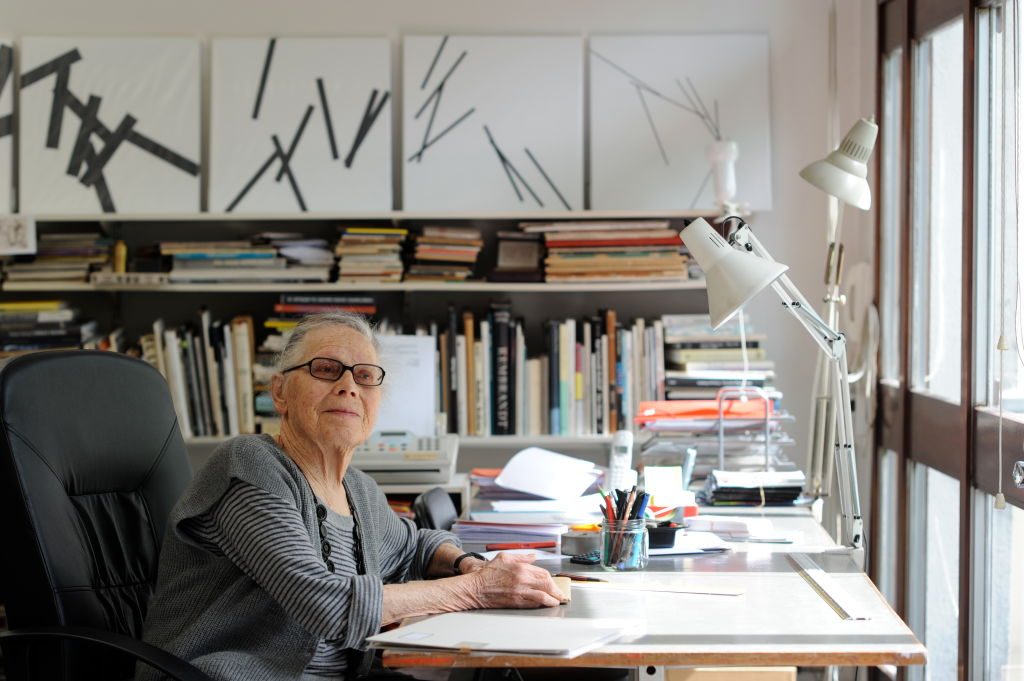
While arranging to visit Vera Molnár, heralded as a pioneer of early computer art, at her nursing home in central Paris, I was warned that the interview might have to be brief. Having recently turned 98, the artist gets tired easily.
Not so for her groundbreaking work, produced from algorithms written in the primordial programming language of Fortran, which seems only to be gaining new relevance as the world catches up with her enthusiasm for creative coding. Still, as I checked-in to one of the few places where France still requires masks and Covid passes, I hoped I wasn’t hounding an old woman who was long past wanting to talk to the press. These fears, thankfully, disappeared as Molnár rose quite spritely from her desk and welcomed me into her room.
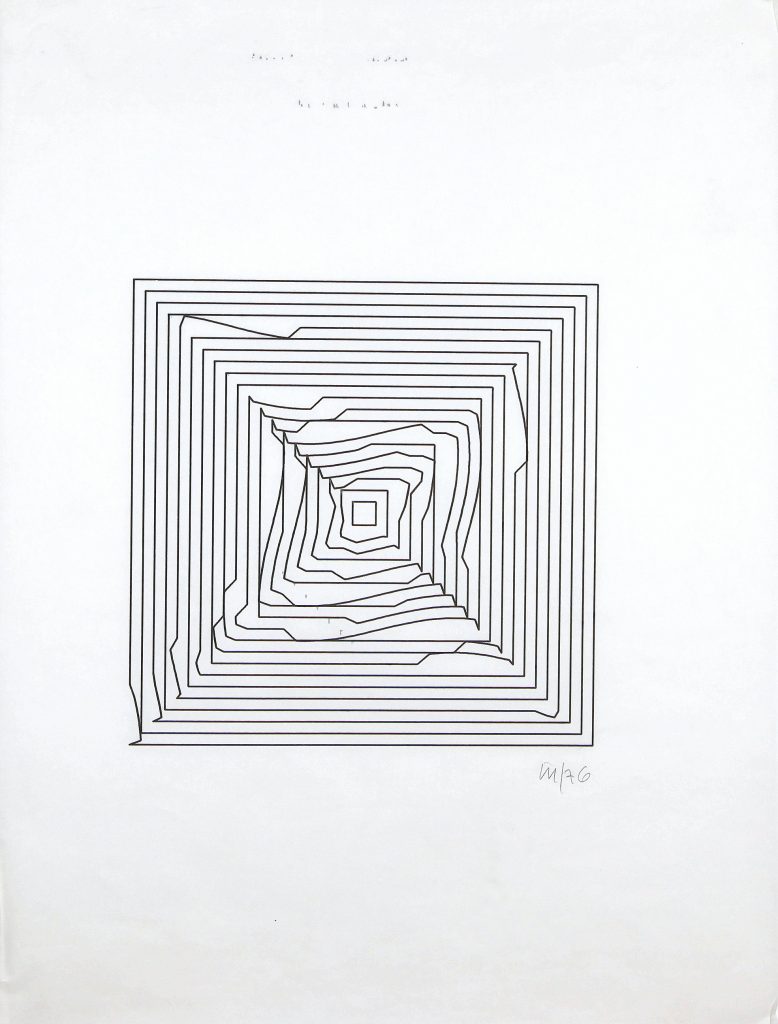
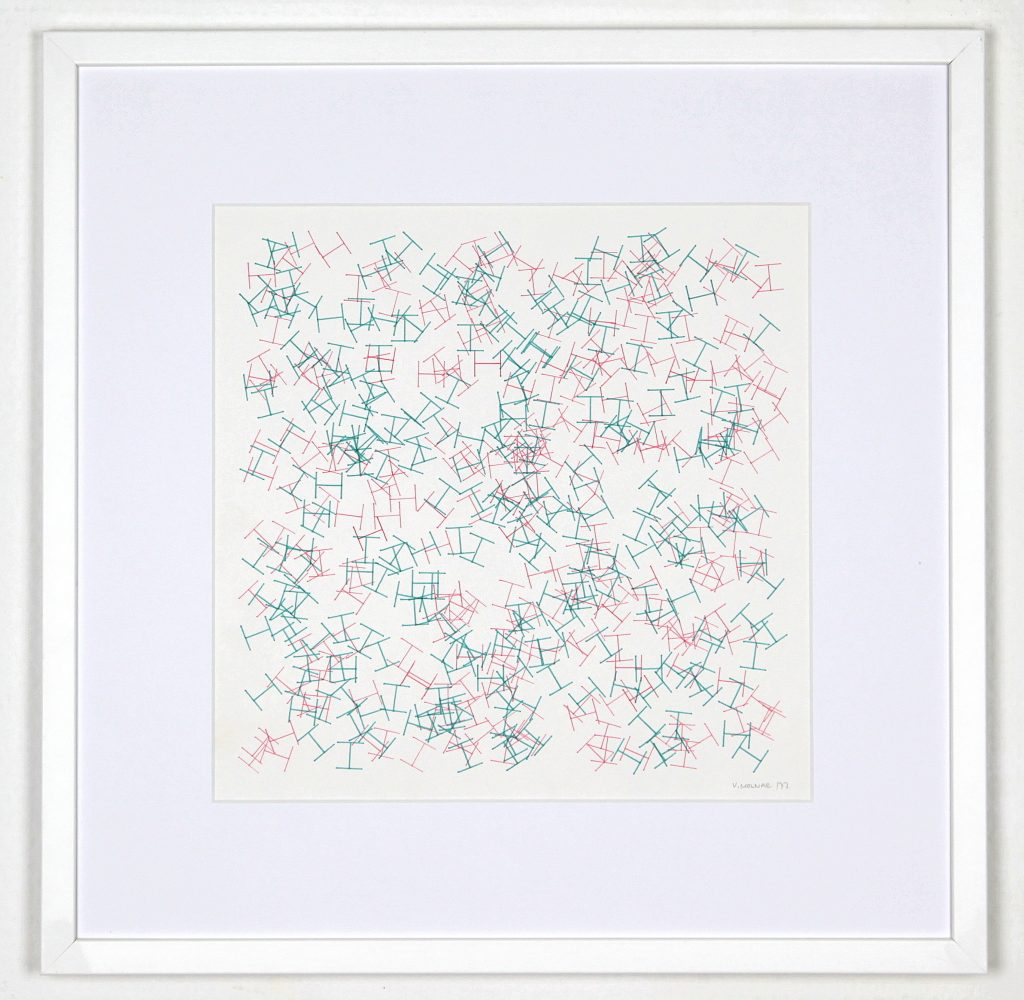
At the main exhibition of this year’s Venice Biennale, “The Milk of Dreams,” a gallery will be dedicated to works by Molnár from the 1970s and ‘80s, including her renowned “Transformations” series of computer plotter drawings. Starting with the simple geometric forms that she favored—in this case concentric squares—Molnár introduced random patterns of disruption through an algorithm, giving the work a lively rhythm as the lines vibrate with variation. Each work is preserved in its original format, as though fresh from the printer, with the date stamped along the edge.
Minimalism and Numbers
As Molnár, born in 1924, tells it, her interest in minimalism stems from her childhood.
At around the age of ten she was given a case of pastels, and each evening drew the sunset over Lake Balaton in her native Hungary. Her mother, who had had some art education, found the composition plain and suggested she add in a tree. When Molnár countered that there wasn’t one, she was encouraged to exercise some artistic licence. Taking her mother’s advice, Molnár recalled, with the same effusive emphasis she places on many of her memories, “I felt it was overloaded! It was too much! I didn’t know what ‘artistic licence’ was, but I decided that my mother didn’t know anything about art and I should go with my own idea.”
She quickly found herself using up the blue, green and red pastels, and invented a system whereby she always took the next pastel to the right so that each day the colour scheme would be different. “It’s not far from my mindset now,” she said. Numbers also inspired her interest. Taken to see the Sistine Chapel aged sixteen, she recalled her mother growing impatient while she contemplated The Last Judgement. When pushed, she explained that she was actually counting the figures on either side of Jesus Christ, to which, Molnár sais, “my mother looked at me with startled eyes and said ‘are you not ashamed?!’”
“For me, arriving in Paris was happiness,” Molnár told me of her emigration to the French capital in 1947 with François Molnar, who would become her husband. Recalling the rapture with which she first saw Notre-Dame, she said: “I had never seen such a grand thing before.” The encounter brought to life an impulse that had lain dormant during her classical training at the Budapest College of Fine Arts. That very same evening she produced a set of highly geometric drawings of the cathedral’s façade, marking a turning point. “I still didn’t know what I was looking for, but I’d eliminated what I was not looking for,” she said. Read More...