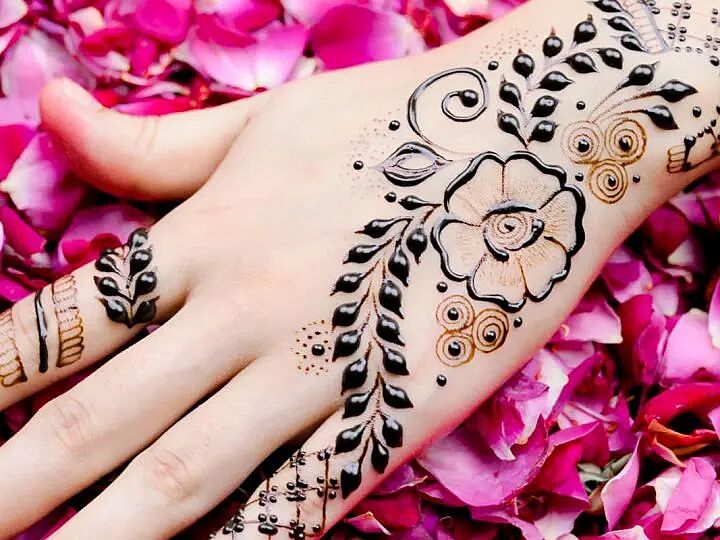
Moroccan Henna Styles and Traditions
-
 Loading...
 - Spencer Hamilton
- 13 Jan 2022
- 520 Views
- 0 Like
- 0 Comment
The traditional use of henna as a hair, skin, and fabric dye in Morocco and other parts of the world goes back thousands of years. Perhaps most famously henna is used for mehndi, or henna tattoos.
Today, Moroccan henna styles are easily recognized and differentiated from the henna tattoo designs you’ll find in Egypt, India, and other countries in the Near, Middle, and Far East where mehndi is a deeply rooted cultural tradition.
Before we talk about the various Moroccan henna tattoo styles or mehndi designs, it helps to know a little about henna.
What is Henna?
Henna is a plant (Lawsonia inermis) native to North Africa, Asia, and northern Australia. It’s used to make a natural dye that can be used on hair, nails, skin, and fabrics, and the plant has medicinal and therapeutic properties as well.
Although the ground henna used to make the dye is green, the resulting henna stain or color ranges from orange and orange-red to brownish-red.
In Morocco, henna is associated with cultural and Moroccan beauty traditions such as dying and conditioning the hair, nails, and skin as well as decorating the hands and feet with intricately designed henna tattoos.
While the color change to hair or nails dyed with henna is permanent, the color change to the skin is not.
Henna Tattoos – Mehndi
The English word henna is a derivative of the Arabic word, al hinna. In much of the world, the words henna and al hinna refer collectively to the henna plant, the ground leaf powder and paste, and the henna tattoos.
However, in countries such as India, Pakistan, and Bangladesh, henna paste and henna tattoos are known specifically as mehndi, which is derived from the Sanskrit word for the henna plant, mendhikÄ.
To make a temporary henna tattoo, henna leaves are crushed to a fine powder, mixed with an acidic medium like lemon juice to make a paste, and the henna paste is applied to the skin, usually in an intricate design or pattern.
As the henna paste dries, the solution penetrates the outermost layer of skin, leaving a reddish-brown stain or “tattoo.”
Typically the longer the henna paste remains on the skin, the deeper the color of the tattoo. Natural skin color, texture, and age also affect the final color.
As the skin naturally exfoliates, the henna tattoo gradually fades. Most people can expect their henna design to last ten days to two weeks.
Henna in Morocco
In Morocco, henna designs are applied to the skin by a henna artist called a naqasha or hannaya.
A naqasha is always a woman and no formal training institutions exist. Instead, henna is usually learned from older women, often female relatives who pass the tradition on.
This type of training often results, after years of experience, in excellent, professional henna artists who take pride in their craft.
Moroccan henna artists sometimes add natural elements such as cloves or brewed tea to enhance the darkness of the tattoo. These ingredients get mixed directly into the henna paste.
Henna Tools
The original Moroccan henna tool was the mrod, a simple pointed stick that was dipped into a very stringy henna paste and then used to drape lines of henna on the skin.
Today, the most commonly used tool in Morocco is a modified syringe. The sharp point of the needle is filed off, leaving a blunt tip that only gently touches the skin at points.
The modified henna syringe allows for the application of henna in very fine lines and intricate designs. This requires a great deal of practice and artistic skill.
Moroccan henna designs range from very simple, such as a tattoo ring or bracelet on the hand or wrist, to very elaborate and intricate bridal henna designs that cover a much larger surface area of skin.
DIY Henna Tattoos
Novices can experiment with applying a henna powder paste at home but are unlikely to match the designs and get the results one expects from a professional henna artist.
Henna tattoo stencils and henna tattoo kits are available to make home applications easier. And instead of a syringe, bottles with assorted tips are often used as henna applicators.
Moroccan Henna Traditions
For centuries, henna has been sought after for therapeutical usage and was believed by some to have baraka, or blessedness, capable of averting malevolent spirits.
Henna was also an integral part of community celebrations and religious holidays in Moroccan village life. Such events were an occasion for women to apply henna tattoos.
The application of henna for celebratory occasions is sometimes a special event of its own, with women and girls gathering for a “henna party” to prepare for the upcoming celebration or holiday.
In the case of weddings, Moroccan families went to great expense to entertain guests, providing celebrations that included food, music, and extensive acts of hospitality.
It was believed that celebratory events like weddings could attract negative attention from malevolent forces. The baraka considered present in henna was believed to help repel jnun (jinns) and avert the evil eye, providing villagers with a weapon to fight off calamity and destruction.
These notions still linger in the culture, while modernity has brought about new ways of understanding henna.
While still very popular at weddings — Moroccan brides traditionally decorate their hands and feet with elaborate henna tattoos — henna has evolved to become much more of an everyday event.
Often heard is the phrase “where there is joy, there is henna,” and no one really needs a reason to get henna in today’s Morocco. Read More…