Most endangered cat in Americas found living on outskirts of Chilean capital
-
 Loading...
 - Noah Hunter
- 16 Dec 2021
- 423 Views
- 0 Like
- 0 Comment
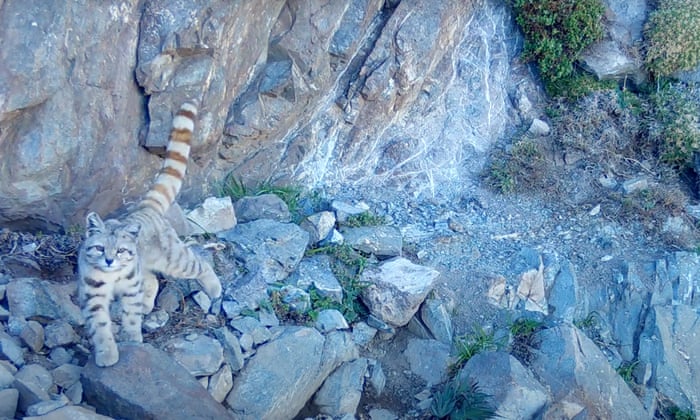
Teetering over an arid cliff face above the sprawling Chilean capital, Bernardo Segura reviews the footage from the camera trap and lets out a yell of excitement as the images reveal a flickering striped tail.
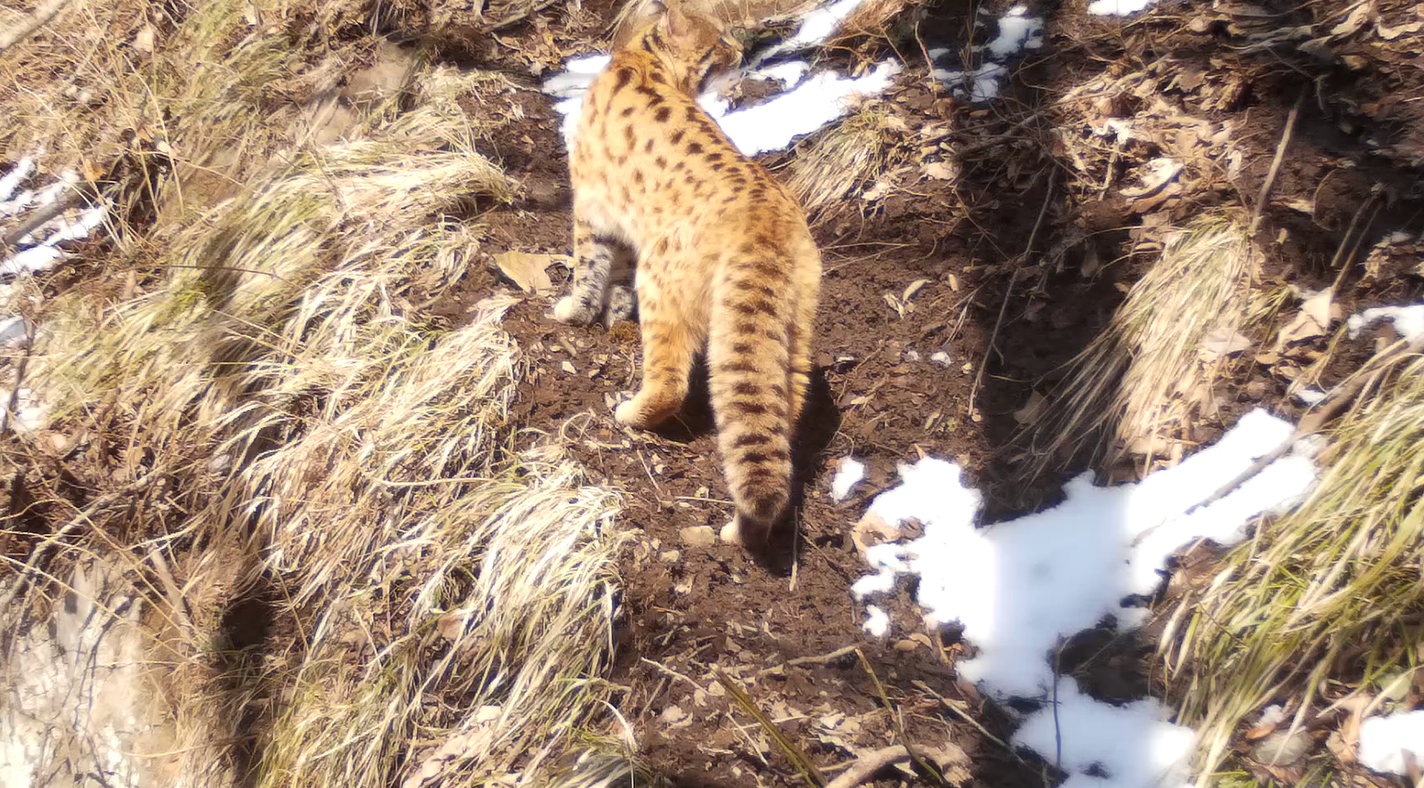
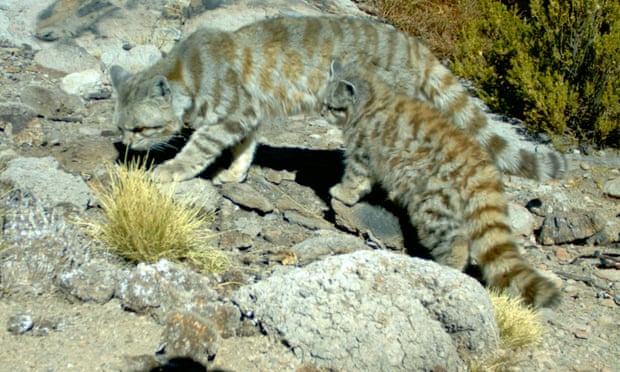
On the screen displaying the conservationist’s latest video capture is an Andean cat – the most endangered feline in the Americas. Looking a little like a miniature snow leopard, the 4kg (9lb) male enters the frame and begins spray-marking the shrubs at the base of the cliff, before stealing away through sharp rocks with his banded brown and grey tail aloft.
Segura is excited for many reasons. With a shrinking population of fewer than 1,400 mature Andean cats left, any sighting is good. But this one heralds a signal of hope in a different way for the species and the conservationists battling against the cats’ extinction because it confirms a new population living close to humans – on the very edge of Santiago, a city of eight million people.
The rare Andean cat lives in isolated populations throughout the Andes mountain range
“We have never found a population so close to a large city before,” says Segura. “This changes what we know about Andean cats and may offer some solutions to how to protect this and other species in the wider mountain ecosystem, which is highly under-studied. Finding one of the most elusive animals in the world just outside Santiago strikingly illustrates this.”
Until now, Andean cats were believed to live only in extremely remote rocky terrain far from cities. But after seeing high numbers of the cats’ favourite prey – rodents from the chinchilla family called mountain vizcachas – around the popular Parque Mahuida nature reserve on the edge of Santiago, Segura trusted a hunch and in February placed camera traps on a terraced precipice above the neighbourhood of La Reina, about 2.5km, or 1.5 miles, from Santiago. In July, he had his first images of an Andean cat. Since then, his camera has taken about 40 more.
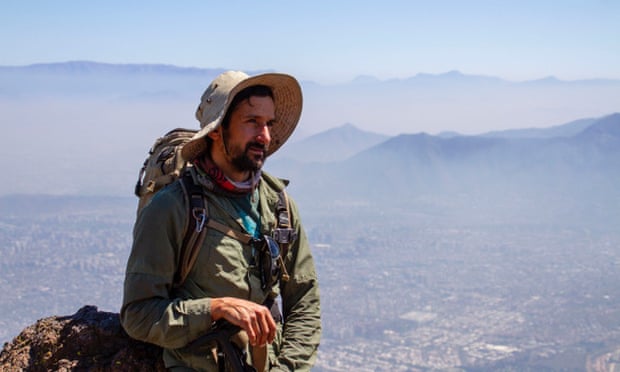
“So far, we have identified at least three individual adults passing continually, suggesting this is the core of their territory and not just a chance encounter,” says Segura, who volunteers for the non-profit organisation Andean Cat Alliance (AGA), a coalition of conservationists who coordinate their efforts across Chile, Argentina, Peru and Bolivia.
“For several of the cats to be living so close to a huge city will open many doors for research,” he adds. “Trips to the field are usually complicated, far away and difficult to reach, but I can see this site from my own apartment with a long lens.
“We can come here every week with a short hike, and build a better picture of their behaviour and distribution. We have excellent internet coverage, so can even do real-time monitoring with remote cameras, which in isolated areas is practically impossible.”
Having easy access to a population will help the AGA tackle key issues in the conservation of Andean cats, including the collection of scat, or faeces, for genetic analysis. This is hard to find in their other known habitats – huge territories that span the higher Andean peaks, and on the northern part of the Patagonian steppe in Argentina. Previous research had identified five highly fragmented populations between the four countries, stretching north to south between Peru and Argentina.
“A primary aim is to work out if these Andean cat populations are linked or isolated,” says AGA’s general coordinator, Dr Rocío Palacios, a specialist in felines for the International Union for the Conservation of Nature (IUCN).
“It’s important to know what we are working to conserve,” she adds. “Because information has only been gathered on Andean cats for the last 20 years, there are a lot of basic aspects that still need to be understood. A genetic understanding of the species can identify if there are isolated populations, which often require enhanced protections.” Read More…