Mounting Challenges Threaten Noboa’s Reelection in Ecuador
-
 Loading...
 - Helmi Salonen
- 29 Oct 2024
- 48 Views
- 0 Like
- 0 Comment
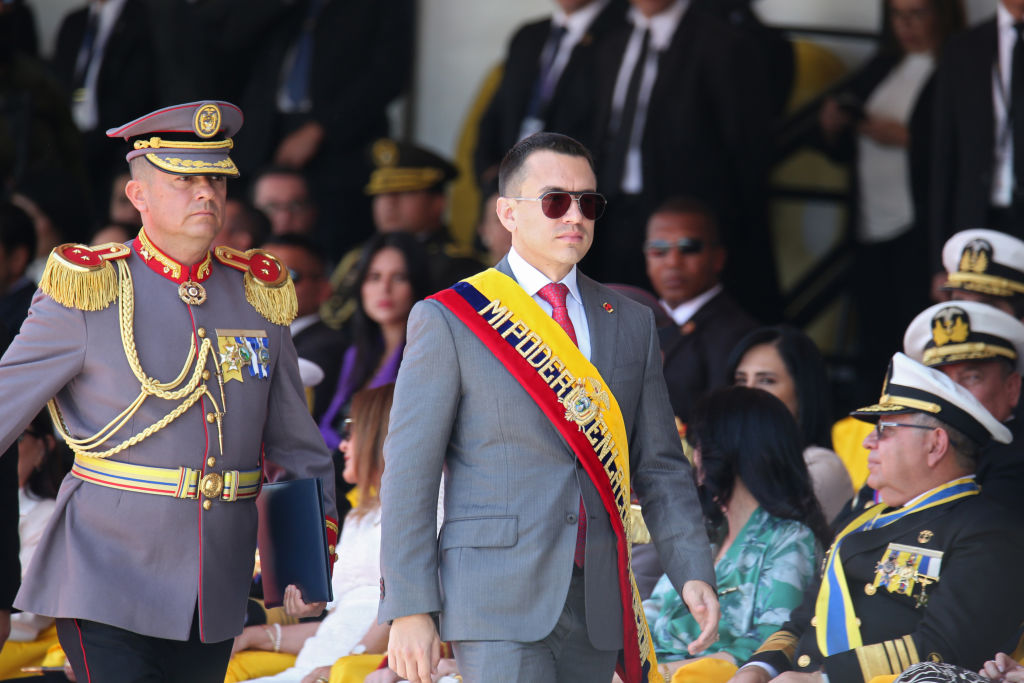
Ecuador’s President Daniel Noboa, who seemed poised for an easy reelection in 2025, is now facing significant challenges that threaten his candidacy. Just weeks ago, he enjoyed over 50% public approval and was the frontrunner in polls. However, a series of costly electricity blackouts and rising public discontent have shifted voter sentiment, leading to increased pessimism about his chances.
Noboa was elected last year to complete the term of former President Guillermo Lasso, who called for a snap election. In his brief tenure of just over ten months, Noboa has positioned himself as an outsider, appealing to voters disillusioned with traditional political forces. As the incumbent, he has the advantage of leveraging government resources and enacting populist policies, such as proposing subsidies for residential power bills during the election season.
Despite his tough-on-crime stance, crime remains the primary concern for Ecuadorians and poses a significant threat to Noboa’s reelection. While there has been a slight decrease in homicides since the launch of a military-supported initiative against criminal organizations, the overall numbers remain historically high. Recent government data shows that while homicides have dropped by 17% compared to last year, they are still 41% above 2022 levels. Any deterioration in the security situation could severely impact voter sentiment, especially in light of the assassination of presidential candidate Fernando Villavicencio last year, which shifted support toward outsider candidates like Noboa.
Ecuador is currently grappling with severe drought conditions that have drastically reduced hydroelectric power generation, which typically accounts for about 80% of the country’s electricity. The resulting 1,000MW electricity deficit has led to blackouts lasting up to 10 hours in some areas. The government’s response has been criticized for being slow and poorly coordinated, with frequent shifts in messaging regarding the necessity and duration of the outages. This has exacerbated public frustration, particularly as Noboa had previously championed an electricity reform law aimed at eliminating blackouts.
The economic impact of these blackouts is substantial, with business associations estimating that each 8-hour outage costs the private sector approximately $96 million. As the worst of the drought may coincide with the lead-up to the election, voter dissatisfaction is likely to grow.
Compounding Noboa’s challenges is Ecuador’s sluggish economy, with the IMF projecting a growth rate of just 0.1% for the year. While Noboa’s early agreement with the IMF stabilized public finances, it has not led to significant economic growth ahead of the election. Major economic reforms are unlikely to materialize until a new government takes office in May 2025, further complicating Noboa’s reelection prospects.
Despite these mounting challenges, Noboa remains the favorite for the 2025 election, although his lead is narrowing. Polls indicate that other candidates, such as Luisa González from correísmo and security hardliner Jan Topic, are gaining ground. Both candidates have strong platforms that resonate with voters, making the race more competitive than anticipated. If no candidate secures more than 50% of the votes in the first round on February 9, a runoff will be held on April 13.
Should Noboa be reelected with a weak mandate and minimal congressional representation, Ecuador may face continued political fragmentation and instability, delaying much-needed reforms and hindering the path to sustained economic growth. As the election approaches, the mounting challenges Noboa faces could significantly alter the political landscape in Ecuador.