My Father's Prison: A Review of Visions du Reel
-
 Loading...
 - Emma Jackson
- 08 May 2023
- 69 Views
- 0 Like
- 0 Comment
My Father's Prison is a personal documentary that tells the story of Ivan Simonovis, the filmmaker's father, who was a high-ranking police officer in Venezuela. He was controversially jailed for his role in a massacre and was under house arrest until his audacious escape in 2019. Director Ivan Andres Simonovis Pertinez makes use of extensive home-video footage shot over several decades, but the film suffers from being too close to the material.
Personal and political perspectives intertwine awkwardly in the film, which is divided into four sections: a short prologue, pre-massacre, aftermath, and escape. The last section is undeniably tense and involving, even for those who may not be entirely convinced about Simonovis's innocence, a matter which the film regards as a given. However, the picture's canvas, much of it crowded with intimate domestic detail, is simply too small to properly deal with the thorny socio-economic intricacies of Venezuela pre-, during, and post-Chavez, especially given Simonovis Pertinez's unalloyed subjectivity.
It's hard to find much sympathy for Simonovis, who became head of the country's elite SWAT-type division in the 1990s and whose self-regard is indicated by the naming of his children and residence. His family firmly believes that he was a handy scapegoat to blame for the Puente Llaguno Massacre of April 2002, which left 19 dead and 27 wounded. The exact circumstances of what happened on that day remain murky, and the film does little to satisfactorily clarify them other than emphasizing the opinions of Simonovis's nearest and dearest.
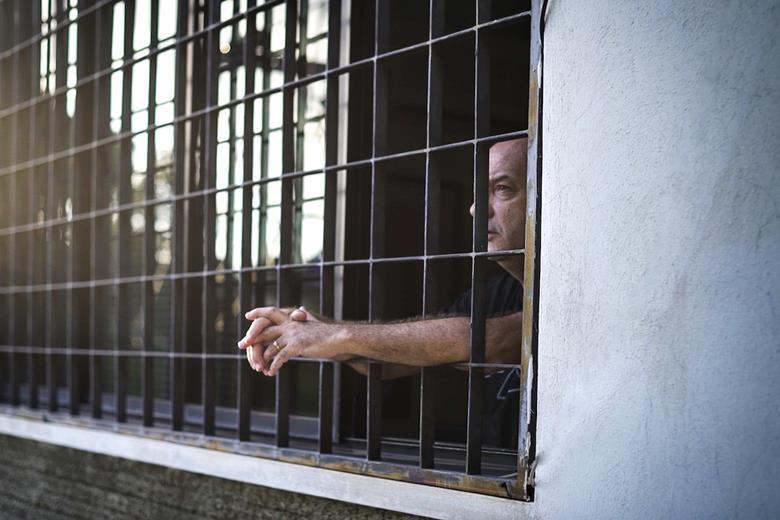
Despite the efforts of Simonovis's wife Bony Pertinez, who represented him in court, he was sentenced to 30 years' imprisonment. Initially sent to a notorious central-Caracas jail, El Helicoide, he was eventually placed under house arrest in the relative luxury of his residence. Much of the film observes Simonovis's quotidian activities within those walls, fluidly interwoven with home-video footage from the 1990s and TV reports of dramatic news events featuring or impacting upon upon the family.
The attitude of the Simonovis family to Chavez and his successor Nicolas Maduro is summed up by their response to the latter's election rise to power in 2013. Maduro remains in office, and the situation in Venezuela remains hazardous for Simonovis's relatives and supporters. Several key personnel on this film remain anonymous in the opening and closing credits.
In conclusion, My Father's Prison is a well-intentioned but flawed documentary that suffers from the director's bias and the limited scope of the film. While it offers a glimpse into the personal story of Ivan Simonovis and his family, it fails to provide a nuanced understanding of the political and socio-economic context of Venezuela. The final section is undeniably tense and involving, but the film's canvas is simply too small to deal with the complexities of the subject matter.