National Gallery Singapore Presented an Exhibition Kim Lim: The Space Between
-
 Loading...
 - Ryosuke Hino
- 15 Oct 2024
- 50 Views
- 0 Like
- 0 Comment
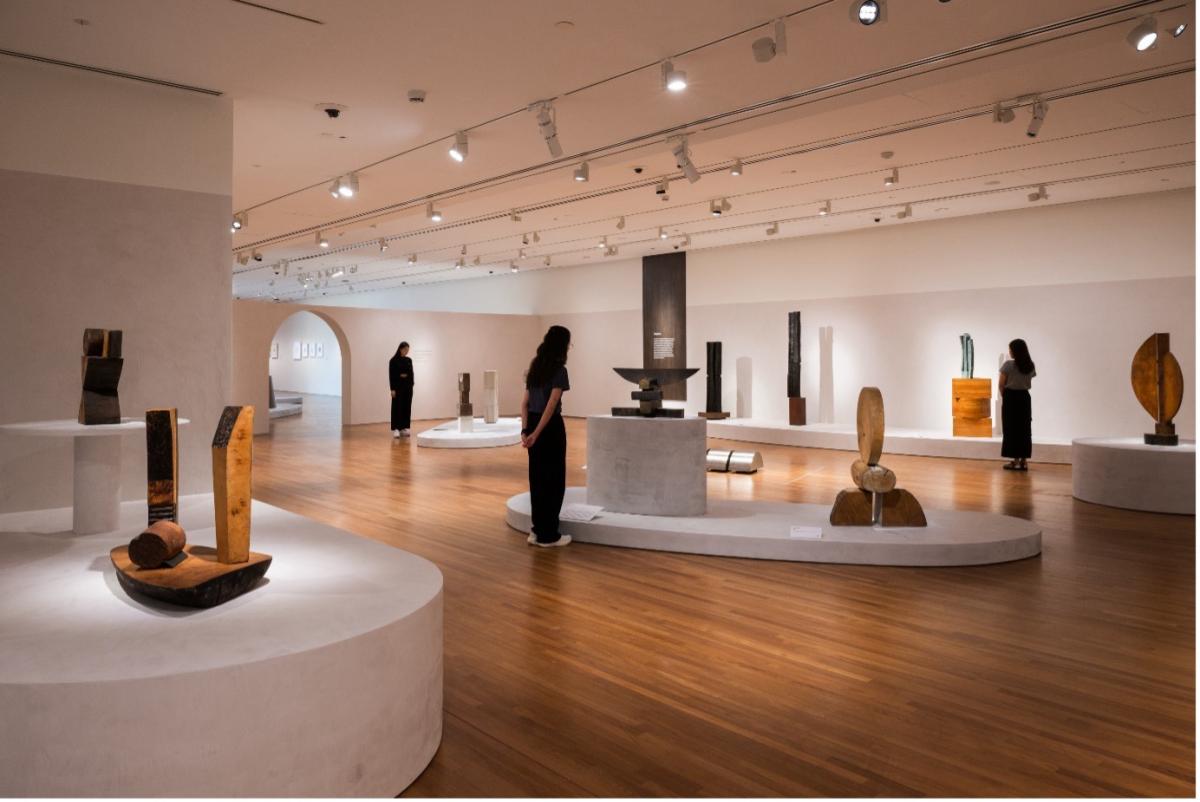
The National Gallery Singapore recently unveiled Kim Lim: The Space Between. A Retrospective—a landmark exhibition that meticulously charts the artistic journey of Kim Lim (1936–1997), a Singapore-born British sculptor and printmaker. Opening on September 27, 2024, this retrospective marks the third installment in the Gallery’s SG Artist series and offers the most comprehensive museum survey of Lim’s work to date. The exhibition aims to reposition Lim as a pivotal figure in 20th-century art, with over 150 artworks spanning four decades, including sculptures, prints, maquettes, archival materials, and never-before-seen photographs.
Kim Lim’s Legacy
Lim’s creative trajectory reflects a fusion of Minimalism, abstraction, and cross-cultural influences drawn from her experiences traveling between Europe and Asia. Although celebrated during her lifetime, her contributions were often overlooked, reflecting the challenges faced by female and immigrant artists within the male-dominated art world. The retrospective serves as both a recognition of her artistic achievements and a corrective to historical exclusions of women artists from mainstream narratives.
Dr. Eugene Tan, CEO of the National Gallery Singapore, emphasized, “This exhibition reintroduces Lim’s subtle and poetic artistic language that offers a counterbalance to the hypermasculinity often associated with 20th-century sculpture.” Lim’s works embody a quiet power, blending delicate craftsmanship with rhythmic compositions that explore light, space, and movement.
Exhibition Highlights
The exhibition is divided into four thematic sections, each reflecting key phases in Lim’s artistic development:
- Architectural Forms: Early works highlight her fascination with verticality and columnar structures, such as Samurai (1961) and Centaur II (1963). Inspired by Romanian sculptor Constantin Brâncuși, Lim’s explorations of stacking and segmentation convey strength without the bulkiness typical of male-dominated sculpture.
- Challenging Convention: Lim’s decision to place sculptures directly on the floor challenged the traditional use of plinths, giving the impression that her works emerge organically from the earth. This curatorial choice redefined spatial engagement with her art.
- Abstract Rhythms and Light: As Lim’s artistic vocabulary evolved, her focus shifted toward dynamic forms, balancing simplicity with layered meanings. Her prints and drawings complement her sculptures by exploring rhythm and texture in two dimensions.
- Cultural Fluidity and Minimalism: Lim’s works avoided cultural pigeonholing. Despite her Asian heritage, she resisted being boxed into labels, engaging in dialogue with Western Minimalism while maintaining a unique artistic voice that traversed cultural boundaries.
Alex and Johnny Turnbull, Lim’s children, expressed their pride at seeing their mother’s work celebrated in her home country: “Although she spent much of her life in the UK, our mother’s connection to Singapore and Asia remained profound, and it is fitting that her legacy continues to inspire here.”
Dr. Tan reiterated the importance of revisiting Lim’s work: “This retrospective not only showcases Lim’s artistic genius but also reflects the growing global recognition of her contribution to art history. It aligns with our mission to spotlight underrepresented narratives.”
Conclusion
The exhibition reflects how Kim Lim’s interdisciplinary practice—which spans sculpture, printmaking, and drawing—challenges dominant artistic conventions while engaging with abstraction in deeply personal ways. Kim Lim: The Space Between invites audiences to appreciate the nuanced interplay between form, space, and light that defines her work. Through this retrospective, the National Gallery Singapore pays tribute to an artist who defied categorization and offers a new lens through which her achievements can be appreciated.
This exhibition not only celebrates the artistry of Kim Lim but also underscores the importance of ensuring that the contributions of women and immigrant artists are integrated into global art histories.