Brazilian Modernism Art Takes Center Stage in Zurich
-
 Loading...
 - Bella Ferdinand
- 15 Oct 2024
- 52 Views
- 0 Like
- 0 Comment
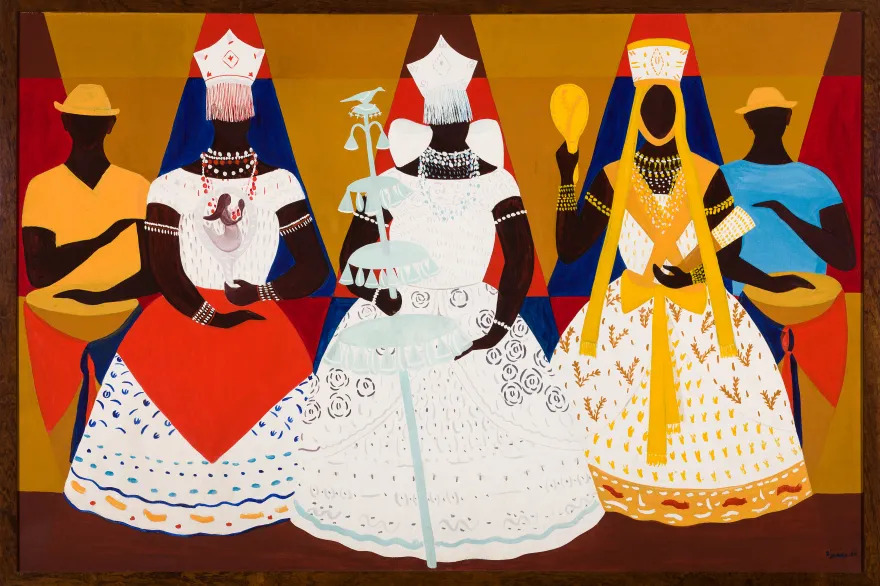
A major exhibition showcasing Brazilian modernism has arrived in Switzerland, marking a pivotal moment in the global recognition of the movement. The exhibit, titled Brasil! Brasil!, is being held at the Zentrum Paul Klee in Bern and brings together 130 works by key artists from this influential period. This exhibition is the most comprehensive international showcase of Brazilian modernism since 1944, when several Brazilian artists donated their works for auction in London to support the British war effort during World War II.
Following its run in Switzerland, the exhibit will travel to the Royal Academy of Arts in London from January 28 to April 21, 2025, where it will expand to include four additional works that had remained in the country after the wartime auction.
A Long-Awaited Spotlight on Brazilian Modernism
While modernism is often associated with Europe and the U.S., the exhibition aims to highlight that Brazilian modernism was equally influential. More than a mere aesthetic movement, Brazilian modernism redefined post-colonial cultural identity in the country, with its impact extending beyond the visual arts to literature, music, and architecture. It also set the stage for later movements such as Concrete Art and the Tropicália movement of the 1960s and 70s.
The artists featured in the exhibition include leading figures like Tarsila do Amaral, Oswald de Andrade, and Mario de Andrade—whose works challenged conventional art forms and reshaped Brazilian culture. The exhibition celebrates both the canonized modernists and other artists linked to the movement as satellites or influences, reflecting the diversity of the era.
From the Margins to the Global Stage
Although Brazilian modernism has played a crucial role in shaping Brazil’s cultural landscape, it has often been underrepresented on the global art circuit. The works of many celebrated Brazilian artists remain in domestic collections, limiting their exposure in international art schools and global markets. While figures like Tarsila do Amaral have gained some global recognition, most Brazilian modernists are not as well-known or traded as “blue-chip” artists from the Western modernist tradition.
This exhibition is part of a growing international acknowledgment of the value of Latin American modernism. It also coincides with Adriano Pedrosa, the director of the São Paulo Museum of Art (MASP), becoming the first Latin American curator of the Venice Biennale. Pedrosa’s leadership at the Biennale has further elevated the prominence of Latin American and Brazilian modernists on the global stage, as he dedicated part of the event to the movement.
The exhibition’s curators, Eggelhöfer and Coutinho, faced the difficult task of selecting works that represent the breadth of the movement while staying within budget and space constraints. They divided the exhibition into two sections:
- The Modernist Canon: Featuring recognized masterpieces that define the movement.
- Beyond the Canon: Showcasing artists who were either influenced by or tangentially linked to the modernist wave, emphasizing the movement's legacy and broader impact.
A Cultural Dialogue Between Brazil and Switzerland
Switzerland’s role in Brazilian modernism has evolved from an early guide to a host. Swiss writer Blaise Cendrars, born in 1887, encouraged Brazilian artists to explore their own cultural heritage, sparking the movement's early development. Today, by hosting Brasil! Brasil! and recognizing the contributions of these artists, Switzerland bridges the gap between Brazilian modernism and the international art world.
The exhibition promises to offer visitors a deeper appreciation of how Brazilian modernism reshaped cultural identity in the 20th century and continues to influence contemporary art and thought. It serves as a reminder that modernism was not limited to Western capitals but thrived globally, enriching the artistic conversation in profound ways.