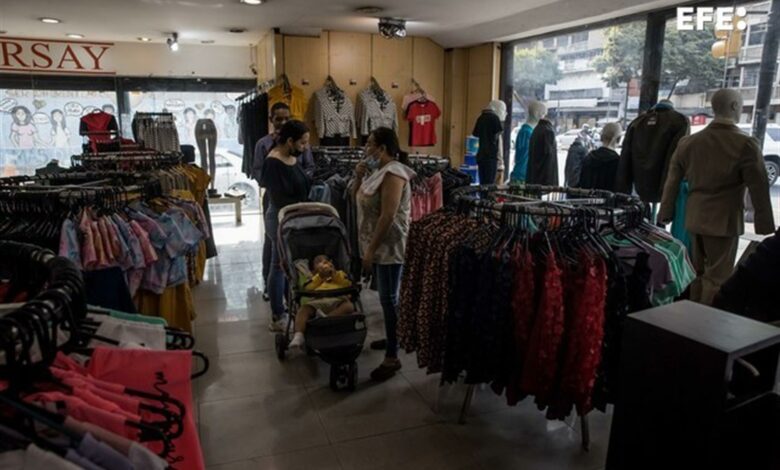
New foreign currency tax in Venezuela hurting business
-
 Loading...
 - Theo Pearson
- 05 Apr 2022
- 331 Views
- 0 Like
- 0 Comment
In Venezuela, where more than 50 percent of all payments are made in foreign currency, a new tax has been imposed on “large financial transactions” (IGTF) which takes up to 20 percent of the value of payments made in foreign currency, but most businesses neither know how to process it nor have the means to comply with the government order.
The Official Gazette says that the IGTF affects “natural and legal persons and economic entities without legal personage, on payments made in money different from the legal tender in the country, or in cryptocurrencies or cryptosecurities different from those issued by … Venezuela.”
But the widespreadlack of knowledge and information about the new measure, combined with the fact that the tax system is not adapted to ensure compliance with the new rule have led some establishments to temporarily suspend taking payments in foreign currency.
A national fast-food chain released a statement to inform its customers that it will find it impossible “for the moment, to receive payment in foreign currency.”
The firm justified its move by saying that it was in the “final phase of adapting and updating all” its systems with an eye toward “faithfully complying with the … rule.”
In addition, the administration of a private parking service at a Caracas mall informed its customers that it was not accepting foreign currency in payment.
Tiziana Polesel, the president of Consecomercio, a national business services council, said that 75 percent of businesses are reporting “that they are not able to receive payment in foreign currency because they have not been able to complete the process of adapting their systems to the new tax.”
She said that the machines at some companies “are not able to adapt or modify their configuration to collect the tax,” and so the equipment must be changed, which can cost “from $600 to more than $1,000,” an expense that is difficult to cover due to the lack of loanable funds, and therefore she called for the suspension or postponement of the order.
At least until March 31, national supermarket, pharmacy, clothing, hardware and food chains, along with other businesses, still have not begun collecting the tax because their systems have not been updated, mainly because the companies that perform that work “have collapsed,” a restaurant manager told EFE.
Nicolas Chirinos, the manager of a hardware store in the capital where the tax is still not being collected, said that the authorities “are trying to get control” of dollarization (that is, payment for goods and services in US dollars), which – although it is not official policy – has spread to almost all businesses.
“The public is asking whether we’re collecting (the tax). In fact, people from Seniat (the National Integrated Service for Customs and Tax Administration), confirmed the (cash register) machine and asked us if we were clear about everything. There are people who are going crazy with this,” Chirinos told EFE. Read More…