New Witkacy exhibition explores one of Poland's most important and influential artists
-
 Loading...
 - Venita Mitchell
- 11 Jul 2022
- 131 Views
- 0 Like
- 0 Comment
An exhibition devoted to the work of StanisÅ‚aw Ignacy Witkiewicz, one of the most outstanding European artists of the 20th century, opens today in Warsaw’s National Museum.
Eclectic, mercurial and eccentric, Witkiewicz, known to the world as Witkacy, was a versatile artist, philosopher, writer, photographer and penetrating critic of civilisation.
A visionary ahead of his time, his insights and catastrophic prophecies make him as relevant today as he was in his lifetime.

It is said that his contemporaries were not ready for him, that the world had yet to grow up to his thought.
He was a total artist whose personal life, many relationships and experimentation with psychedelic drugs made him one of the most colourful and eccentric characters of the interbellum art scene.
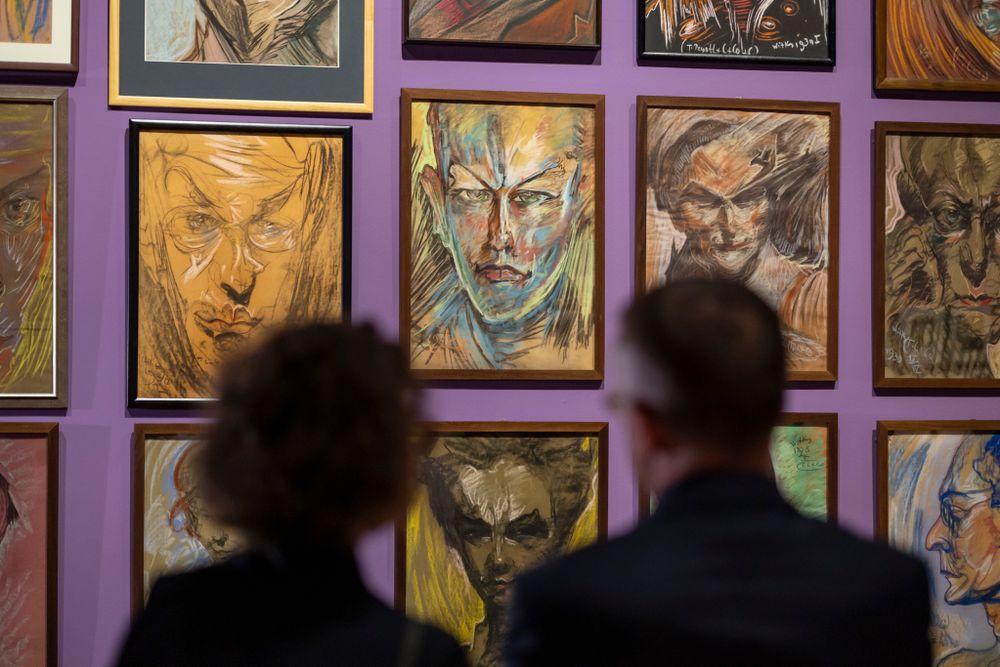
Entitled ‘Seismograph of the Age of Acceleration’, the exhibition displays almost 500 works by the artist from the museum's own collection and from numerous museums and institutions in Poland, as well as rarely presented works from private collections.
The exhibition rejects a traditional chronology of the artist’s life and opts instead for an overview of themes that were important to him.

These include categories such as the cosmos, movement, the body, artistic vision, metaphysical experience, history and the crisis of culture.
Witkacy’s exuberant life and suicide the day after Stalin invaded Poland on September 17, 1939, have been a point of fascination for decades.
Said to be particularly fond of alcohol, particularly vodka, legend says that he could drink half a litre of vodka with lunch and half a litre with dinner, although he swore he was not an alcoholic.
He experimented with drugs long before altered states of consciousness began to inspire hippies, and his portraits feature mysterious symbols that refer to the substances under whose influence Witkacy created. Read More…