New Zealand Author Braces for “Backlash from Some Māori” Following Book Launch
-
 Loading...
 - Shane Higgins
- 06 Jan 2025
- 33 Views
- 0 Like
- 0 Comment
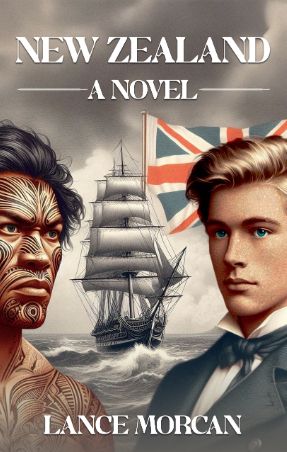
Lance Morcan, a New Zealand author, is preparing for potential criticism following the release of his latest novel, New Zealand: A Novel, published by Sterling Gate Books. This ambitious work spans nearly 500 years, chronicling the discoveries of New Zealand by both Māori and European explorers.
The narrative begins in the 1300s with the departure of Pacific Islanders from Hawaiki, seeking new lands, and concludes in the 1700s with Captain James Cook’s historic circumnavigation of New Zealand. Morcan intertwines the stories of Māori ancestors with European explorers, allowing readers to experience the historical events from both perspectives.
Morcan describes the novel as a "no-holds-barred historical adventure," reflecting the complexities of the time, including themes of betrayal, lust, and conflict. He does not shy away from depicting the darker aspects of history, including slavery and cannibalism, which he anticipates may provoke backlash from some Māori communities who might prefer these topics remain unaddressed.
In the book's Historical Notes, Morcan discusses the prevalence of cannibalism among Māori, stating that it continued into the 1800s, particularly during the Musket Wars. He references the work of historian Paul Moon, who asserts that cannibalism was widespread in early Māori society, even quoting Captain Cook on the subject.
Morcan acknowledges that his fictionalization of historical events may draw criticism from historians and educators. He emphasizes that while his novel may not be a precise recounting of history, it aims to capture the spirit of the era. He defends his approach by comparing his work to that of other historical fiction authors, such as Bernard Cornwell, who often blend fact with fiction for narrative purposes.
Morcan expresses concern about the current state of New Zealand's history education, citing Moon's critique of the new history curriculum as being overly simplistic and lacking in diversity. He believes that his novel could stimulate broader discussions about how New Zealand's history is taught, providing insights into the country's rich and complex past through the lens of fiction.
This novel marks a significant milestone for Morcan, as it is his first solo-authored work after co-authoring 35 books with his son, James Morcan. The author describes the writing process as a labor of love that began 50 years ago, evolving from a one-paragraph logline into a full-fledged novel.
New Zealand: A Novel promises to be a thought-provoking exploration of the country's history, blending adventure with historical reflection. While Morcan braces for potential backlash, he hopes that his work will encourage readers to engage with New Zealand's past in a meaningful way. As the conversation around history and representation continues, Morcan's novel may serve as a catalyst for deeper discussions about identity, culture, and the complexities of New Zealand's heritage.