Norway's Dragon's Eye: The Fantastical 'Pothole' That Emerged From Ice 16,000 Years Ago
-
 Loading...
 - Oline Fegth
- 25 Jul 2024
- 52 Views
- 0 Like
- 0 Comment
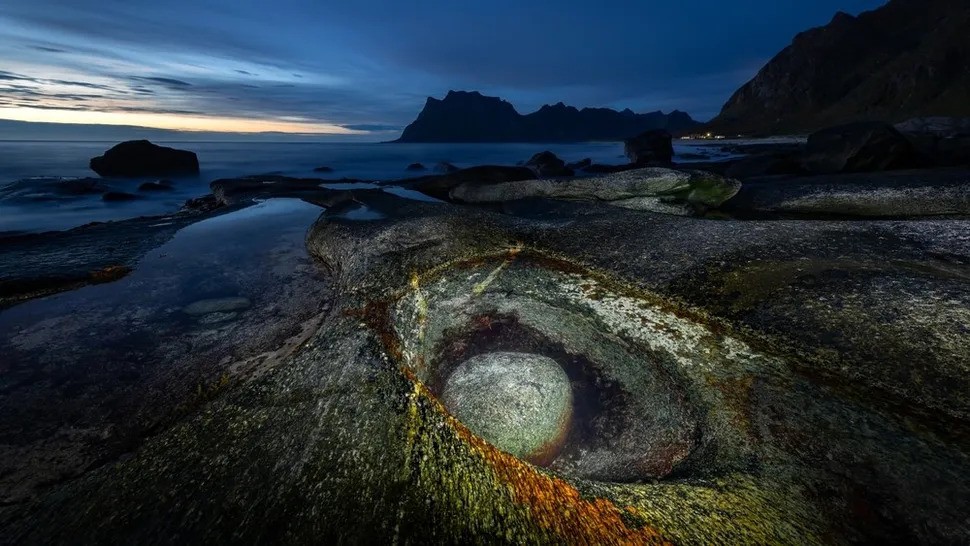
Nestled along Norway's rugged northwestern coastline lies a geological wonder that has captivated the imagination of locals and tourists alike—the "Dragon's Eye." This natural hollow, which resembles a reptilian eye, is not just a visual marvel but also a window into Earth's glacial past. Formed approximately 20,000 years ago beneath the colossal Fennoscandian Ice Sheet, the Dragon's Eye is a testament to the powerful forces of nature.
The Dragon's Eye likely formed during the last glacial maximum when the Fennoscandian Ice Sheet covered Scandinavia, parts of Northern Europe, and northwestern Russia. According to Francis Chantel Nixon, an associate professor of physical geography and quaternary geology at the Norwegian University of Science and Technology, this feature is known as a "pothole."
Potholes are a type of plastic form, or p-form, created by meltwater full of abrasive sediments. These sediments, ranging from fine sand to giant boulders, sculpt the bedrock into smooth-walled depressions through high-pressure meltwater currents. These currents concentrate abrasion and erosion in circular patterns, eventually forming potholes like the Dragon's Eye.
The Dragon's Eye probably emerged from beneath the ice around 16,000 years ago, during a period of deglaciation. As the Fennoscandian Ice Sheet retreated, it exposed the bedrock and its unique formations, including the fantastical Dragon's Eye.
The Dragon's Eye is characterized by a boulder at the bottom of the hollow, which stands out against a bed of white sand and algae, forming the eye's "pupil." The algae and sand within the hollow change appearance depending on the time of year and tidal movements, adding to the feature's dynamic beauty.
The pothole is carved into gneiss, a type of metamorphic rock known for its colorful mineral bands. These bands contribute to the eye's striking appearance, making it a photogenic natural wonder.
At high tide, waves wash over the rocks, depositing and removing sand from the hollow. This constant movement sometimes leaves the boulder sitting on bare bedrock, altering the Dragon's Eye's appearance.
The algae inside the eye also varies with the seasons and light conditions, providing a different view with each visit. This ever-changing nature keeps the Dragon's Eye perpetually intriguing.
The Dragon's Eye offers valuable insights into glacial processes and the power of meltwater currents. By studying such formations, scientists can better understand the dynamics of past ice ages and the effects of glaciation on the landscape.
The varying algae and sediment within the Dragon's Eye also offer a glimpse into the local ecosystem's health and changes over time. This natural feature serves as a living laboratory for studying ecological interactions in coastal environments.
The Dragon's Eye has become a symbol of Norway's natural beauty and geological heritage. Its unique appearance and fascinating history draw visitors from around the world, eager to witness this natural wonder.
Photographers are particularly enamored with the Dragon's Eye, capturing its different moods and appearances at various times of the day and year. These images help share the beauty of this feature with a global audience.
Norway's Dragon's Eye is more than just a picturesque pothole; it is a geological marvel born from the ice ages. Its formation, dynamic nature, and ecological significance make it a captivating subject of study and a must-visit destination. As we continue to explore and understand such natural wonders, they remind us of the powerful forces that shape our world and the ever-changing beauty of our planet.