Notes from the field: Walking shark protections bring hope for other species
-
 Loading...
 - Amalia Wijaya
- 26 Apr 2023
- 62 Views
- 0 Like
- 0 Comment
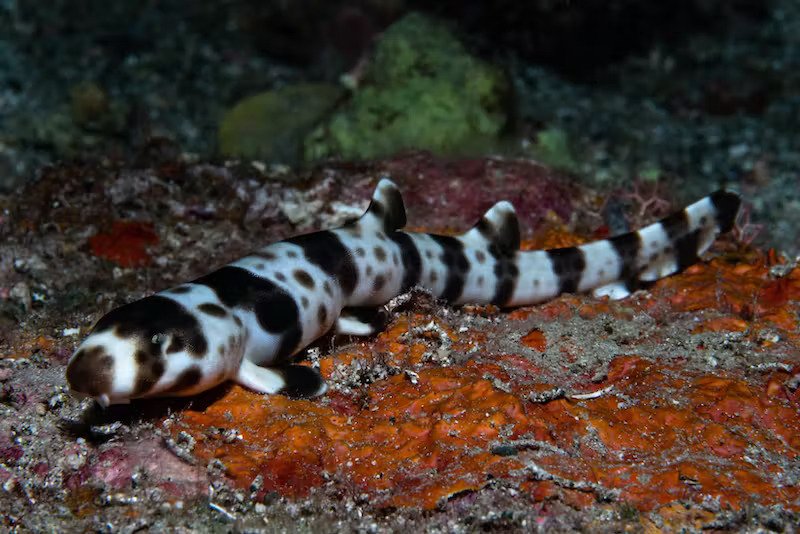
The Indonesian government has granted six species of threatened “walking sharks” the highest level of protection across all national waters — a move experts hope will lead to the conservation of other sharks, whose numbers have plummeted due largely to the shark fin trade.
“Walking sharks are small, charismatic and absolutely harmless to humans. Our hope is that they will be ambassadors for the conservation of their toothier cousins,” said Iqbal Herwata Putra, a scientist with Konservasi Indonesia, Conservation International’s main partner in the country.
“This is a big step that culminates years of effort,” he added. “We hope it will give walking sharks the chance to thrive in a changing climate.”
The Indonesian government and Konservasi Indonesia worked to show that the protections — which ban all fishing and collecting of walking sharks — support the survival of a species that’s important to Indonesia’s biodiversity and benefit local communities because of the ecotourism that walking sharks attract.
Walking sharks stand apart from other sharks for a couple of reasons. The first, of course, is their preferred mode of transport, which has captivated scientists and divers. They use muscular pectoral and pelvic fins to shimmy across the shallow ocean floor, poking their heads under coral and rocks in search of small fish, snails and crustaceans to eat. They can even slow their breathing and heart rate to wobble on land, across tidepools and reef flats, for up to an hour.
The second is their tendency to stay very close to home. Most walking sharks live out their lives within a mile of where they hatched. And they are only found in a relatively small area circling Northern Australia and New Guinea. Within that ring, individual species of walking shark, also known as epaulette sharks, occupy very specific habitats, with no two species of walking sharks overlapping in any given area. For example, the Cenderawasih epaulette shark (Hemiscyllium galei) is only found in Cenderawasih Bay, northwest of the Indonesian province of Papua — an extremely small area for a shark species distribution. Read More…