Opposition Secures Sweeping Victory in Thai Elections with Pledge for Revolutionary Reforms
-
 Loading...
 - Bupe Kayuni
- 15 May 2023
- 51 Views
- 0 Like
- 0 Comment
Thailand's electorate has resoundingly voiced their demand for change after enduring nine years under the leadership of a former military general who came to power through a coup. The MFP (Movement for Future Prosperity) witnessed an enormous surge in support during Sunday's elections, positioning it as the largest party. Following closely behind is the opposition party, Pheu Thai, led by billionaire former prime minister Thaksin Shinawatra.
Thai voters turned out in record numbers to deliver a harsh verdict on the former coup leader, Prime Minister Prayut Chan-O-Cha. They attributed economic stagnation and a crackdown on human rights to his administration. Pita Limjaroenrat, the leader of MFP, expressed his intention to form a six-party coalition, including Pheu Thai. While Pheu Thai has indicated its readiness to join, detailed negotiations are yet to commence.
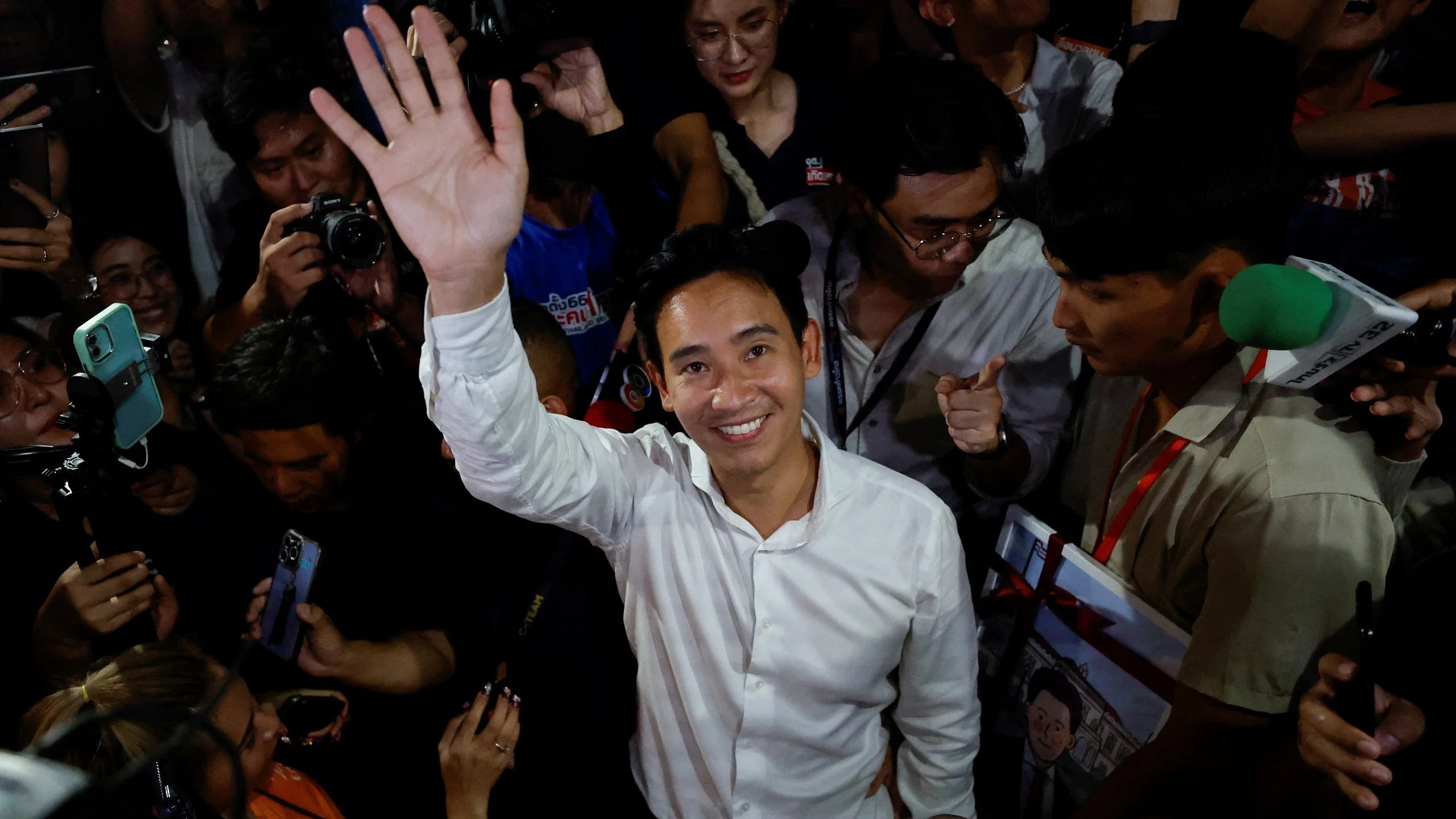
Addressing reporters at MFP headquarters in Bangkok, Pita confidently stated, "I am Pita Limjaroenrat, the future prime minister of Thailand." He further added, "We are prepared to govern," emphasizing his commitment to being a leader for all citizens. Pita also reached out to Paetongtarn Shinawatra, the lead prime ministerial candidate of Pheu Thai, to extend congratulations on her campaign and invite her to join the coalition.
Reflecting on the election results, Pita remarked in English, "The atmosphere has changed; it was the right time. People have endured enough. Today is a new day, filled with hope and optimism."
The combined strength of MFP and Pheu Thai is expected to secure 292 out of 500 seats in the lower house, while the two primary parties allied with the military are projected to attain a mere 76 seats in total. However, in a country where military coups and court interventions have often overshadowed democratic processes, concerns persist that the election outcome may be thwarted.
MFP has committed itself to reforming Thailand's stringent laws against insulting the monarchy, setting the stage for a clash with the powerful royalist-military establishment. Emerging as a formidable political force in Thailand, MFP harnessed the energy of youth-led pro-democracy protests in 2020. The party's election campaign pitched a young generation yearning for change against the entrenched conservative old guard personified by the 69-year-old former general, Prayut.
Beam, a 29-year-old personal assistant and MFP voter who participated in the 2020 protests, conveyed her optimism, stating, "I feel like my country has hope for the future. People have truly opened their eyes."
With 99% of polling stations counted, data from the Election Commission revealed that MFP secured 14.1 million votes, while Pheu Thai garnered 10.8 million. The United Thai Nation party, led by Prayut, the former army chief who seized power in a 2014 coup, trailed far behind with 4.7 million votes.
Highlighting potential flashpoints ahead, Pita reiterated his commitment on Monday to reform the lese majeste law, which imposes severe prison sentences for insulting the monarchy. Previously considered a taboo issue in Thai politics, Pheu Thai had avoided addressing it during the campaign.
Expressing their congratulations, Pheu Thai acknowledged MFP's victory and recognized its right to lead the new government. Paetongtarn, the daughter of Thaksin, the party's influential figure in exile, stated that negotiations between the two parties regarding the coalition details are yet to commence.
Despite their electoral success, both MFP and Pheu Thai face numerous obstacles in securing power due to a constitution drafted by the junta in 2017. The selection of the new prime minister will be a joint effort involving the 500 elected members of the lower house and 250 senate members appointed by Prayut's junta.
Adding to the prevailing uncertainty, there are already rumors circulating that MFP could face dissolution through a court order, similar to what happened to its predecessor, the Future Forward Party, after it unexpectedly performed well in the 2019 elections. The Election Commission is not expected to officially confirm the final seat distribution for several weeks.
While MFP and Pheu Thai celebrate their triumph, they still confront significant challenges on their path to power. Nevertheless, this election marks a significant milestone as the first since the 2020 protests that demanded limitations on the power and expenditures of Thailand's king. Although the demonstrations dwindled as COVID-19 restrictions were imposed and numerous leaders were arrested, their energy fueled growing support for the more progressive MFP opposition.
MFP actively courted millennial and Gen Z voters, who comprise nearly half of the 52 million-strong electorate. Early results indicate that they have made inroads across all age groups. The party is projected to win constituencies even in the traditionally Pheu Thai strongholds in northern Thailand, potentially even flipping Thaksin Shinawatra's home district near the city of Chiang Mai.