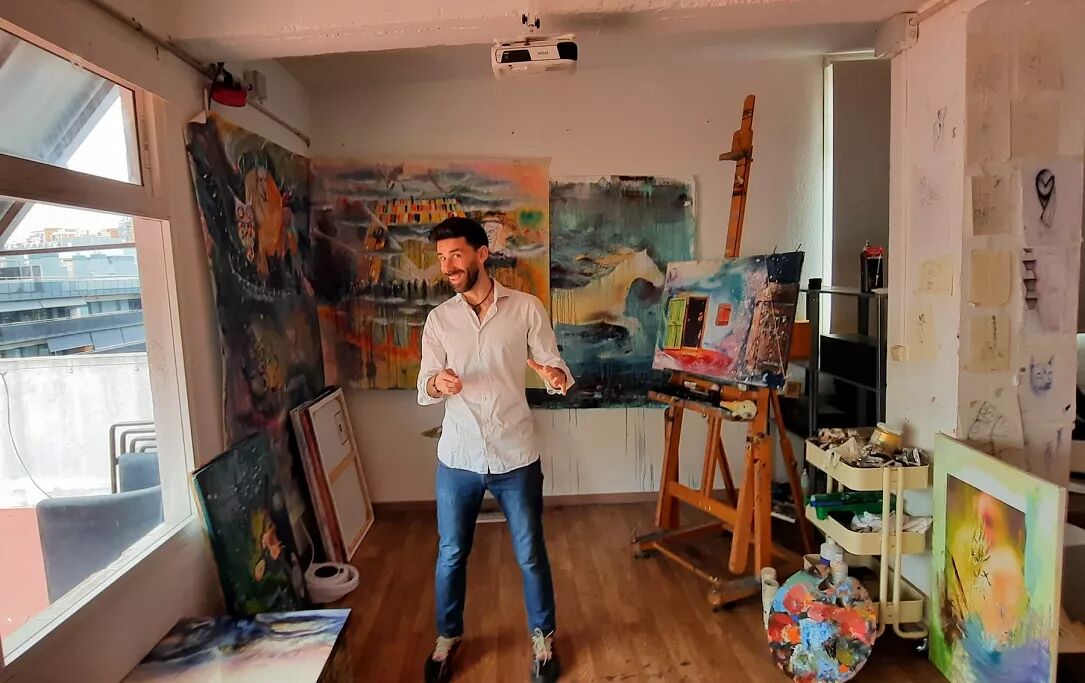
Painting with beetroot, or where does an ambitious Romanian artist stand in today's value crisis
-
 Loading...
 - Jake Martin
- 19 Jul 2022
- 101 Views
- 0 Like
- 0 Comment
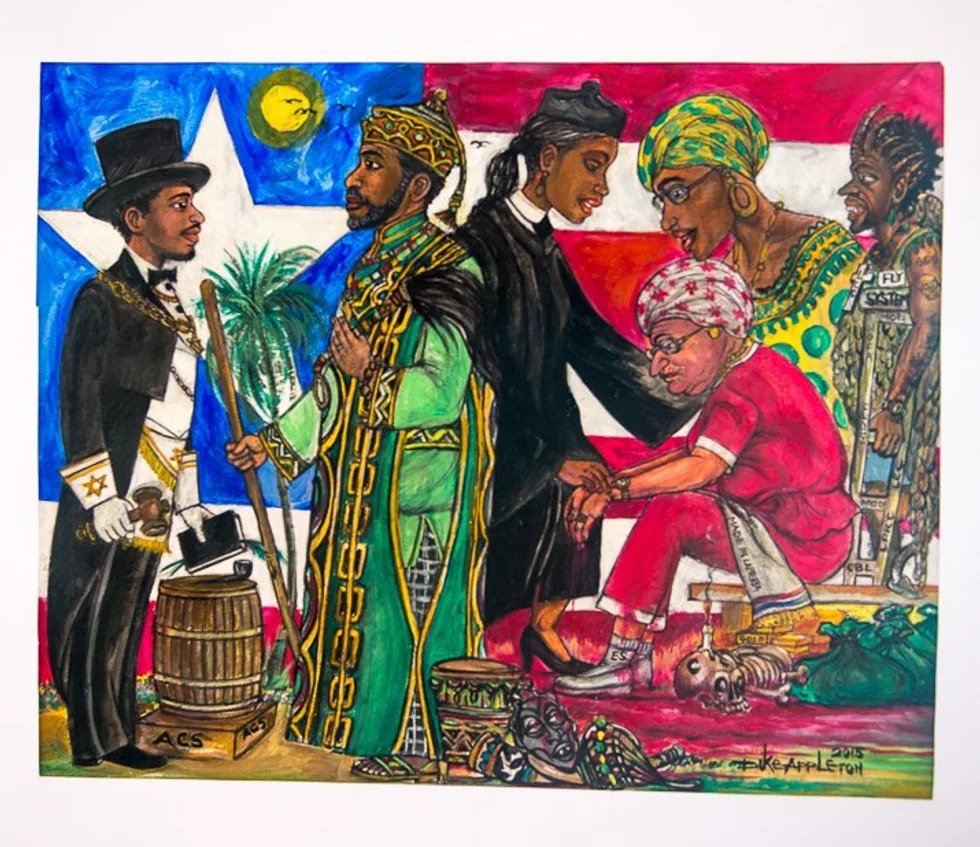
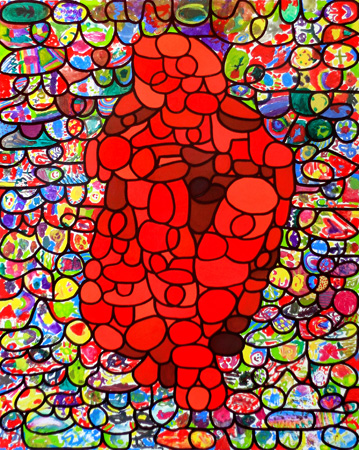
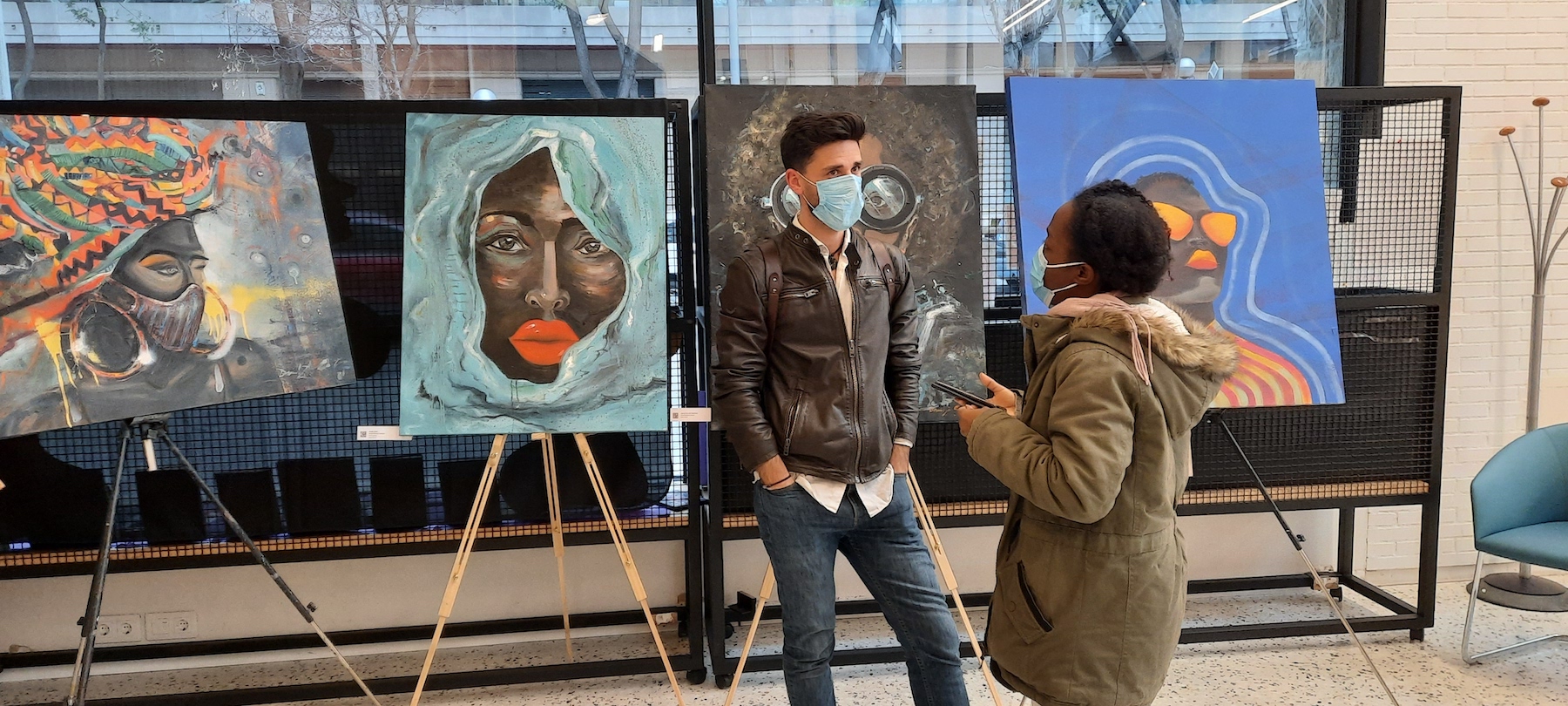
Far away from the most common attractions visited by Barcelona’s 27 million yearly tourists, lies the quiet, yet lively neighbourhood of Les Corts. In a corner of the local library, you can find Daniel Zlota’s latest collection, one that celebrates women, promotes freedom, and strikes diversity.
Given the context, Daniel is speaking quietly, presenting the motivation behind his paintings to the people that joined on the last day of his exhibition: “We tend to give people labels because of history and prejudices, but if we do not speak out for those issues, they will be left behind, unresolved,” says Daniel one day before leaving for New York and Cancún, for business and a well-deserved holiday.
Daniel was born in FocÈ™ani in 1985, four years before the Romanian Revolution. Since he was a little kid, he was always interested in the novel and progression. He chose to study at the local arts high school because he “found it interesting. It was only the third year they organised classes for the 5th grade, and I wanted to be there, surrounded by Nirvana and leather jackets,” he remembers.
Later, Daniel chose to study architecture in Bucharest because he found joy in the structure and logical thinking this type of art provided him. During his years in the capital city of Romania, being surrounded by both business executives as well as university dropouts, he found that his principles do not align with the “I have a friend who can help you” mentality. “My work is a projection of my values. For me it's important that my clients, and, in general people who appreciate my art, share the same values,” Daniel says.
In Romania, throughout history, values have had plenty of reasons to change. That might explain the trust paradox found by the ISRA National Study in 2018, when 81% of Romanians answered that they keep their word, 71% declared themselves as being honest, but 63% said that it’s never good to believe what others say. Moreover, the National Atlas of Values mentions that, even after the Revolution, the Romanian society has still been lagging behind in Europe, as one of those that mistrust the most. A common topic covered in both these publications is that Romanians’ most important achievement in life is building a family, even though, they have one of the lowest frequencies in Europe to meet their close friends. Read More…