Patient’s race and method of dialysis are linked to higher risk of blood infection
-
 Loading...
 - Bobel Anna
- 24 Feb 2023
- 84 Views
- 0 Like
- 0 Comment
Hispanic, Latino, and non-Hispanic Black Americans on dialysis for end-stage kidney disease have a higher risk of developing life-threatening bloodstream infections, a new report says.
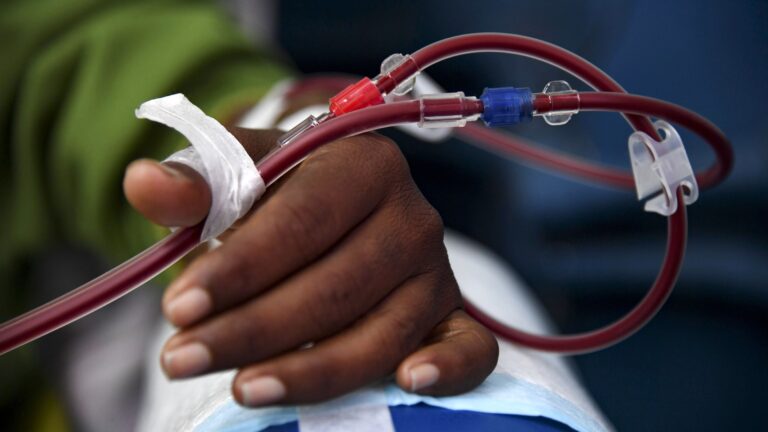
And those racial and ethnic disparities are deepened by another risk factor: how the patient received hemodialysis. Going through a central venous catheter straight into major veins was linked to higher rates of infection than less invasive routes.
A new “Vital Signs” report published by the Centers for Disease Control and Prevention on Monday used national, laboratory, and population-based surveillance data from 2017 to 2020 to find common patterns among patients who got bloodstream infections. In 2020, about 14,800 bloodstream infections were reported to the national surveillance system, and 34% of them were by Staphylococcus aureus, the report said. S. aureus is a round bacterium that commonly causes skin infections but can enter the bloodstream and affect the organs.
About 40% of those S. aureus infections were the difficult-to-treat kind: methicillin-resistant S. aureus, also known as MRSA. Infections are a leading cause of death in patients undergoing dialysis — accounting for more than a third of deaths, by some estimates.
During the years the report analyzed, hemodialysis patients were 100 times more likely to get S. aureus bloodstream infections than adults not on dialysis, highlighting the potential dangers of what is, for many, a life-support system once their kidneys lose function. The researchers included 7,100 dialysis facilities in the study.
The method a dialysis provider used to access a patient’s cardiovascular system made the biggest difference in the risk of S. aureus infections, the data show. Central venous catheters, put through the skin into a vein in the neck, chest, or groin and stop near the heart, carried the highest risk for S. aureus bloodstream infection — six times higher than the safest method studied. “The other end remains outside the body, exposed to germs which can adhere to the tube and move into the bloodstream,” said Shannon Novosad, senior author of the paper.
This kind of dialysis access was the most powerful determinant of whether a patient got a bloodstream infection, according to the study. Methods deemed safer: grafts, small plastic tubes that connect an artery and a vein, and fistulas, which join an artery and vein directly.
People from racial and ethnic minority groups are more likely to develop end-stage kidney disease. And, according to the CDC report, Hispanic and non-Hispanic Black hemodialysis patients had the highest rates of S. aureus bloodstream infections. Hispanic and Latino dialysis patients had a 40% higher risk of S. aureus infections than white patients in the same time period, the report found. Even though a bigger proportion of white patients on hemodialysis had a central venous catheter (23%, versus 21% of Black people and 14% of Hispanic or Latino people), those from minority groups had higher rates of infection. Men and patients who were 18 to 49 years old were also at elevated risk, the data suggested.
Overall, dialysis patients who lived in areas with higher rates of poverty, lower levels of educational attainment, and more crowded living conditions had disproportionately higher rates of these bloodstream infections. Those findings highlight well-documented inequities that Medicare is endeavoring to fix with a major experiment in how dialysis clinics are paid. Read More…