Home Upload Photo Upload Videos Write a Blog Analytics Messaging Streaming Create Adverts Creators Program
Bebuzee Afghanistan Bebuzee Albania Bebuzee Algeria Bebuzee Andorra Bebuzee Angola Bebuzee Antigua and Barbuda Bebuzee Argentina Bebuzee Armenia Bebuzee Australia Bebuzee Austria Bebuzee Azerbaijan Bebuzee Bahamas Bebuzee Bahrain Bebuzee Bangladesh Bebuzee Barbados Bebuzee Belarus Bebuzee Belgium Bebuzee Belize Bebuzee Benin Bebuzee Bhutan Bebuzee Bolivia Bebuzee Bosnia and Herzegovina Bebuzee Botswana Bebuzee Brazil Bebuzee Brunei Bebuzee Bulgaria Bebuzee Burkina Faso Bebuzee Burundi Bebuzee Cabo Verde Bebuzee Cambodia Bebuzee Cameroon Bebuzee Canada Bebuzee Central African Republic Bebuzee Chad Bebuzee Chile Bebuzee China Bebuzee Colombia Bebuzee Comoros Bebuzee Costa Rica Bebuzee Côte d'Ivoire Bebuzee Croatia Bebuzee Cuba Bebuzee Cyprus Bebuzee Czech Republic Bebuzee Democratic Republic of the Congo Bebuzee Denmark Bebuzee Djibouti Bebuzee Dominica Bebuzee Dominican Republic Bebuzee Ecuador Bebuzee Egypt Bebuzee El Salvador Bebuzee Equatorial Guinea Bebuzee Eritrea Bebuzee Estonia Bebuzee Eswatini Bebuzee Ethiopia Bebuzee Fiji Bebuzee Finland Bebuzee France Bebuzee Gabon Bebuzee Gambia Bebuzee Georgia Bebuzee Germany Bebuzee Ghana Bebuzee Greece Bebuzee Grenada Bebuzee Guatemala Bebuzee Guinea Bebuzee Guinea-Bissau Bebuzee Guyana Bebuzee Haiti Bebuzee Honduras Bebuzee Hong Kong Bebuzee Hungary Bebuzee Iceland Bebuzee India Bebuzee Indonesia Bebuzee Iran Bebuzee Iraq Bebuzee Ireland Bebuzee Israel Bebuzee Italy Bebuzee Jamaica Bebuzee Japan Bebuzee Jordan Bebuzee Kazakhstan Bebuzee Kenya Bebuzee Kiribati Bebuzee Kuwait Bebuzee Kyrgyzstan Bebuzee Laos Bebuzee Latvia Bebuzee Lebanon Bebuzee Lesotho Bebuzee Liberia Bebuzee Libya Bebuzee Liechtenstein Bebuzee Lithuania Bebuzee Luxembourg Bebuzee Madagascar Bebuzee Malawi Bebuzee Malaysia Bebuzee Maldives Bebuzee Mali Bebuzee Malta Bebuzee Marshall Islands Bebuzee Mauritania Bebuzee Mauritius Bebuzee Mexico Bebuzee Micronesia Bebuzee Moldova Bebuzee Monaco Bebuzee Mongolia Bebuzee Montenegro Bebuzee Morocco Bebuzee Mozambique Bebuzee Myanmar Bebuzee Namibia Bebuzee Nauru Bebuzee Nepal Bebuzee Netherlands Bebuzee New Zealand Bebuzee Nicaragua Bebuzee Niger Bebuzee Nigeria Bebuzee North Korea Bebuzee North Macedonia Bebuzee Norway Bebuzee Oman Bebuzee Pakistan Bebuzee Palau Bebuzee Panama Bebuzee Papua New Guinea Bebuzee Paraguay Bebuzee Peru Bebuzee Philippines Bebuzee Poland Bebuzee Portugal Bebuzee Qatar Bebuzee Republic of the Congo Bebuzee Romania Bebuzee Russia Bebuzee Rwanda Bebuzee Saint Kitts and Nevis Bebuzee Saint Lucia Bebuzee Saint Vincent and the Grenadines Bebuzee Samoa Bebuzee San Marino Bebuzee São Tomé and Príncipe Bebuzee Saudi Arabia Bebuzee Senegal Bebuzee Serbia Bebuzee Seychelles Bebuzee Sierra Leone Bebuzee Singapore Bebuzee Slovakia Bebuzee Slovenia Bebuzee Solomon Islands Bebuzee Somalia Bebuzee South Africa Bebuzee South Korea Bebuzee South Sudan Bebuzee Spain Bebuzee Sri Lanka Bebuzee Sudan Bebuzee Suriname Bebuzee Sweden Bebuzee Switzerland Bebuzee Syria Bebuzee Taiwan Bebuzee Tajikistan Bebuzee Tanzania Bebuzee Thailand Bebuzee Timor-Leste Bebuzee Togo Bebuzee Tonga Bebuzee Trinidad and Tobago Bebuzee Tunisia Bebuzee Turkey Bebuzee Turkmenistan Bebuzee Tuvalu Bebuzee Uganda Bebuzee Ukraine Bebuzee United Arab Emirates Bebuzee United Kingdom Bebuzee Uruguay Bebuzee Uzbekistan Bebuzee Vanuatu Bebuzee Venezuela Bebuzee Vietnam Bebuzee World Wide Bebuzee Yemen Bebuzee Zambia Bebuzee Zimbabwe
Blog Image

Plants colonized Earth 100 million years earlier than previously thought

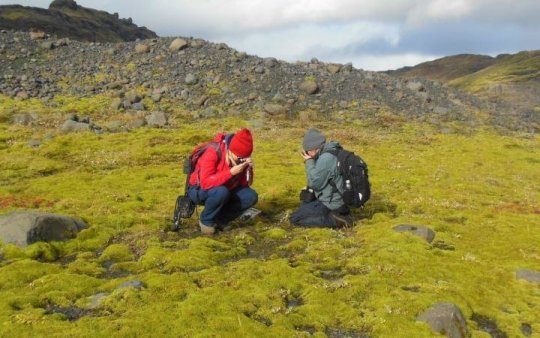
Early life on land resembled cryptogamic ground covers like this lava field in Iceland. Co-author Sylvia Pressel appears in the right of the picture. Credit: Image courtesy of Paul Kenrick

For the first four billion years of Earth's history, our planet's continents would have been devoid of all life except microbes.

All of this changed with the origin of land plants from their pond scum relatives, greening the continents and creating habitats that animals would later invade.

The timing of this episode has previously relied on the oldest fossil plants which are about 420 million years old.

New research, published today in the journal Proceedings of the National Academy of Sciences, indicates that these events actually occurred a hundred million years earlier, changing perceptions of the evolution of the Earth's biosphere.

Plants are major contributors to the chemical weathering of continental rocks, a key process in the carbon cycle that regulates Earth's atmosphere and climate over millions of years.

The team used 'molecular clock' methodology, which combined evidence on the genetic differences between living species and fossil constraints on the age of their shared ancestors, to establish an evolutionary timescale that sees through the gaps in the fossil record.

Dr Jennifer Morris, from the University of Bristol's School of Earth Sciences and co-lead author on the study, explained: "The global spread of plants and their adaptations to life on land, led to an increase in continental weathering rates that ultimately resulted in a dramatic decrease the levels of the 'greenhouse gas' carbon dioxide in the atmosphere and global cooling.

"Previous attempts to model these changes in the atmosphere have accepted the plant fossil record at face value -- our research shows that these fossil ages underestimate the origins of land plants, and so these models need to be revised."

Co-lead author Mark Puttick described the team's approach to produce the timescale. He said: "The fossil record is too sparse and incomplete to be a reliable guide to date the origin of land plants. Instead of relying on the fossil record alone, we used a 'molecular clock' approach to compare differences in the make-up of genes of living species -- these relative genetic differences were then converted into ages by using the fossil ages as a loose framework.

"Our results show the ancestor of land plants was alive in the middle Cambrian Period, which was similar to the age for the first known terrestrial animals."

One difficulty in the study is that the relationships between the earliest land plants are not known. Therefore the team, which also includes members from Cardiff University and the Natural History Museum, London, explored if different relationships changed the estimated origin time for land plants.

Leaders of the overall study, Professor Philip Donoghue and Harald Schneider added: "We used different assumptions on the relationships between land plants and found this did not impact the age of the earliest land plants.

"Any future attempts to model atmospheric changes in deep-time must incorporate the full range of uncertainties we have used here."

Previous Post

For tropical forest birds, old neighborhoods matter

Next Post

The starry sky shows nocturnal animals the way

Comments