Pope plays key role in Argentina's bishops asking for forgiveness
-
 Loading...
 - Corinne Fraise
- 18 May 2023
- 74 Views
- 0 Like
- 0 Comment
Argentina's Catholic Church is undergoing a process of introspection as the country prepares for general elections in October, marking four decades since the end of the military dictatorship.
In 2023, the Argentine bishops' conference initiated the publication of a comprehensive report examining its role during the military regime from 1976 to 1983. Titled "The Truth Will Set You Free," this three-volume report represents the first public review by a national church of its actions during an authoritarian regime. Moreover, it is the first time the Argentine bishops' conference has sought forgiveness for its deeds and omissions during the dictatorship.
Father Carlos Galli, the lead author of the report and dean of the Theology School at the Pontifical Catholic University of Argentina, highlighted the significance of the church's request for forgiveness, stating, "They have sought forgiveness from the victims and the Argentine people for not living up to the occasion. This is a significant development because no institution in Argentina has asked for forgiveness or engaged in self-criticism." Father Galli conveyed these remarks to OSV News.
Father Galli also noted the timely nature of the report's release, occurring in a year marked by the polarization of Argentine society due to economic hardships, ongoing political debates surrounding the elections, and the 40th anniversary of the country's return to democracy.
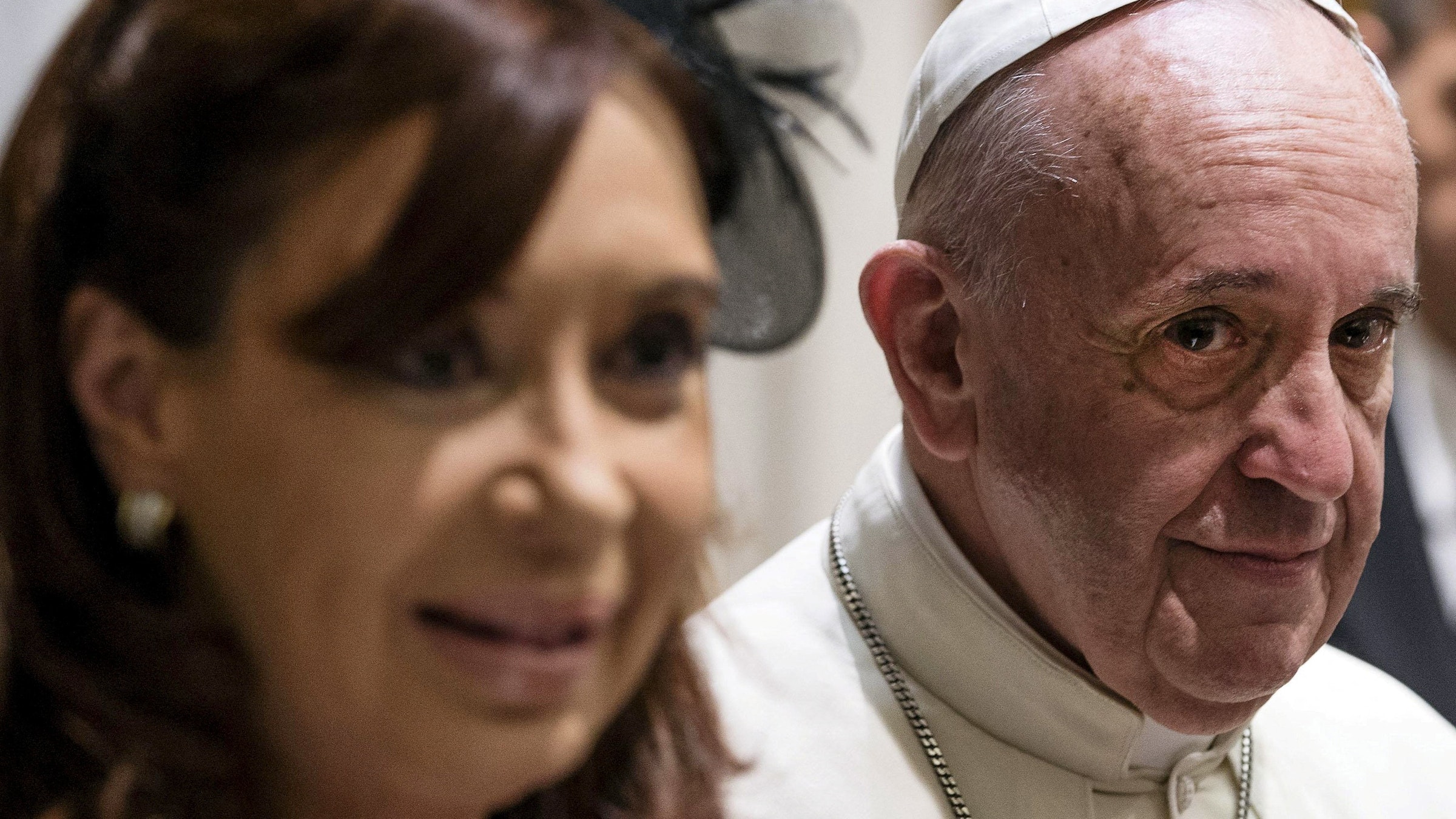
While the report received extensive national coverage, including over 200 articles, radio interviews, and television appearances, international attention came unexpectedly from Pope Francis himself. As an Argentine who previously served as the Jesuit provincial during the military government and later became the cardinal of Buenos Aires, Pope Francis discussed the kidnapping and torture of two Jesuits, Father Ferenc Jálics and Father Orland Yorio, during his visit to Hungary in late April. The transcript of this conversation was published in the Italian Jesuit journal Civiltà Cattolica, a customary practice following such meetings.
Father Jálics and Father Yorio were among the estimated 10,000 to 30,000 victims of forced disappearances, kidnappings, murders, and torture during the military rule from 1976 to 1983. Their case is included in the report, with both priests having since passed away, Father Yorio in 2000 and Father Jálics in 2021.
During the conversation with the Hungarian Jesuits, the pope addressed the topic of Father Jálics and expressed that he did "what I felt I had to do to defend them. It was a very painful affair." However, his remark about certain politicians aiming to "cut my head off" by linking him to the military and suggesting his possible complicity in the Jesuits' kidnappings attracted attention back in Argentina. The pope did not disclose the identities of those who desired his downfall.
These remarks added to the prevailing economic and political turmoil in Argentina, with inflation reaching an annualized rate of 109% as of April. The country is preparing to elect a new president in October, as President Alberto Fernández has decided not to run for a second term.
Father Galli, along with his team, meticulously examined over 200,000 documents to compile the report. He emphasized that the evidence not only absolves the pope but also underscores Francis' instrumental role in the report's completion.
According to Father Galli, "Pope Francis contributed to this process in three ways. Firstly, during his tenure as the president of the episcopal conference from 2005 to 2011, he organized the files available in Argentina. Secondly, he oversaw the digitization of Vatican files concerning Argentina. Lastly, he declassified the Vatican archives for our use."
The report consists of three volumes, with the first volume covering the entire church and the second volume focusing specifically on the bishops' conference. The two volumes comprise a total of 1,772 pages. The third volume, scheduled for release later this year, will provide an interdisciplinary analysis of the issues at hand.
In the early 2000s, Cardinal Bergoglio, before becoming Pope Francis, called for an investigation into the death of Bishop Enrique Angelelli of La Rioja, who died in 1976. The military government had claimed that his death resulted from a car accident, but the investigation confirmed that he was, in fact, murdered by the military junta. Bishop Angelelli was subsequently beatified as a martyr in 2019.
During the inquiry into Bishop Angelelli's death, archives were discovered within the bishops' conference categorized under "human rights." These archives contained letters from families to priests and bishops, seeking assistance in locating their loved ones who had disappeared after being kidnapped by the military. The letters numbered in the thousands, and the correspondence extended through the ecclesiastical chain up to the papal nuncio and Rome.
Cardinal Bergoglio took steps to systematize and digitize the files in Argentina, both during his time as the archbishop of Buenos Aires and after assuming the papacy, extending the process to the Vatican archives pertaining to Argentina's military rule. In 2017, Father Galli and three other theologians were chosen to author the report, and in an unprecedented move, the Vatican opened its archives on Argentina to facilitate their research.
Father Galli emphasized that their mandate was to seek the truth without ideological or institutional bias, approaching the challenging history with a critical methodology and without concealing any information. The objective was to present an unvarnished account of history, free from distortion. Father Galli shared his experience with OSV News, expressing the harrowing nature of his research and describing the descent into hell he felt while reading the files. He revealed that he personally had friends and family members who had disappeared.
He further stated that the report, along with the bishops' conference's request for forgiveness, has played a significant role in the healing process for Argentina, more than four decades after the "dirty war." In the report's prologue, the bishops not only sought forgiveness for the "many decisions, actions, and omissions" during the military rule but also emphasized that the research would guide their future endeavors in pursuit of justice and reconciliation among Argentines.
Unlike the bishops in Chile, who established the Solidarity Vicariate under General Augusto Pinochet's military regime from 1973 to 1990, Argentina's Catholic bishops did not create a comprehensive system within the church to support the victims and their families during the military rule. While some individual bishops did offer assistance, the church as a whole remained largely uninvolved.
Father Galli affirmed that this moment represents a liberating experience for the bishops, even though none of the current bishops were serving during the dictatorship. He acknowledged that the bishops concur on the need for the church to have done more but firmly rejected the narrative suggesting that the church acted as an accomplice to state violence. While the church may not have been prophetic in the face of the tragedy, it cannot be labeled complicit as an institution, according to Father Galli.
Concluding the meeting with the Hungarian Jesuits, Pope Francis recommended that they read the Argentine church's report, "The Truth Will Set You Free," stating that it would provide them with a comprehensive understanding of the case.