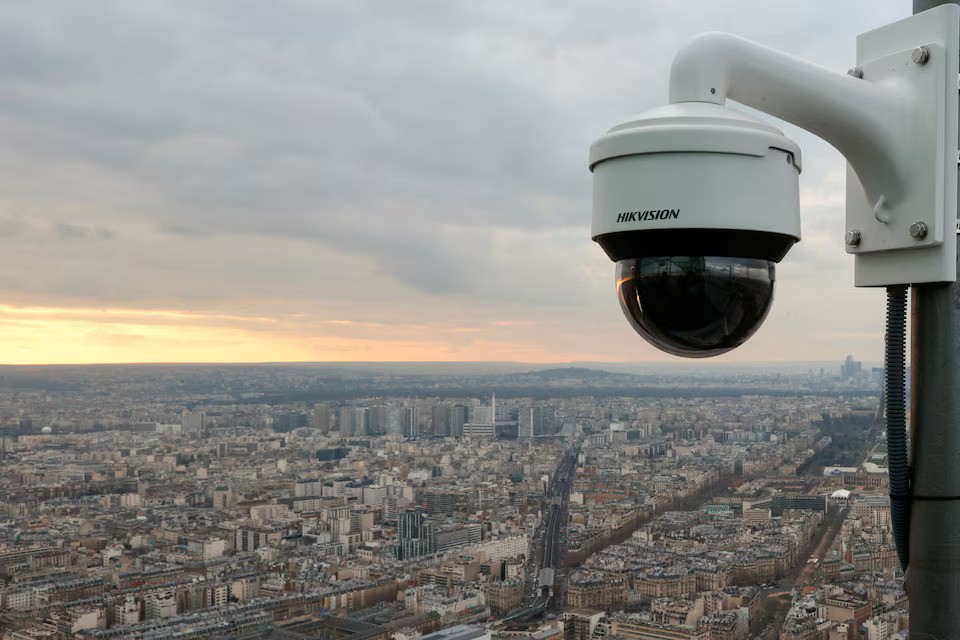
Privacy Fears Grow as France Extends AI Surveillance Beyond Olympics
-
 Loading...
 - Finlay Carson
- 16 Oct 2024
- 56 Views
- 0 Like
- 0 Comment
France's recent decision to extend the use of AI-powered video surveillance in public spaces until March 2025 has raised significant concerns regarding privacy and civil liberties. Initially introduced for the 2024 Olympics, this technology is now set for broader application, prompting critics to voice fears about potential discriminatory practices and excessive monitoring of citizens.
Algorithmic video surveillance (AVS) integrates traditional video monitoring with artificial intelligence to analyze public spaces. The system is designed to detect specific behaviors, such as crowd movements, abandoned objects, and excessive density, as well as to identify individuals entering restricted areas. While the current capabilities do not include facial recognition, critics worry that future developments could expand the technology's reach, infringing on individual privacy rights.
Bastien Le Querrec from the digital rights organization La Quadrature du Net expressed concerns that AVS could lead to increased surveillance and discrimination against certain population groups. He stated, "This technology is more of a way to increase surveillance on the streets and to focus on certain categories within the population, opening the possibilities of discrimination and the infringement of human rights."
Prime Minister Michel Barnier has endorsed the widespread use of AVS, following support from Paris Police Chief Laurent Nunes, who described the technology as necessary for public safety. However, this extension comes despite an evaluation report on the ethical implications of AVS not being expected until the end of the year. Critics argue that the lack of thorough ethical review raises serious questions about the technology's implementation and its potential impact on civil liberties.
Le Querrec highlighted that while the technology aims to enhance surveillance efficiency, it could disproportionately target specific groups, effectively expanding everyday monitoring of citizens. He warned that even if current technologies remain within legal boundaries, future advancements could easily overstep those limits.
The AVS system was initially authorized under the 2023 JOP Law, which was intended to secure large-scale events like the Olympics. Although facial recognition is not currently permitted under French law, the use of AI for public monitoring poses significant risks, particularly regarding the processing of personal data. Legal experts are increasingly concerned about how data collected through AVS could be misused.
Le Querrec emphasized that activism, rather than legal challenges, may be the most effective way to combat this surveillance. He noted that prior to the Olympics, the technology was illegal, and the processing of personal data remains a critical issue. Despite this, many French cities have reportedly been using similar technologies for years, often without legal authorization.
A key loophole in the current legal framework allows algorithmic surveillance to monitor "abnormal behavior" in groups without directly harvesting personal data. This has led to a reluctance among France's legal institutions, including the Constitutional Council, to challenge the use of AVS. Le Querrec pointed out that the alignment of the French government, lawmakers, and the Constitutional Council suggests that national courts are unlikely to impose limitations on this technology.
Even France's data protection watchdog, CNIL, has expressed concerns about a "ratchet effect," where temporary measures could become permanent. The ongoing support for AVS from various government officials raises alarms about the future of privacy rights in France.
As France moves forward with the extension of AI-powered video surveillance, the implications for privacy and civil liberties remain a contentious issue. Critics argue that the technology could lead to increased discrimination and excessive monitoring, while government officials maintain that it is essential for public safety. The debate highlights the need for a careful examination of the ethical and legal frameworks surrounding surveillance technologies, as well as the importance of protecting individual rights in an increasingly monitored society. As the situation evolves, the role of activism and public discourse will be crucial in shaping the future of surveillance in France.