Home Upload Photo Upload Videos Write a Blog Analytics Messaging Streaming Create Adverts Creators Program
Bebuzee Afghanistan Bebuzee Albania Bebuzee Algeria Bebuzee Andorra Bebuzee Angola Bebuzee Antigua and Barbuda Bebuzee Argentina Bebuzee Armenia Bebuzee Australia Bebuzee Austria Bebuzee Azerbaijan Bebuzee Bahamas Bebuzee Bahrain Bebuzee Bangladesh Bebuzee Barbados Bebuzee Belarus Bebuzee Belgium Bebuzee Belize Bebuzee Benin Bebuzee Bhutan Bebuzee Bolivia Bebuzee Bosnia and Herzegovina Bebuzee Botswana Bebuzee Brazil Bebuzee Brunei Bebuzee Bulgaria Bebuzee Burkina Faso Bebuzee Burundi Bebuzee Cabo Verde Bebuzee Cambodia Bebuzee Cameroon Bebuzee Canada Bebuzee Central African Republic Bebuzee Chad Bebuzee Chile Bebuzee China Bebuzee Colombia Bebuzee Comoros Bebuzee Costa Rica Bebuzee Côte d'Ivoire Bebuzee Croatia Bebuzee Cuba Bebuzee Cyprus Bebuzee Czech Republic Bebuzee Democratic Republic of the Congo Bebuzee Denmark Bebuzee Djibouti Bebuzee Dominica Bebuzee Dominican Republic Bebuzee Ecuador Bebuzee Egypt Bebuzee El Salvador Bebuzee Equatorial Guinea Bebuzee Eritrea Bebuzee Estonia Bebuzee Eswatini Bebuzee Ethiopia Bebuzee Fiji Bebuzee Finland Bebuzee France Bebuzee Gabon Bebuzee Gambia Bebuzee Georgia Bebuzee Germany Bebuzee Ghana Bebuzee Greece Bebuzee Grenada Bebuzee Guatemala Bebuzee Guinea Bebuzee Guinea-Bissau Bebuzee Guyana Bebuzee Haiti Bebuzee Honduras Bebuzee Hong Kong Bebuzee Hungary Bebuzee Iceland Bebuzee India Bebuzee Indonesia Bebuzee Iran Bebuzee Iraq Bebuzee Ireland Bebuzee Israel Bebuzee Italy Bebuzee Jamaica Bebuzee Japan Bebuzee Jordan Bebuzee Kazakhstan Bebuzee Kenya Bebuzee Kiribati Bebuzee Kuwait Bebuzee Kyrgyzstan Bebuzee Laos Bebuzee Latvia Bebuzee Lebanon Bebuzee Lesotho Bebuzee Liberia Bebuzee Libya Bebuzee Liechtenstein Bebuzee Lithuania Bebuzee Luxembourg Bebuzee Madagascar Bebuzee Malawi Bebuzee Malaysia Bebuzee Maldives Bebuzee Mali Bebuzee Malta Bebuzee Marshall Islands Bebuzee Mauritania Bebuzee Mauritius Bebuzee Mexico Bebuzee Micronesia Bebuzee Moldova Bebuzee Monaco Bebuzee Mongolia Bebuzee Montenegro Bebuzee Morocco Bebuzee Mozambique Bebuzee Myanmar Bebuzee Namibia Bebuzee Nauru Bebuzee Nepal Bebuzee Netherlands Bebuzee New Zealand Bebuzee Nicaragua Bebuzee Niger Bebuzee Nigeria Bebuzee North Korea Bebuzee North Macedonia Bebuzee Norway Bebuzee Oman Bebuzee Pakistan Bebuzee Palau Bebuzee Panama Bebuzee Papua New Guinea Bebuzee Paraguay Bebuzee Peru Bebuzee Philippines Bebuzee Poland Bebuzee Portugal Bebuzee Qatar Bebuzee Republic of the Congo Bebuzee Romania Bebuzee Russia Bebuzee Rwanda Bebuzee Saint Kitts and Nevis Bebuzee Saint Lucia Bebuzee Saint Vincent and the Grenadines Bebuzee Samoa Bebuzee San Marino Bebuzee São Tomé and Príncipe Bebuzee Saudi Arabia Bebuzee Senegal Bebuzee Serbia Bebuzee Seychelles Bebuzee Sierra Leone Bebuzee Singapore Bebuzee Slovakia Bebuzee Slovenia Bebuzee Solomon Islands Bebuzee Somalia Bebuzee South Africa Bebuzee South Korea Bebuzee South Sudan Bebuzee Spain Bebuzee Sri Lanka Bebuzee Sudan Bebuzee Suriname Bebuzee Sweden Bebuzee Switzerland Bebuzee Syria Bebuzee Taiwan Bebuzee Tajikistan Bebuzee Tanzania Bebuzee Thailand Bebuzee Timor-Leste Bebuzee Togo Bebuzee Tonga Bebuzee Trinidad and Tobago Bebuzee Tunisia Bebuzee Turkey Bebuzee Turkmenistan Bebuzee Tuvalu Bebuzee Uganda Bebuzee Ukraine Bebuzee United Arab Emirates Bebuzee United Kingdom Bebuzee Uruguay Bebuzee Uzbekistan Bebuzee Vanuatu Bebuzee Venezuela Bebuzee Vietnam Bebuzee World Wide Bebuzee Yemen Bebuzee Zambia Bebuzee Zimbabwe
Blog Image

Rare glimpse of giant planet still ‘in the womb' yet nine times the mass of Jupiter

Observers believe AB Aurigae b is at the earliest stage of formation ever observed for a gas giant, and isn’t forming the way planets usually do

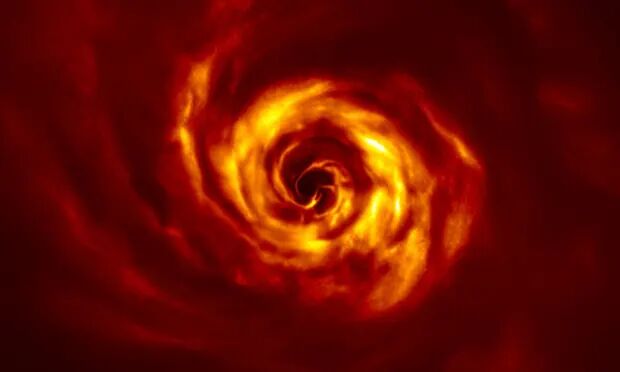
Scientists have observed an enormous planet about nine times the mass of Jupiter at a remarkably early stage of formation – describing it as still in the womb – in a discovery that challenges the current understanding of planetary formation.

The researchers used the Subaru telescope, near the summit of an inactive Hawaiian volcano, and the orbiting Hubble space telescope to detect and study the planet called AB Aurigae b, a gas giant orbiting unusually far from its young host star. Gas giants are planets, like our solar system’s largest ones Jupiter and Saturn, composed mostly of hydrogen and helium, with swirling gases surrounding a smaller solid core.

“We think it is still very early on in its ‘birthing’ process,” said astrophysicist Thayne Currie of the Subaru Telescope and the Nasa-Ames research center, lead author of the study published on Monday in the journal Nature Astronomy. “Evidence suggests that this is the earliest stage of formation ever observed for a gas giant.”

It is embedded in an expansive disk of gas and dust that bears the material that forms planets and surrounds a star called AB Aurigae. It lies 508 light years from Earth. This star had a fleeting moment of fame when its image appeared in a scene in the 2021 film Don’t Look Up.
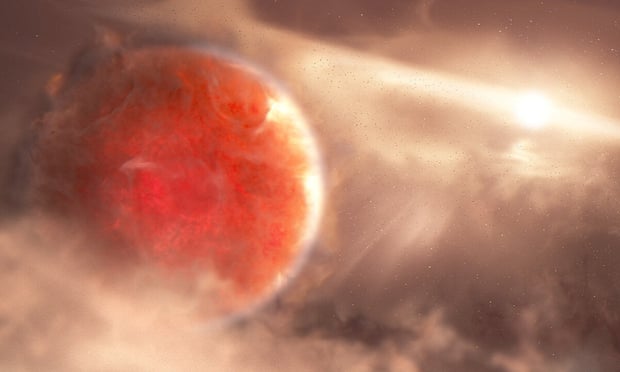
About 5,000 planets beyond our solar system, or exoplanets, have been identified. This one is among the largest. It is approaching the maximum size to be classified as a planet rather than a brown dwarf, a body intermediate between planet and star. It is heated by gas and dust falling into it.

Planets in the process of formation – called protoplanets – have been observed around only one other star.

Almost all known exoplanets have orbits around their stars within the distance that separates our sun and its most faraway planet Neptune. But this planet orbits three times as far as Neptune from the sun and 93 times Earth’s distance from the sun.

Its birth appears to be following a different process than the standard planetary formation model.

“The conventional thinking is that most – if not all – planets form by slow accretion of solids onto a rocky core, and that gas giants go through this phase before the solid core is massive enough to start accreting gas,” said astronomer and study co-author Olivier Guyon of the Subaru telescope and the University of Arizona.

In this scenario, protoplanets embedded in the disk surrounding a young star gradually grow out of dust- to boulder-sized solid objects and, if this core reaches several times Earth’s mass, then begin accumulating gas from the disk. Read More…

 

Previous Post

Astronomers observe most distant galaxy ever spotted

Next Post

Pioneering research sees scientists look at ‘growing third teeth' to replace dentures and implants

Comments