Home Upload Photo Upload Videos Write a Blog Analytics Messaging Streaming Create Adverts Creators Program
Bebuzee Afghanistan Bebuzee Albania Bebuzee Algeria Bebuzee Andorra Bebuzee Angola Bebuzee Antigua and Barbuda Bebuzee Argentina Bebuzee Armenia Bebuzee Australia Bebuzee Austria Bebuzee Azerbaijan Bebuzee Bahamas Bebuzee Bahrain Bebuzee Bangladesh Bebuzee Barbados Bebuzee Belarus Bebuzee Belgium Bebuzee Belize Bebuzee Benin Bebuzee Bhutan Bebuzee Bolivia Bebuzee Bosnia and Herzegovina Bebuzee Botswana Bebuzee Brazil Bebuzee Brunei Bebuzee Bulgaria Bebuzee Burkina Faso Bebuzee Burundi Bebuzee Cabo Verde Bebuzee Cambodia Bebuzee Cameroon Bebuzee Canada Bebuzee Central African Republic Bebuzee Chad Bebuzee Chile Bebuzee China Bebuzee Colombia Bebuzee Comoros Bebuzee Costa Rica Bebuzee Côte d'Ivoire Bebuzee Croatia Bebuzee Cuba Bebuzee Cyprus Bebuzee Czech Republic Bebuzee Democratic Republic of the Congo Bebuzee Denmark Bebuzee Djibouti Bebuzee Dominica Bebuzee Dominican Republic Bebuzee Ecuador Bebuzee Egypt Bebuzee El Salvador Bebuzee Equatorial Guinea Bebuzee Eritrea Bebuzee Estonia Bebuzee Eswatini Bebuzee Ethiopia Bebuzee Fiji Bebuzee Finland Bebuzee France Bebuzee Gabon Bebuzee Gambia Bebuzee Georgia Bebuzee Germany Bebuzee Ghana Bebuzee Greece Bebuzee Grenada Bebuzee Guatemala Bebuzee Guinea Bebuzee Guinea-Bissau Bebuzee Guyana Bebuzee Haiti Bebuzee Honduras Bebuzee Hong Kong Bebuzee Hungary Bebuzee Iceland Bebuzee India Bebuzee Indonesia Bebuzee Iran Bebuzee Iraq Bebuzee Ireland Bebuzee Israel Bebuzee Italy Bebuzee Jamaica Bebuzee Japan Bebuzee Jordan Bebuzee Kazakhstan Bebuzee Kenya Bebuzee Kiribati Bebuzee Kuwait Bebuzee Kyrgyzstan Bebuzee Laos Bebuzee Latvia Bebuzee Lebanon Bebuzee Lesotho Bebuzee Liberia Bebuzee Libya Bebuzee Liechtenstein Bebuzee Lithuania Bebuzee Luxembourg Bebuzee Madagascar Bebuzee Malawi Bebuzee Malaysia Bebuzee Maldives Bebuzee Mali Bebuzee Malta Bebuzee Marshall Islands Bebuzee Mauritania Bebuzee Mauritius Bebuzee Mexico Bebuzee Micronesia Bebuzee Moldova Bebuzee Monaco Bebuzee Mongolia Bebuzee Montenegro Bebuzee Morocco Bebuzee Mozambique Bebuzee Myanmar Bebuzee Namibia Bebuzee Nauru Bebuzee Nepal Bebuzee Netherlands Bebuzee New Zealand Bebuzee Nicaragua Bebuzee Niger Bebuzee Nigeria Bebuzee North Korea Bebuzee North Macedonia Bebuzee Norway Bebuzee Oman Bebuzee Pakistan Bebuzee Palau Bebuzee Panama Bebuzee Papua New Guinea Bebuzee Paraguay Bebuzee Peru Bebuzee Philippines Bebuzee Poland Bebuzee Portugal Bebuzee Qatar Bebuzee Republic of the Congo Bebuzee Romania Bebuzee Russia Bebuzee Rwanda Bebuzee Saint Kitts and Nevis Bebuzee Saint Lucia Bebuzee Saint Vincent and the Grenadines Bebuzee Samoa Bebuzee San Marino Bebuzee São Tomé and Príncipe Bebuzee Saudi Arabia Bebuzee Senegal Bebuzee Serbia Bebuzee Seychelles Bebuzee Sierra Leone Bebuzee Singapore Bebuzee Slovakia Bebuzee Slovenia Bebuzee Solomon Islands Bebuzee Somalia Bebuzee South Africa Bebuzee South Korea Bebuzee South Sudan Bebuzee Spain Bebuzee Sri Lanka Bebuzee Sudan Bebuzee Suriname Bebuzee Sweden Bebuzee Switzerland Bebuzee Syria Bebuzee Taiwan Bebuzee Tajikistan Bebuzee Tanzania Bebuzee Thailand Bebuzee Timor-Leste Bebuzee Togo Bebuzee Tonga Bebuzee Trinidad and Tobago Bebuzee Tunisia Bebuzee Turkey Bebuzee Turkmenistan Bebuzee Tuvalu Bebuzee Uganda Bebuzee Ukraine Bebuzee United Arab Emirates Bebuzee United Kingdom Bebuzee Uruguay Bebuzee Uzbekistan Bebuzee Vanuatu Bebuzee Venezuela Bebuzee Vietnam Bebuzee World Wide Bebuzee Yemen Bebuzee Zambia Bebuzee Zimbabwe
Blog Image

Astronomers observe most distant galaxy ever spotted

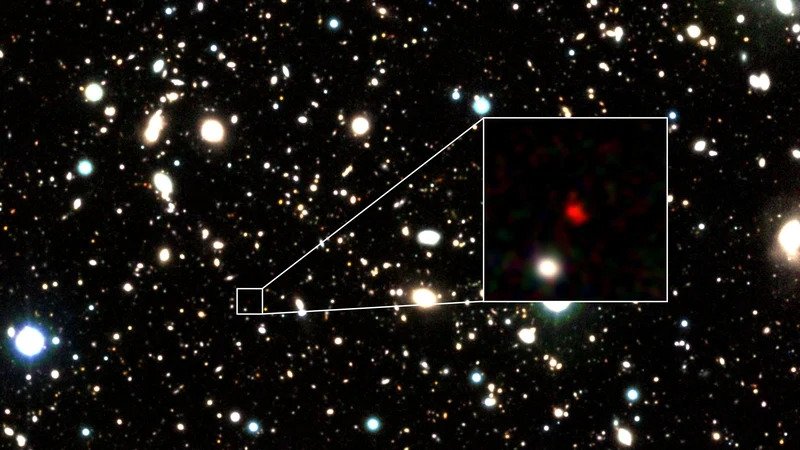
Astronomers have spotted what could be the most distant astronomical object ever seen - a galaxy.

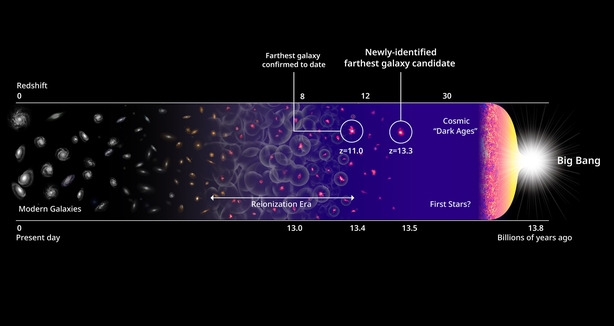
Named HD1, the galaxy candidate is some 13.5 billion light-years away, and scientists are speculating what exactly it is.

Researchers propose two ideas, with the first being that HD1 may be forming stars at an astounding rate and is possibly even home to the universe's very first stars known as Population III stars - which have never been observed.

Alternatively, HD1 may contain a supermassive black hole about 100 million times the mass of the Sun, the scientists suggest.

The observation is described in the Astrophysical Journal, while the descriptions of what it could be are detailed in an accompanying paper published in the Monthly Notices of the Royal Astronomical Society Letters (MNRAS).

Yuichi Harikane, an astronomer at the University of Tokyo who discovered it, said: "It was very hard work to find HD1 out of more than 700,000 objects.

"HD1's red colour matched the expected characteristics of a galaxy 13.5 billion light-years away surprisingly well, giving me a little bit of goose bumps when I found it."
Fabio Pacucci, lead author of the MNRAS study, co-author in the discovery paper, and an astronomer at the Centre for Astrophysics Harvard & Smithsonian, said: "Answering questions about the nature of a source so far away can be challenging.

"It's like guessing the nationality of a ship from the flag it flies, while being faraway ashore, with the vessel in the middle of a gale and dense fog.

"One can maybe see some colours and shapes of the flag, but not in their entirety. It's ultimately a long game of analysis and exclusion of implausible scenarios."

According to the study, HD1 is extremely bright in ultraviolet light.

At first, the researchers assumed it was a standard starburst galaxy - one that is creating stars at a high rate.

But after calculating how many stars HD1 was producing, the astronomers found it would be forming more than 100 stars every single year.

This is at least 10 times higher than what would be expected for these galaxies, and therefore the researchers started suspecting HD1 might not be forming normal, everyday stars.

Dr Pacucci said: "The very first population of stars that formed in the universe were more massive, more luminous and hotter than modern stars.

"If we assume the stars produced in HD1 are these first, or Population III, stars, then its properties could be explained more easily.

"In fact, Population III stars are capable of producing more UV light than normal stars, which could clarify the extreme ultraviolet luminosity of HD1."

But a supermassive black hole could also explain the extreme brightness of HD1.

If that is the case it would be by far the earliest supermassive black hole known to humankind, observed much closer in time to the Big Bang compared with the current record-holder.

Avi Loeb, an astronomer at the Centre for Astrophysics and co-author on the MNRAS study, said: "HD1 would represent a giant baby in the delivery room of the early universe."

HD1 was discovered after more than 1,200 hours of observing time with the Subaru Telescope, Vista Telescope, UK Infrared Telescope and Spitzer Space Telescope. Read More...


Previous Post

Meet four civilians set to become first private astronauts to stay, work on Space Station

Next Post

Rare glimpse of giant planet still ‘in the womb' yet nine times the mass of Jupiter

Comments