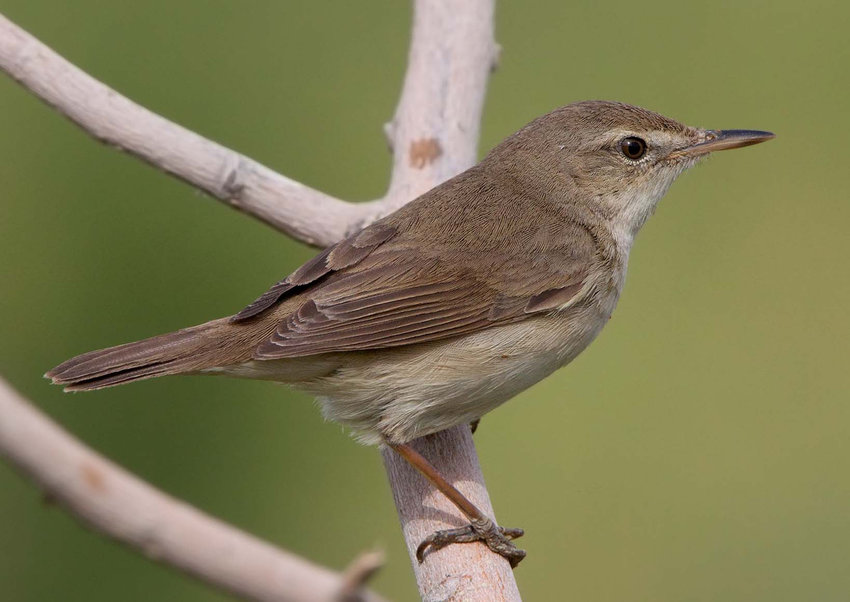
Rare Sighting of Blyth’s Reed Warbler in Hungary
-
 Loading...
 - Elke Christoph
- 31 Jul 2024
- 48 Views
- 0 Like
- 0 Comment
A rare migratory bird, the Blyth’s reed warbler (Acrocephalus dumetorum), has been spotted at a lake in Dávod, on the border of Baranya and Bács-Kiskun counties in southern Hungary. The Baranya county news portal, Bama.hu, reported that a conservation officer, Attila Mórocz, captured and ringed the bird at the Dávod Bird Ringing Station in mid-July.
On the first day of the summer-autumn bird migration research, the old male Blyth’s reed warbler delighted experts during the early morning net check. After thorough documentation and recording of numerous biometric data, the bird was released back into the wild, the Danube-Drava National Park noted.
According to Mórocz, the Blyth’s reed warbler is an extremely rare migratory bird in Hungary, with only eight recorded sightings in the country. The bird nests from Scandinavia and the Baltic States through Russia to central Siberia and winters in Asia, southern India, and Sri Lanka. Named after British zoologist Edward Blyth, this small migratory bird is typically found in thickets near water but not in swamps. It lays 4-6 eggs in a nest in a bush and is a medium-sized warbler, measuring 12.5-14 cm long. The adult is smooth brown on the back and pale underneath, making it easily confused with the reed warbler, the marsh warbler, and some of the Hippolais warblers. Like most warblers, it is insectivorous but will also eat other small food items, including berries.
Conservation and Importance
The presence of such a rare bird species in Hungary underscores the importance of ongoing conservation efforts and bird migration studies. The sighting not only adds valuable data to the ornithological records but also emphasizes the need to protect natural habitats that support diverse bird species.
The Danube-Drava National Park, along with other conservation bodies, continues to play a crucial role in monitoring and preserving Hungary’s rich avian biodiversity. The sighting of the Blyth’s reed warbler is a testament to the effectiveness of these efforts and the richness of the region's natural heritage.
By documenting and sharing these sightings, conservationists can raise awareness about the significance of maintaining and protecting habitats that are crucial for the survival of migratory birds and other wildlife.