Razer's Kishi V2 is an improved yet even more imperfect controller
-
 Loading...
 - Maxime Jacobs
- 04 Jul 2022
- 109 Views
- 0 Like
- 0 Comment
With the Kishi mobile controller that launched in mid-2020, Razer succeeded in turning phones into pseudo-Nintendo Switch consoles. It offered a clever design that sandwiched your phone in the middle of two controllers. Not to mention, it was a more comfortable, console-like way to play mobile games, as well as cloud streaming services, like xCloud, Stadia, and more. Now, with the $99 Kishi V2, it seems like Razer’s goal was to get a leg up on a competitor who did it all better on its first try: Backbone.
That one-hit wonder of a company swooped in after the Kishi launched with an even more formidable mobile controller for iPhone, the $99 Backbone One. It featured a simpler, cozier design, more functionality, and an interface that felt just shy of a full-blown console operating system. It turned gaming on the phone into a more fleshed-out experience, making the Kishi’s value proposition weaker and a lot less interesting by comparison.
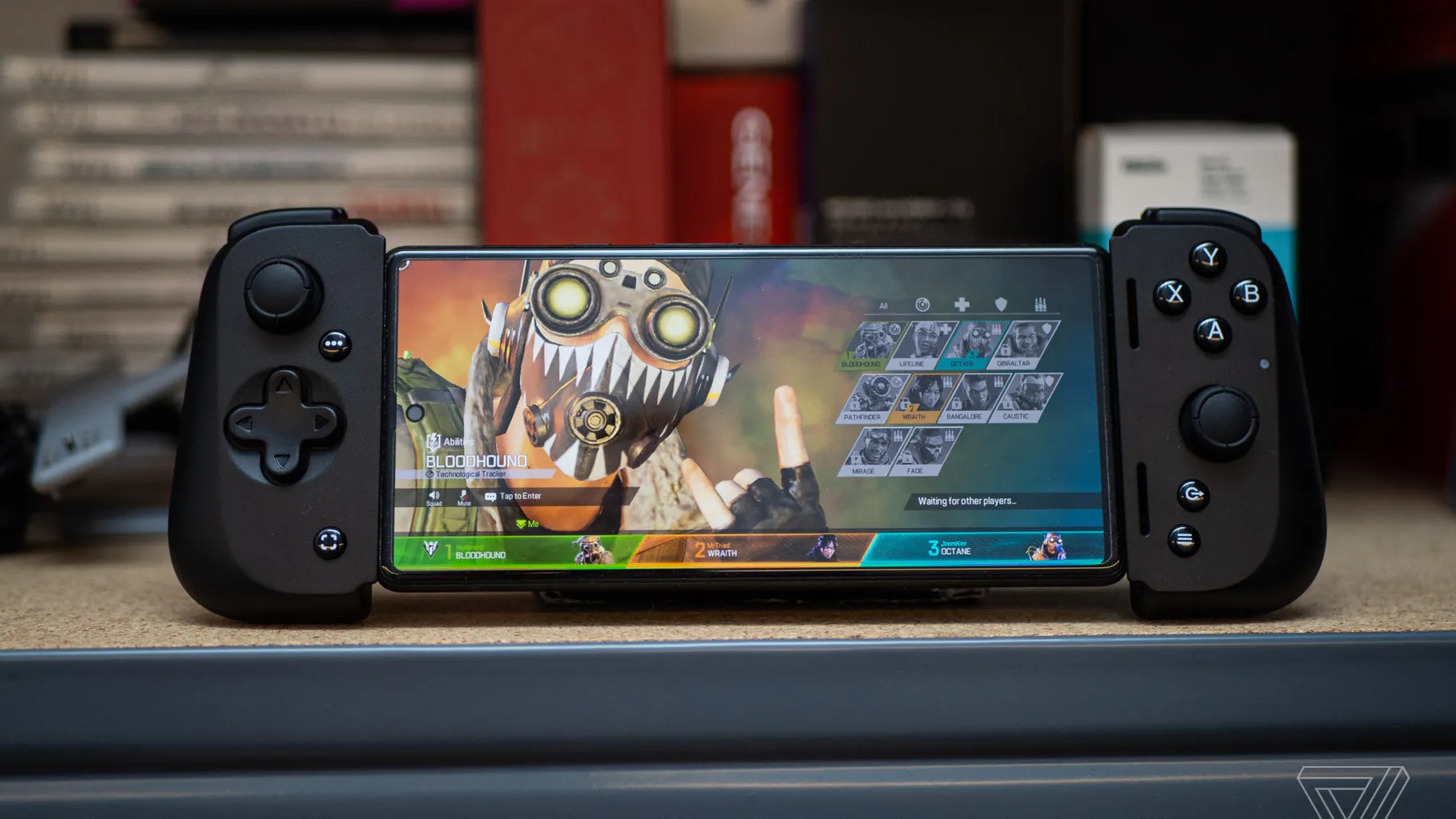
So, with the Kishi V2, Razer decided to ditch its first-gen design for something very similar to the Backbone One. There isn’t much here that Razer can take much credit for. The V2 has a similarly minimalist design to the Backbone and the same kind of pull-to-extend bridge mechanism to let you slot your phone into its split controller arrangement. The in-game capture button is here on the left side, along with an options button on the right, and there’s a new button that takes you to — yes — Razer’s own spin on a gaming dashboard called Nexus. It’s not mandatory that you use it, but it’s there.
There are some key perks that the Kishi V2 has over Backbone’s controller. The big one is that the Kishi V2 is made for Android. There’s also an iOS version coming later in 2022. Backbone (frustratingly) hasn’t made a version of its controller with USB-C, unless you count that subscribers to its paid service can connect it to an Android device with a Lightning-to-USB-C cable. If you play mobile games with complex control schemes, Razer’s new model features two extra programmable shoulder buttons — one on each side. Those can be remapped within the Nexus app.
:format(webp):no_upscale()/cdn.vox-cdn.com/uploads/chorus_asset/file/23663800/cfaulkner_220630_5324_0003.jpg)
Each side of the controller features a programmable macro key, which might come in handy for you.
And while Backbone’s design hit its limit with the iPhone 13 Pro Max’s giant camera bump (it offered free 3D-printed adapters to make it work), the Kishi V2 includes adjustable rubber inserts to broaden its compatibility with Android phones and their various camera bump dimensions — even those in thin cases. The full list of supported phones includes both Razer phones; Samsung’s Galaxy S8 through the S22; the Galaxy Note 8 through 20; Google Pixel 2 through 6; and “many other Android devices.” It supports up to 11.5mm-thick devices, including a camera bump — I was surprised that I had to take my Pixel 6 out of its thin (and yellowing) official Google case to make it fit. Read More...