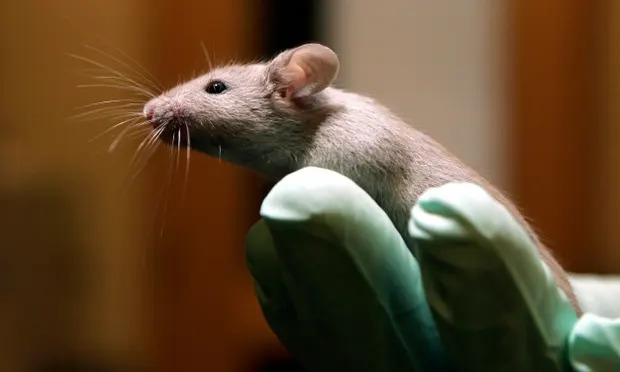
Recovery of mice raises hopes drug could help people with spinal injuries

Mice with spinal cord injuries have shown remarkable recovery after being given a drug initially developed for people with lung disease, researchers have revealed, saying the treatment could soon be tested on humans.
It is thought there are about 2,500 new spinal cord injuries in the UK every year, with some of those affected experiencing full loss of movement as a result. Despite a number of promising areas of research, at present damage to the spinal cord is not reversible.
Now researchers at the University of Birmingham say a drug called AZD1236, initially developed to treat chronic obstructive pulmonary disease in humans, has shown promise in mice with spinal cord compression injuries, a type of injury often associated with motor accidents in humans, but which is also linked to conditions such as osteoarthritis. A similar drug, called AZD3342, showed comparable benefits in rats.
The results, published in the journal Clinical and Translational Medicine, suggested the drugs block the action of enzymes known as MMP-9 and MMP-12 that rise after spinal cord injury. The upshot was that swelling of the spinal cord was reduced, levels of proteins linked to inflammation and pain were lowered, and breakdown of the blood-spinal cord barrier was limited. Scarring of connective tissue was also reduced.
The team said that compared with injured mice not given AZD1236, those given the drug for three days showed 85% improvement in movement and sensation six weeks after the spinal injury, while their nerve function was 80% of that seen in uninjured mice. Furthermore, the benefits were similar whether the drug was given immediately after spinal injury or 24 hours later.
“What we’re doing is we’re dampening down the damage to the nerve tissues. That way, we’re preserving more and more of the neurons,” said Prof Zubair Ahmed of the University of Birmingham, a co-author of the study.
Ahmed said the findings were exciting, adding that because AZD1236 had already been shown to be safe in humans, it could enter human trials sooner. Read More…