Rembrandt Paintings Reunited in Denmark After 223 Years
-
 Loading...
 - Daley Adron
- 04 Sep 2024
- 50 Views
- 0 Like
- 0 Comment
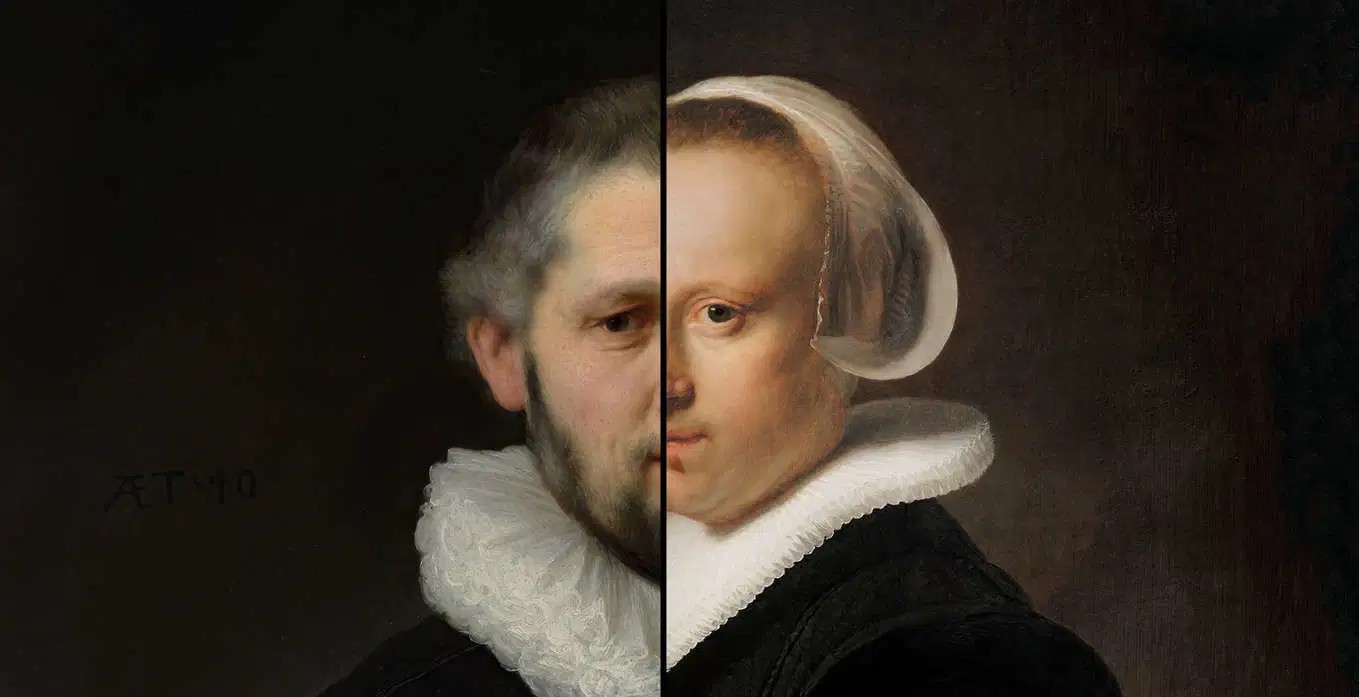
In a historic moment, two Rembrandt paintings, separated for 223 years, have been reunited in Denmark as part of an exhibition titled "Rembrandt Reunited" at the Nivaagaard Painting Collection in Copenhagen. The two portraits, "Portrait of a 39-year-old Woman" and "Portrait of a 40-year-old Man", were previously in the same private collection but were sold separately in Paris in 1801. The reunion aims to solve the long-standing question of whether Rembrandt originally painted the two portraits as a pair, specifically as husband and wife, in 1632.
The exhibition brings together researchers, art historians, and scholars to compare the results of technical analyses, archival documents, and a side-by-side examination of the two portraits. A research seminar will be held on September 2, followed by the public opening of the exhibition, which will run from September 3 to November 10, 2024.
The history of the two paintings dates back to 120 years ago when Johannes Hage, a landowner in Nivå, Denmark, purchased the "Portrait of a 39-year-old Woman" from 1632, which is now part of the Nivaagaard Collection. Throughout history, it has been suggested that the work may have been a counterpart to the same artist's male portrait, the "Portrait of a 40-Year-Old Man", which belongs to the Metropolitan Museum of Art in New York.
Recent studies, led by Dr. Angela Jager of the RKD-Dutch Institute for Art History and Rembrandt specialist Jørgen Wadum, have been conducted to solve the riddle of the connection between the two works. The Metropolitan Museum of Art has agreed to lend its work to the Nivaagaard Paintings Collection in 2024, allowing the two Rembrandt paintings to be reunited.
The results of the latest research, combined with an art-historical assessment of the paintings side by side, will finally lead to a truthful historiography about the two Rembrandt portraits. Museum visitors will have the opportunity to experience firsthand what is imagined to be the definitive writing of history.
Both works are painted on oak panels, are oval in shape, and have almost identical inscriptions to the left and right of the figures. Ongoing research on the Nivaagaard Collection has examined the female portrait using multispectral imaging, which confirmed the authenticity of the inscriptions. Scholars were puzzled by a subtle change in the format of the female portrait, which was increased by several centimeters all around. To compare the provenance of the oak panels and their character in Nivaagaard's portrait with the male portrait in the Metropolitan Museum of Art, an extraordinary scan of the female portrait was performed.
The technical studies will be combined with an art-historical evaluation to compare the results of the scans, the nature of the inscriptions, the dendrochronological analysis of the oak panels on both paintings, and so on. Based on the analysis and provenance studies, researchers will be able to assess whether they are counterparts or not, after a new stylistic and compositional evaluation of the two paintings next to each other.