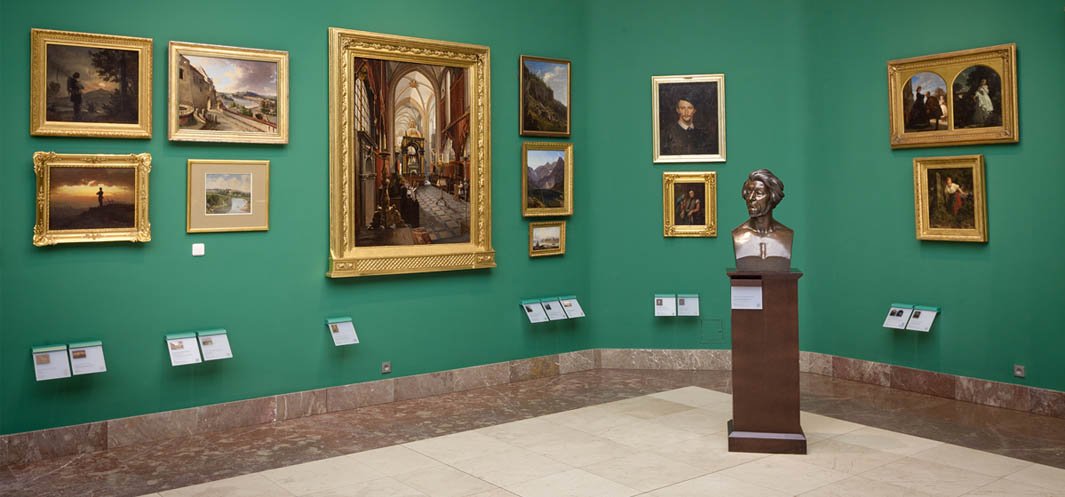
The Gallery of 19th-Century Polish Art in the Sukiennice - The Michałowski Room
-
 Loading...
 - Kane Prince
- 04 Sep 2024
- 53 Views
- 0 Like
- 0 Comment
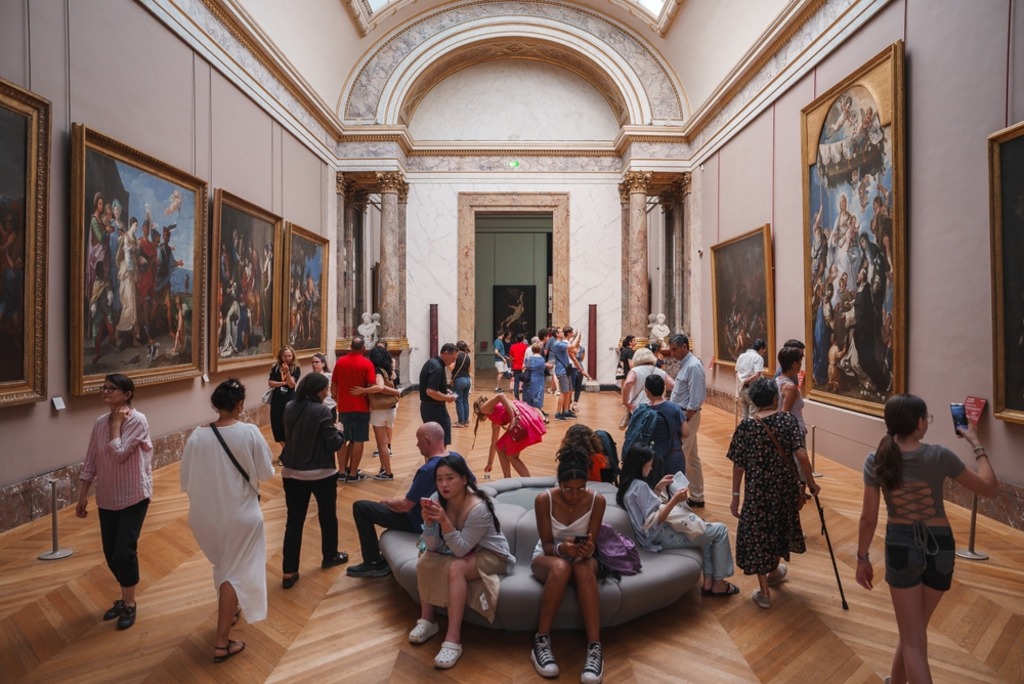
The 19th century in Poland was a time of significant cultural and artistic development, despite the country's political struggles. The Gallery of 19th-Century Polish Art in the Sukiennice, specifically the Michałowski Room, showcases some of the most important works of Polish Romanticism.
Polish Romanticism emerged in the early 19th century, around the time Poland lost its independence (1795). The movement's development took place between 1822 and 1863, encompassing the publication of Adam Mickiewicz's poetry and the collapse of the January Uprising. The painting and sculpture of Polish Romanticism were characterized by a variety of approaches and creative experiments, resulting in a thematic and stylistic diversity of works. However, the most important feature of these works was their patriotic and pro-independence nature.
The Michałowski Room in the Gallery features works by prominent painters such as Piotr Michałowski, Henryk Rodakowski, Wojciech Korneli Stattler, Teofil Kwiatkowski, Artur Grottger, and Leon Kapliński. These artists' works are juxtaposed with those of less prominent artists who illustrated current historical events, such as Michał Stachowicz, Teodor Baltazar Stachowicz, January Suchodolski, and Franciszek Faliński.
The so-called 'sentimental sights' are also represented in the gallery, featuring landscapes and depictions of cities or monuments of great importance for the national history and culture. Works by Jan Nepomucen Głowacki, Aleksander Płonczyński, and Saturnin Świerzyński are examples of this theme.
Polish art of the Romanticism period was of ideological nature, attuned to public demand. It conveyed contents centered around national issues, not comprehensible to everyone, hermetic, but stylistically close to the trends in European art of that time. The movement was dominated by the influence of French Romanticists and inspired by artistic circles in Dresden, Saint Petersburg, Vienna, Munich, and Rome.
The shift towards national history prompted the development of history painting, while the legacy of Romanticism in Polish art was visible in growing realistic tendencies. These tendencies highlighted the unbiased and factual way of depicting reality, while interest in native landscape and the people resulted in a dynamic development of landscape and genre painting. In many respects, Romanticism in Polish art continued ceaselessly until the end of the century.
In summary, the Gallery of 19th-Century Polish Art in the Sukiennice - The Michałowski Room, showcases some of the most important works of Polish Romanticism, highlighting the movement's patriotic and pro-independence nature, as well as its influence on Polish art throughout the 19th century.