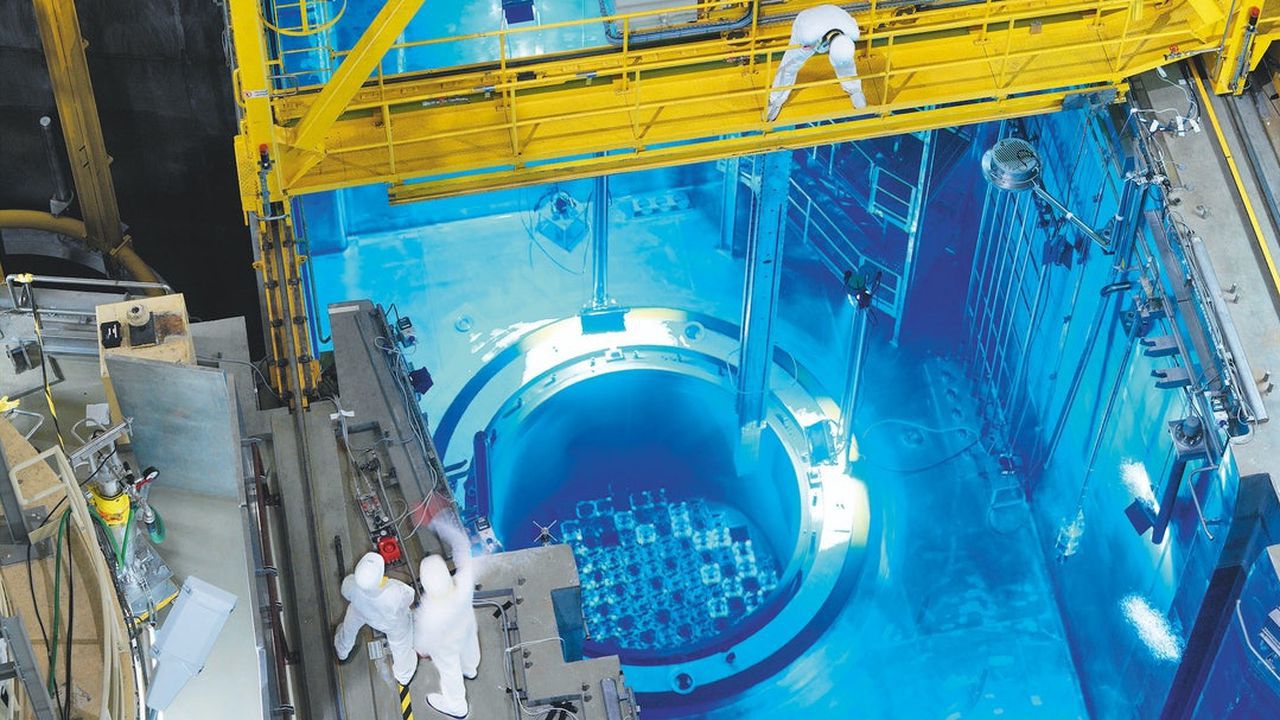
Reprieve for two of Belgium's nuclear reactors
-
 Loading...
 - Julien Heeren
- 23 Mar 2022
- 400 Views
- 0 Like
- 0 Comment
After a meeting that start on Friday morning and didn’t conclude until well into the evening Belgium’s Federal Government has reached what it says will be its final decision on the future of the country’s nuclear energy production capacity.
At the end of last year, it seemed that all the country’s nuclear reactions would be decommissioned by the end of 2025. However, speaking at the press conference that followed Friday’s lengthy meeting, the Federal Prime Minister Alexander De Croo (Flemish liberal) said that his government had opted “for certainty in uncertain times”. He added that “for too long our vision on energy has been lacking”.
The Federal Government has now decided to take the necessary steps to extend the life of the Doel 4 and Tihange 3 nuclear reactors for an additional ten years. The reactors have a combined production capacity of 2GW.
The Federal Government is keen to stress that the extension of the life of the two nuclear reactors won’t have any adverse impact on the transition towards greater reliance on renewable energy sources. Consequently, one of the avenues that is to be explored is whether in the case of overproduction the nuclear reactors could also be used to kick-start the hydrogen enegy market in Belgium.
Also, at Friday’s meeting it was decided to give the go-ahead for the construction of two new gas-fired power stations. Both will be in Wallonia with the first at Awirs (Liège Province) and the second at either Seraing (Liège Province) or Manage (Hainaut).
1.16 billion in investments
The Federal Government also intends to invest 1.16 billion euro to accelerate the reduction in our dependence on fossil fuels. The government will, among other things, invest in wind energy. An increase in the offshore wind energy production capacity at the Princess Elisabeth Wind Farm will be accelerated.
Meanwhile, obstacles to the construction new onshore and offshore wind energy production capacity will be removed and the existing electricity production will be increased through technical advances. Cooperation with neighboring countries will also be strengthened, the aim being that a single integrated offshore network will be operational more quickly. These measures reinforce Belgium’s commitment to triple the offshore wind capacity in the Belgian sector of the North Sea.
Hydrogen and solar panels
Extra efforts will also be made to accelerate the transition towards energy produced from hydrogen and to develop a hub for the import and transit of green hydrogen fuel.
There will also be a reduction in the level VAT on solar panels from 21% to 6% percent. The VAT reduction will apply to homes less than ten years old. The VAT for heat pumps and solar boilers will also be reduced to 6% for homes less than ten years old. Where possible, solar panels will also be installed on the roofs of Federal Government buildings.
25 million per annum for SMR research
The Federal Government also reaffirmed its commitment to research on small modular nuclear reactors (SMRs). Belgium is a world-leader when it comes to expertise in the field of new nuclear technologies. During the next four years an annual budget of 25 million euro/annum will be available for research in this field. Read More...