Spanish scientist nervous about her turn to use Webb telescope
-
 Loading...
 - Albert Bradley
- 23 Mar 2022
- 396 Views
- 0 Like
- 0 Comment
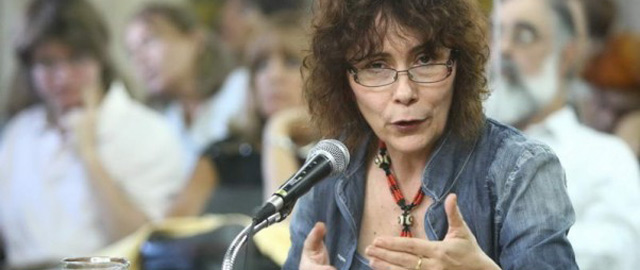
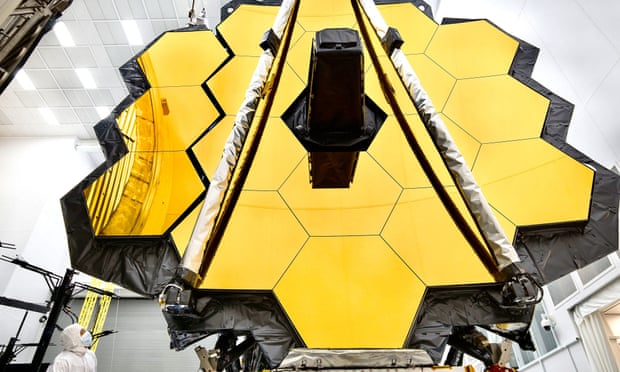
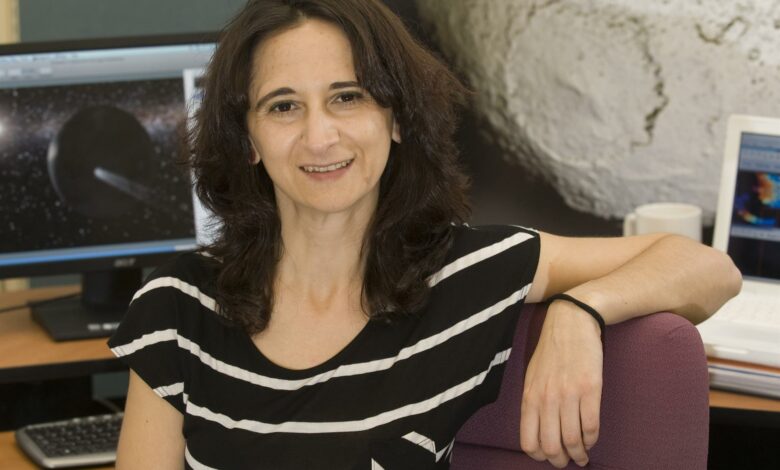
The James Webb Space Telescope, the largest telescope ever sent into space, recently finished deploying its 18 hexagonal mirrors covered in a microscopically thin layer of gold, and Spanish planetary scientist Noemi Pinilla Alonso is now nervously and impatiently waiting for her turn to use the complex instrument to explore the composition and origin of objects beyond the orbit of the planet Neptune.
“The study will give us data about the first stages of formation and evolution of the Solar System,” Pinilla told EFE in an interview.
“The objects in Kuiper Belt, also known as trans-Neptunian objects, are frozen time capsules that will give us knowledge about the gas and dust cloud that formed the Solar System,” she said.
The unmanned Webb telescope, launched on Dec. 25, 2021, is now at its planned destination 1.6 million kilometers (1 million miles) from Earth, and at the beginning of March it finished deploying and aligning its 18 mirrors made of beryllium covered with gold that now form a single mirror 6.5 meters (21.3 feet) in diameter.
Pinilla, who has worked at the University of Central Florida’s Space Institute since 2015, is the lead investigator on one project and co-investigator on two others that will use the quota of time allocated on the Webb ‘scope to study the heavenly bodies that orbit the Sun beyond the orbit of the gas giant Neptune, the farthest known planet from the Sun since Pluto’s planetary status was rescinded in 2006.
In 2017, the Telescope Allocation Committee issued a call for research proposals using the Webb and by the end of 2020 the group had received more than 1,100 from 44 countries, totaling more than 24,000 hours of use on the huge telescope.
The committee made up of 200 astronomical experts from all over the world, approved 286 proposals and allocated a total of 6,031 hours of telescope use, with Pinilla receiving 100 hours.
“It’s a complicated system for assigning time to users,” Pinilla said. “It takes time to prepare and to aim (the telescope). We made a list of 59 trans-Neptunian objects (to observe) and we need them all.”
Her team also includes Charles Schambeau and Brazilians Ana Carolina de Souza Feliciano and Mario De Pra, all of whom are scientists working at the Florida Space Institute.
“In the coming months we’ll get into the first cycles of observation focused on determining what the Solar System’s small bodies are made of,” said Pinilla, who in 2009 obtained her doctorate in astronomy and astrophysics at Spain’s Universidad de La Laguna.
“It’s a variety of objects and what we’re looking for is to understand not only what the largest are made of but also the smallest,” she said.
“Each individual object will give us information about its composition while the study of the entire sample will round out knowledge of the entire region,” she emphasized. Read More…