Romanian Food: 40 Traditional Dishes to Look For in Bucharest
-
 Loading...
 - Rosie Payne
- 13 Jan 2022
- 493 Views
- 0 Like
- 0 Comment
The legend of Vlad Dracula is the most famous but there are so many compelling reasons to visit this lesser known gem in southeastern Europe. Romania’s medieval castles and painted monasteries are must-visits while its Carpathian Mountains and pastoral countryside offer much to adventure seekers and nature lovers.
If you thrive in big cities, then you’ll want to spend a good chunk of your time in Bucharest. Once nicknamed “Little Paris” and now touted as the “new Berlin”, Romania’s capital buzzes with excitement and is perhaps one of the most underrated cities in Europe.
And then there’s the food.
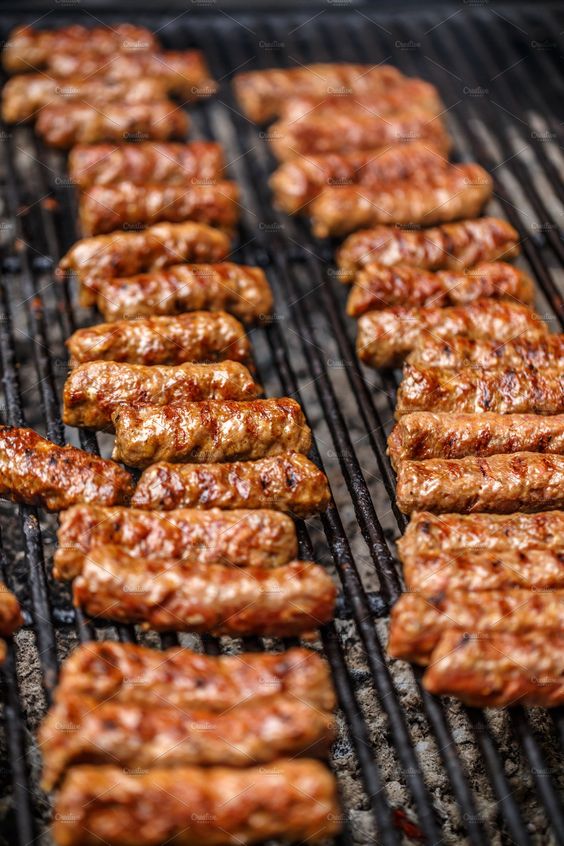
If you travel to eat like we do, then mouthwatering dishes like mititei, ciorbă, pasca, and sarmale will give you even more reasons to visit Bucharest and Romania. In fact, this Romanian food guide will give you forty! Poftă bună!
WHAT IS TRADITIONAL ROMANIAN FOOD?
Romanian food is a mix of local Dacian traditions and foreign influences, mostly from ancient Roman, Turkish, Hungarian, and Balkan cuisines.
Ancient Dacians existed on a diet consisting mostly of roasted meats, fruits, honey, and aromatic wines. They excelled at breeding cattle and growing crops but they weren’t as skilled at preparing dairy products. They drank raw sheep’s and cow’s milk and ate their vegetables boiled.
Because of the country’s prime geographic location, ancient Romanians were always under the threat of invasion so they learned to eat on the move. They became accustomed to eating raw herbs and salad vegetables and dry curing raw meat.
The Roman occupation brought with it dishes and culinary techniques like pastries (plăcintă, pască), soups, breads, and cold-pressed olive oil. This was followed centuries later by the Ottoman influence and the introduction of now common dishes like meatballs, kebabs, sour soups (ciorbă), stuffed peppers (ardei umpluţi), cabbage rolls (sarmale), and Turkish delight.
From the 1700s onwards, Romanian food started to become more westernized and modernized with Austro-Hungarian, Russian, French, Greek, and Italian influences making their way into different parts of the country.
Sadly, with the arrival of communism in 1947, Romanian gastronomy took a step back with the censorship and elimination of western influences. Even after it ended, this difficult period left a lasting imprint on the culinary sensibilities of Romanians. Many craved the novelty and slick branding of international fast food at the expense of classic Romanian cuisine.
STARTERS / SALADS / SIDES / SNACKS
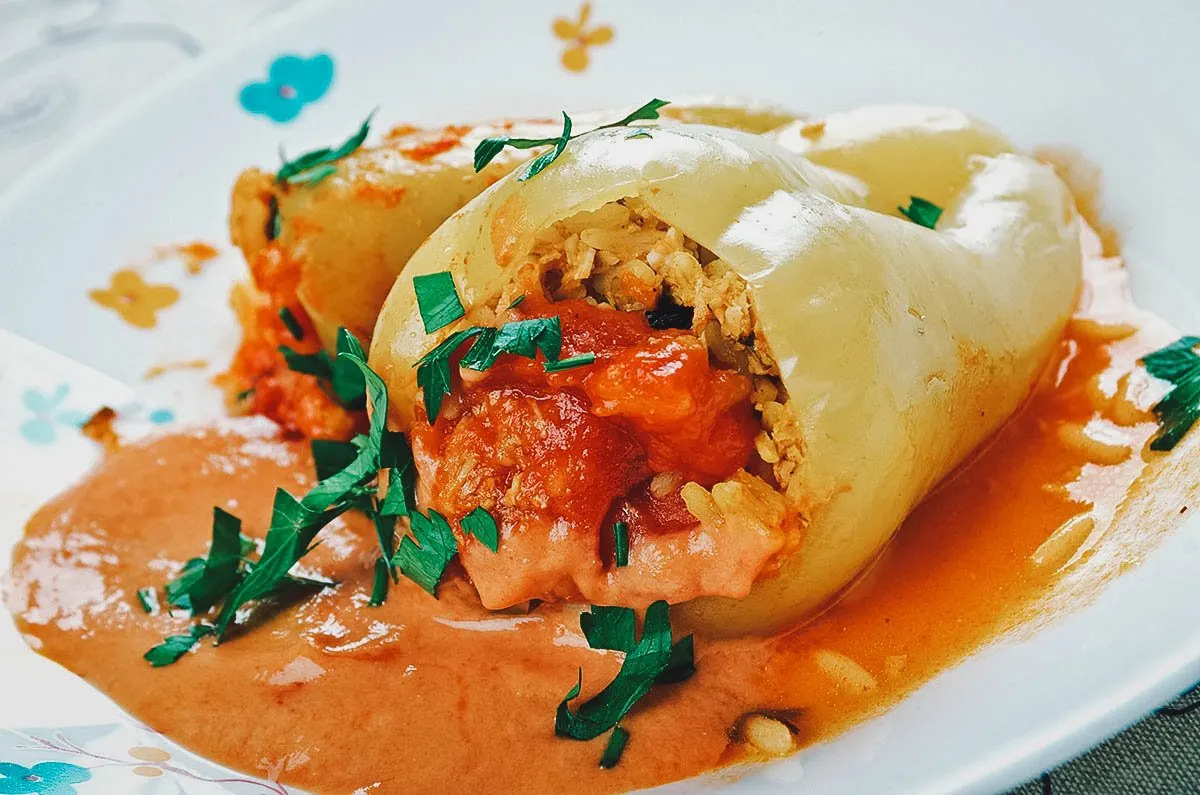
1. Ardei Umpluţi
If you enjoy Balkan food, then this first Romanian dish will be familiar to you. Ardei umpluÅ£i means “stuffed pepper” in Romanian and refers to the local version of dolma, a popular dish consisting of hollowed-out peppers stuffed with ground meat and rice.
Stuffed peppers are popular in many countries throughout the Balkans and beyond like Bosnia and Herzegovina, Serbia, Croatia, Albania, Georgia, and Armenia. They can be made with any type of vegetable but in Romania, ardei umpluţi refers specifically to yellow bell peppers stuffed with a filling of ground pork, white rice, herbs, garlic, and spices. Depending on the cook, it can be stuffed with other ingredients as well like mushrooms, cheese, carrots, and tomatoes.
After stuffing, the peppers are traditionally boiled in a tomato sauce with bay leaves and seasonings before being served with a dollop of sour cream or yogurt.
2. Salată de Boeuf
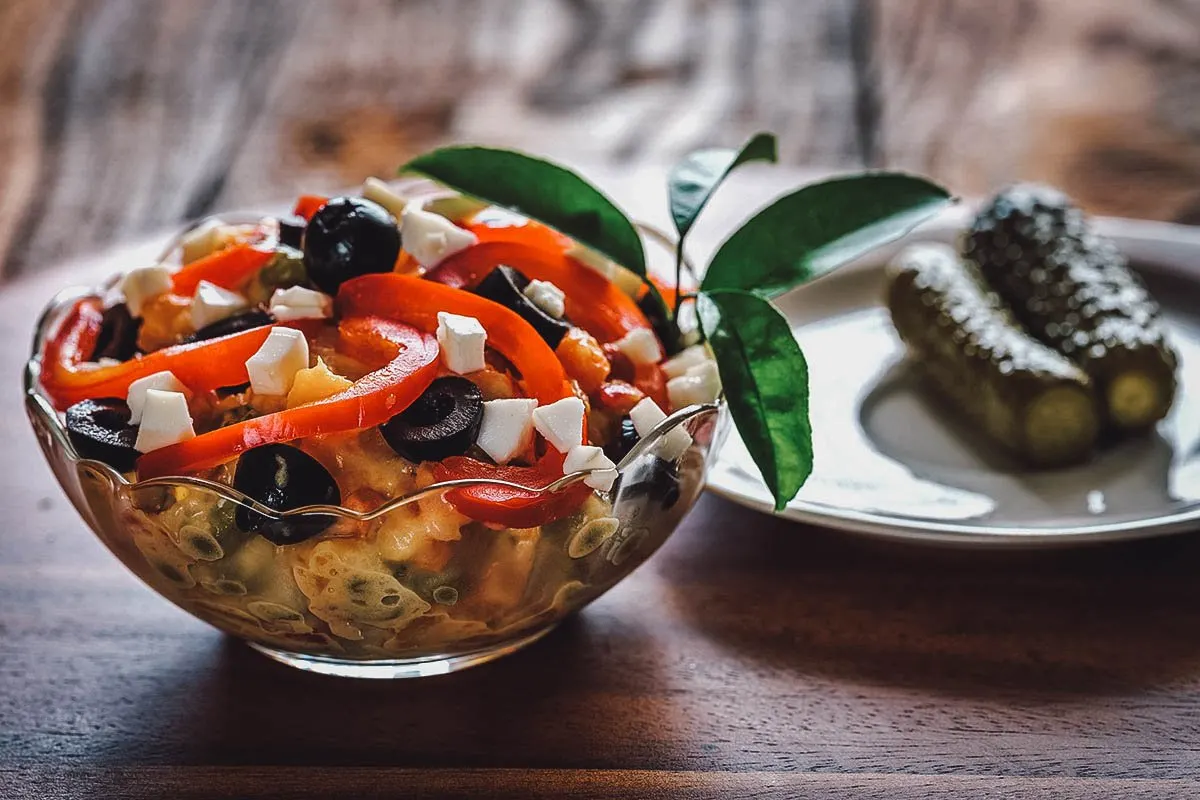
Salată de boeuf literally means “beef salad” and refers to the Romanian equivalent of olivye salad, more commonly known as Russian salad. It’s a type of potato salad that was invented and popularized by Chef Lucien Olivier, a Russian chef of Belgian and French descent who offered the salad at his Hermitage restaurant in Moscow in the 1860s.
As its name suggests, salată de boeuf was traditionally made with beef but these days, it can be made with any available proteins like chicken, turkey, or ham. They’re mixed with finely diced potatoes, root vegetables, and murături (Romanian pickled vegetables) before being smothered in mayonnaise and garnished with bits of vegetables and hard-boiled eggs.
Like sarmale (stuffed cabbage rolls), salată de boeuf is typically a holiday dish in Romania. It’s often prepared to celebrate the Christmas, New Year, and Easter seasons.
3. Salată de Vinete
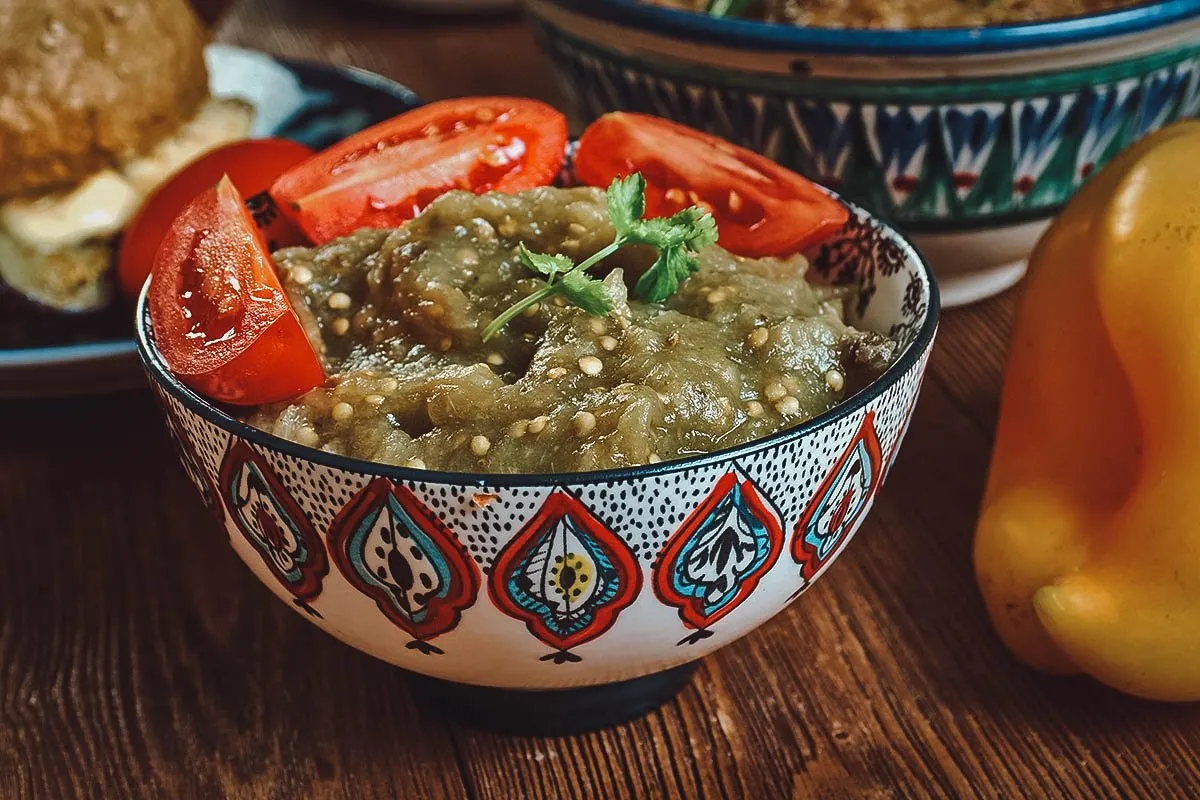
Salată de vinete is a popular Romanian eggplant salad or dip made with roasted and puréed aubergine mixed with sunflower oil, lemon juice, and salt. It’s very similar to Lebanese baba ghanoush except it isn’t made with any tahini (toasted sesame seed paste).
Salată de vinete typically contains just four ingredients – eggplant, lemon juice, sunflower oil, and salt – but it can be made with additional ingredients as well like garlic, onions, and homemade mayonnaise. It’s typically enjoyed in the summer with crusty bread and slices of fresh tomatoes.
4. Ardei Copți
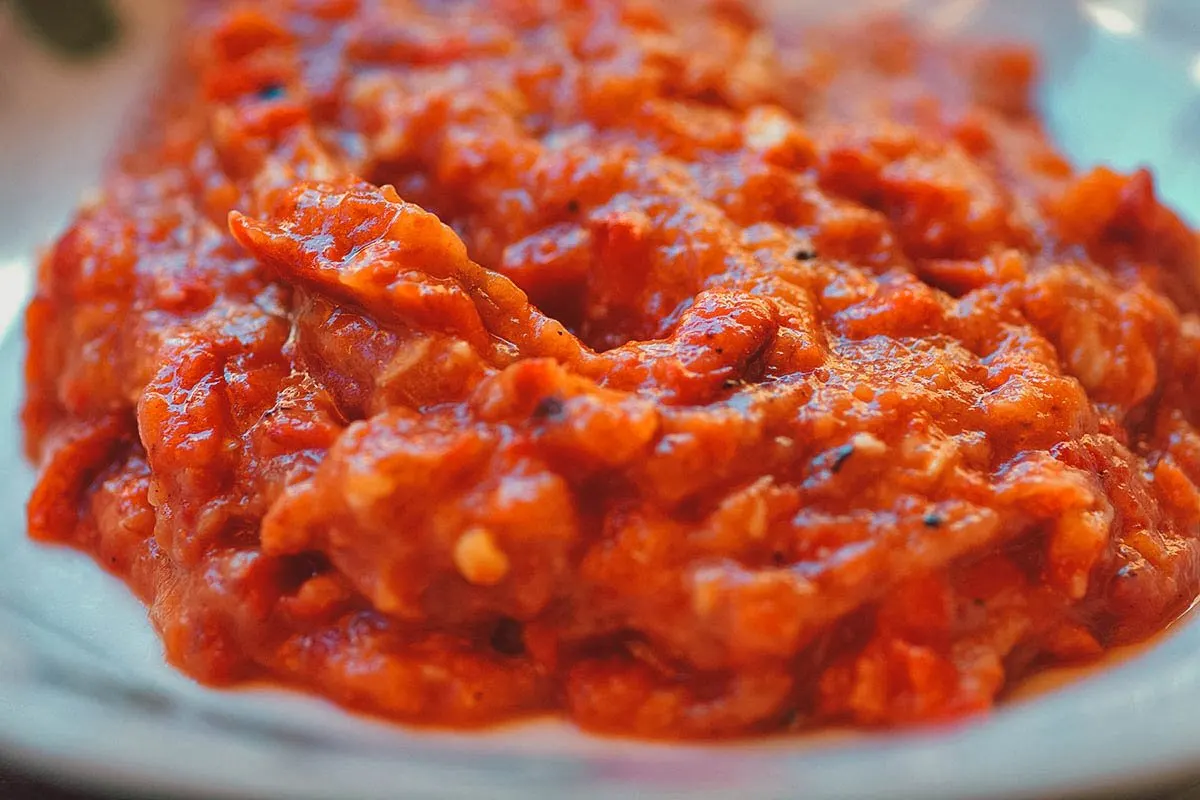
Ardei copÈ›i refers to a type of Romanian roasted pepper salad. It’s a simple side dish or spread made with roasted bell peppers seasoned with salt and doused in a mixture of vinegar and olive oil. Optionally, it can be topped with slices of garlic before serving.
Ardei copți pairs well with salată de vinete and makes a delicious accompaniment to Romanian meat dishes and crusty bread.
5. Varză Călită
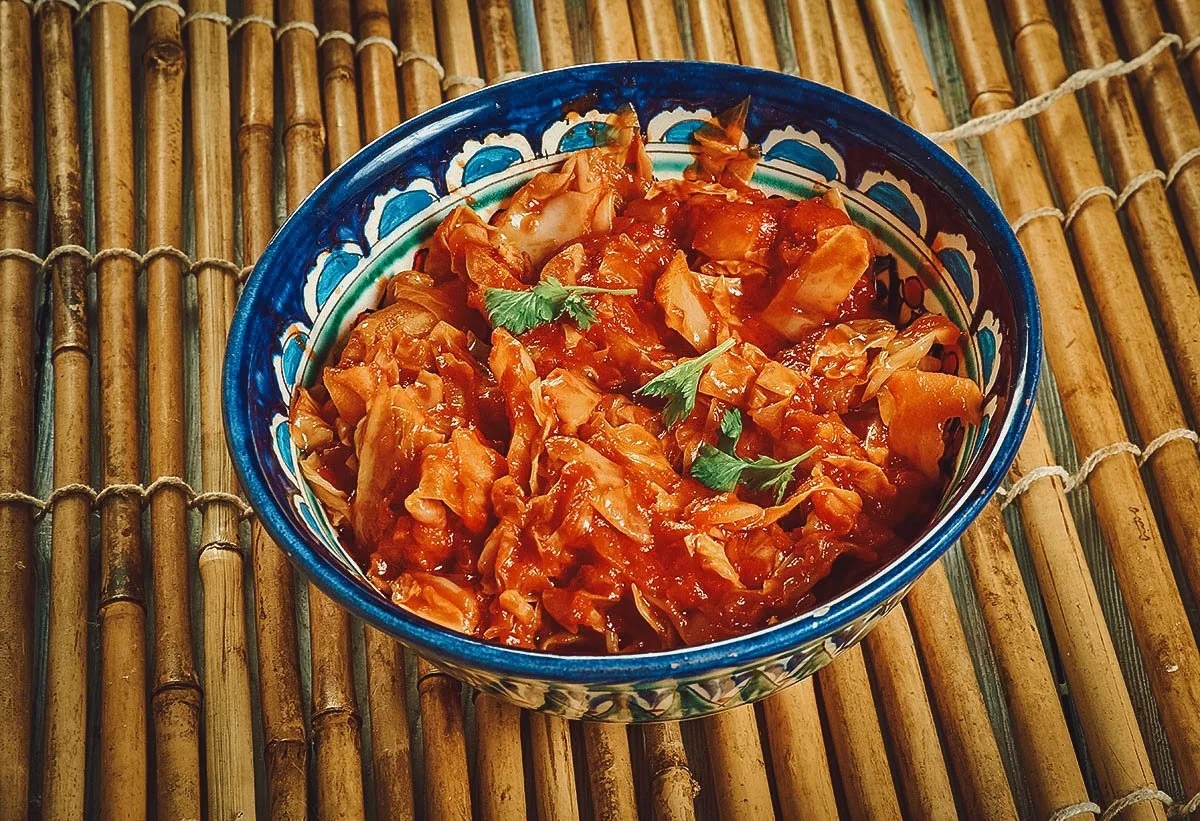
Varză călită literally means “stewed cabbage” and refers to a type of braised sauerkraut served at many Romanian restaurants. It’s a simple side dish consists of fresh cabbage slowly simmered with tomato paste, onions, sweet peppers, bay leaves, salt, pepper, and fresh dill.
Varză călită can be served cold or hot, often with smoked pork and paired with mămăligă.
6. Zacuscă
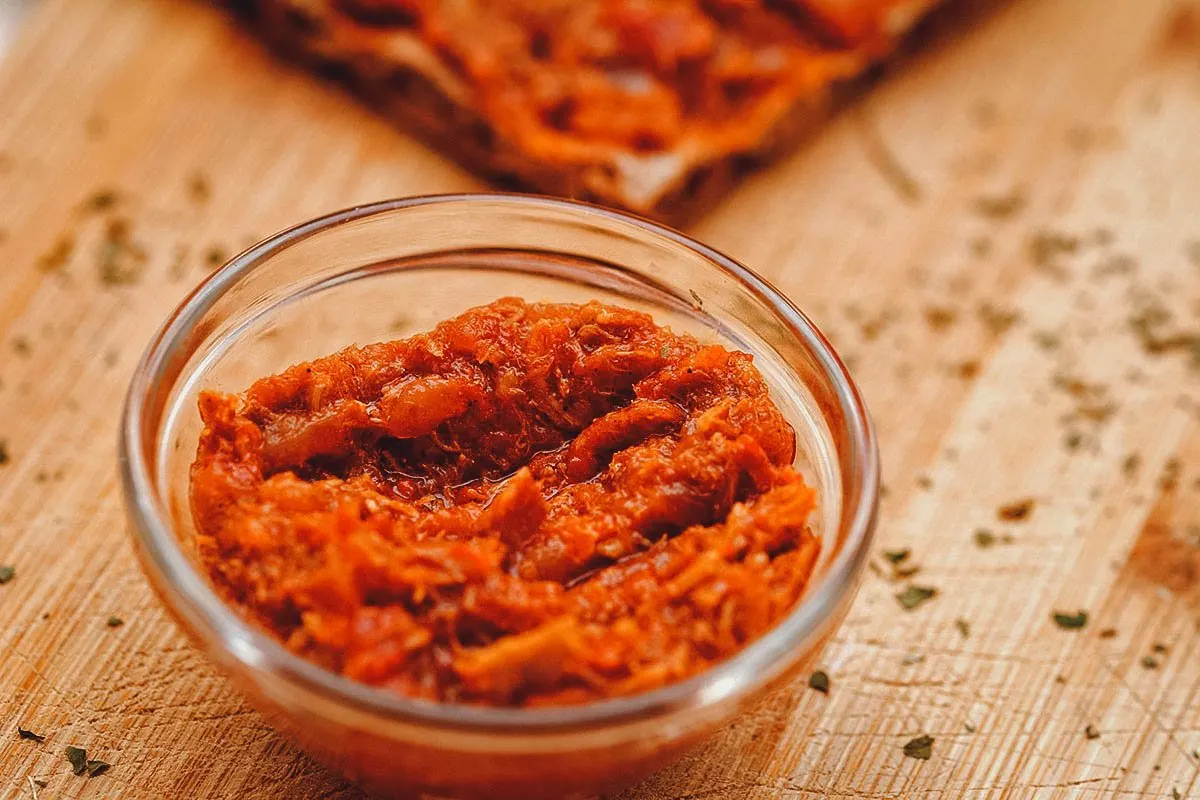
If salată de vinete and ardei copÈ›i sound appealing to you, then you’ll definitely want to try this next Romanian dish. Zacuscă is a traditional Romanian vegetable spread made with roasted eggplant and red peppers as its main ingredients. You can think of it as the Romanian version of ajvar.
Romanian recipes for this popular condiment vary but it’s typically made with roasted eggplant, tomato paste, sautéed onions, and gogoÈ™ari, a type of Romanian sweet red pepper. It’s usually seasoned with bay leaves, salt, pepper, and olive oil and can be made with additional ingredients like carrots, celery, zucchini, parsley, and mushrooms.
Like ajvar, zacuscă is typically made in large batches in autumn – when eggplant and gogoÈ™ari are in season – and then stored in jars for consumption through the winter. It’s usually enjoyed as a spread with bread, often on a platter with different types of Romanian cheese, cold cuts, and slices of red onion.