Thai Fruits: 20 Delicious and Exotic Fruits in Thailand

Thailand is home to one of the biggest and most diverse collections of tropical fruit in the world. If you’re a fan of fresh fruit like we are, then listed in this article are twenty of the most delicious and interesting fruits that you need to try in Thailand.
FREQUENTLY ASKED QUESTIONS ABOUT THAI FRUITS
Before we dive into this list of the most delicious and exotic Thai fruits, let’s answer a few commonly asked questions about the fruits in Thailand.
1. How many fruits are there in Thailand?
That’s a good question. We’re only familiar with the commercial varieties but according to this paper on the development of fruit production in Thailand, there are over 1,000 varieties of tropical and sub-tropical fruits in the country. A reported 57 of those fruits are grown commercially with the 6 biggest fruit crops being mango, durian, mangosteen, longan, rambutan, and lanzones.
2. What are the top 3 fruits that tourists should try in Thailand and why?
This is subjective. You can’t go wrong with any of the 6 major Thai fruit crops mentioned in the previous question but personally, I’d recommend durian, mangosteen, and lanzones. Personally, those are my three favorite Thai fruits.
3. When are the fruits in Thailand in season?
This varies from fruit to fruit but the main fruit season in Thailand is from April to July. Some fruits are available year-round though most are best at certain times of the year. To help you decide which fruits to try on your visit to Thailand, I’ve indicated under each entry when these Thai fruits are in season.
4. Where can I buy fruits in Bangkok?
Fresh fruits are available in every fresh market in Bangkok, but one of the best places to have them is at Or Tor Kor Market. Located next to the famous Chatuchak Weekend Market, it’s a more upscale food market declared by CNN and Newsweek as one of the 10 best food markets in the world.
Prices are a bit higher at Or Tor Kor but the quality is second to none. Plus, it’s cleaner and much more pleasant than your average wet market in Southeast Asia.
MUST-TRY EXOTIC THAI FRUITS
Thailand is home to many popular fruits like mango, banana, pineapple, passion fruit, and coconut. Most of you are already familiar with those fruits so we’ve left them off this list to focus on the more exotic fruits in Thailand like durian, sugar apple, dragon fruit, and rose apple.
1. Mangosteen
Personally, mangosteen is one of my favorite Thai fruits. We have them in the Philippines as well but the mangosteen in Thailand is on a different level. They’re so incredibly sweet and delicious.
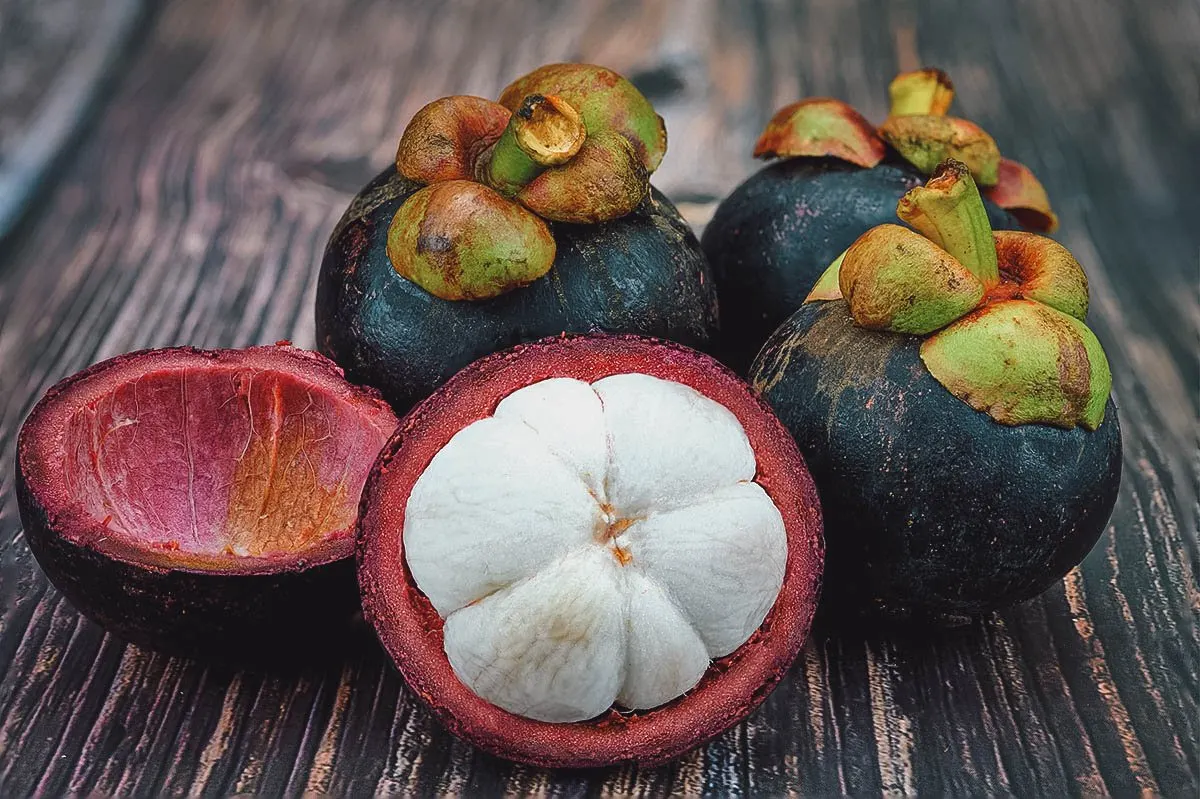
Mangosteen are round Southeast Asian fruits with a leathery purple shell and soft white fruit. To eat, you cut the thick purple skin in half with a knife to reveal 5-8 segments of the delicate fruit. The largest segments will have a seed in the middle which you can spit out after eating the white flesh.
When in season, nothing beats Thai mangosteen. They’re sweet, just a little but tangy, and insanely addictive. It takes some serious will power to stop eating them!
It’s interesting to note that mangosteen is nicknamed the “queen of fruits” in Thailand. They’re commonly paired with durian, the “king of fruits”, because they’re said to have a cooling effect on the body as opposed to durian which is known to increase your body heat.
Scientific name: Garcinia mangostana
Thai name: Mangkut (มังคุด)
Mangosteen season in Thailand: April to December
2. Durian
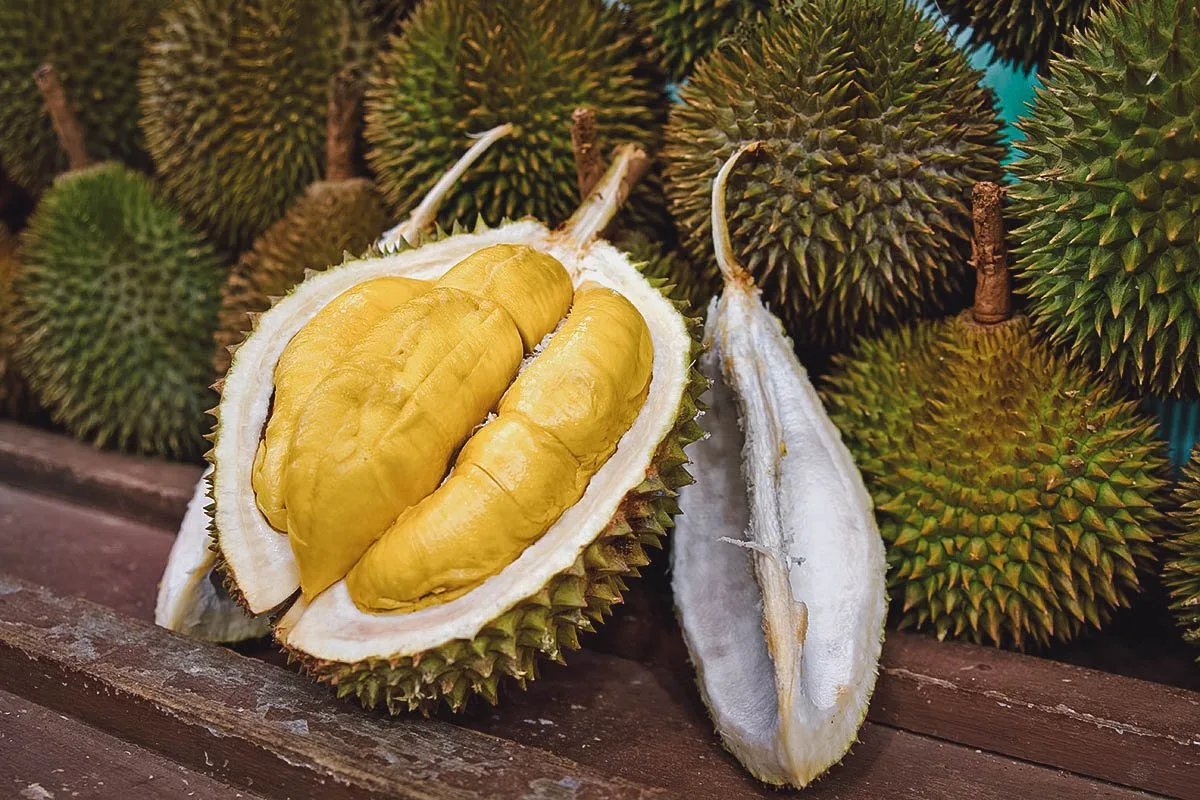
The undisputed “king of fruits”, durian is perhaps the most notorious and polarizing fruit in Thailand. You either love it or you hate it. Personally, I love it and can’t get enough of it whenever we visit Bangkok. It’s the one Thai fruit that I always look for at Or Tor Kor Market.
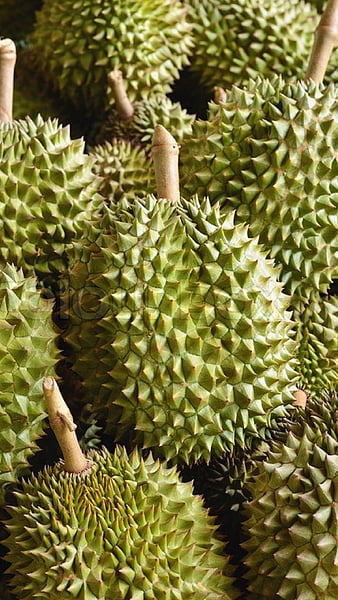
Brownish green in color with a thorny and thick exterior rind, durian has an unrelenting stench that’s off-putting to many. Most foreigners can’t get past its smell which has been likened to rotting flesh or moldy gym socks, but the ones that do are rewarded with a sweet and silky fruit reminiscent of custard flavored with almonds.
No matter how good durian tastes, its stench is undeniable so it’s banned in many public spaces like hotels, airports, and the subway. Personally, I think it’s best when eaten ripe and straight from the rind, but people wary of the smell may want to try it in a processed form first. Durian is used as a flavoring agent in many Thai food products like candies, cakes, chips, ice cream, and coffee.
Durian can vary greatly in quality with the best brands setting you back a few hundred baht. If you want to try the raw fruit without breaking the bank, then I suggest going to Or Tor Kor Market. You can get just one or two prepackaged pieces so you don’t have to buy the whole fruit.
Scientific name: Durio zibethinus
Thai name: Turian (ทุเรียน)
Durian season in Thailand: April to August
3. Lanzones
Lanzones (or langsat, longkong) is the third of my personal big three Thai fruits. Provided they’re in season, lanzones, durian, and mangosteen are the three fruits I would always look for on every return trip to Thailand.
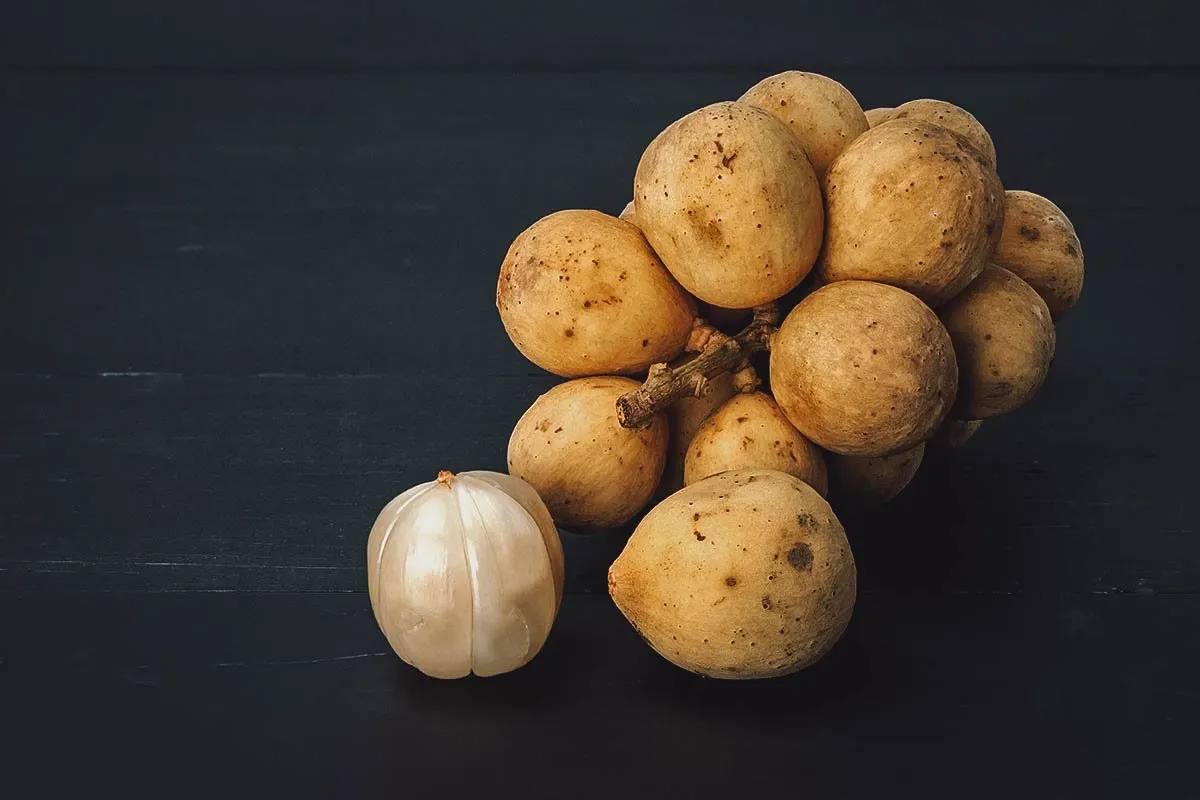
Lanzones is a popular Southeast Asian fruit with thin, pale brown skin and translucent flesh. Clustered like grapes, the skin is easy to break open with your fingers to reveal 4-5 segments of the sweet fruit. The smaller segments are usually sweeter while the largest segments will have a seed in the middle. You can eat the flesh around them but be careful not to bite into the seeds as they can be very bitter.
Like mangosteen, lanzones is one of those incredibly addictive Thai fruits. They may even be more addictive since they’re smaller and easier to eat. Once you start, it’s almost impossible to stop.
Scientific name: Lansium parasiticum
Thai name: Langsat (ลางสาด)
Lanzones season in Thailand: July to October
4. Dragon Fruit
Also known as pitaya or pitahaya, dragon fruit is one of the most beautiful and unusual-looking fruits on this list. It refers to the fruit of a cactus tree cultivated throughout the tropical and subtropical regions of the world like Central America, Southeast Asia, India, and the Caribbean.
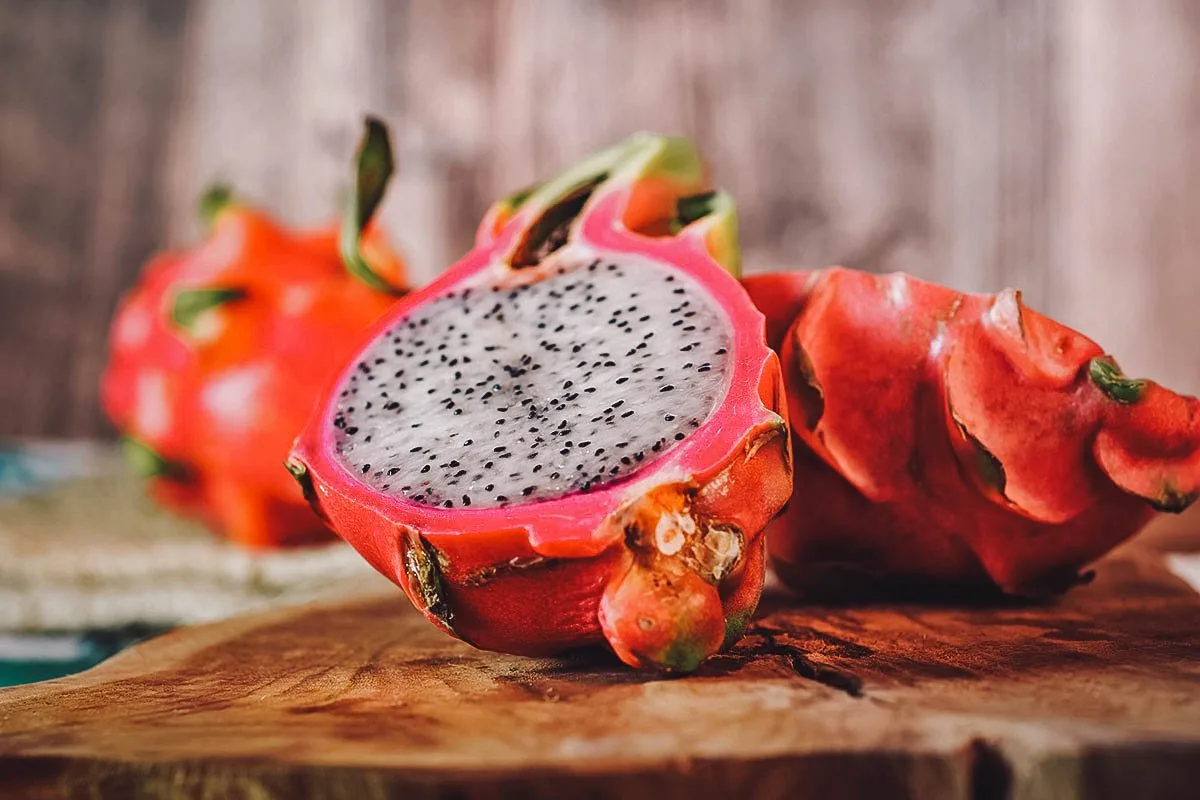
Dragon fruit is known for its distinctive reddish-purple skin with green fins or horns and a soft white flesh dotted with small crunchy black seeds. It’s very mild in its sweetness and has a texture similar to kiwi fruit. Dragon fruit can be eaten fresh with a spoon, sliced and mixed into a fruit bowl, or blended into juices.
Dragon fruit with white flesh is the most common and what you’d typically find at fresh markets in Thailand. Dragon fruit with deep purple flesh is sweeter but more rare. Even rarer still is yellow dragon fruit.
Scientific name: Selenicereus undatus
Thai name: Gao mung gorn (à¹à¸à¹‰à¸§à¸¡à¸±à¸‡à¸à¸£)
Dragon fruit season in Thailand: April to October
5. Guava
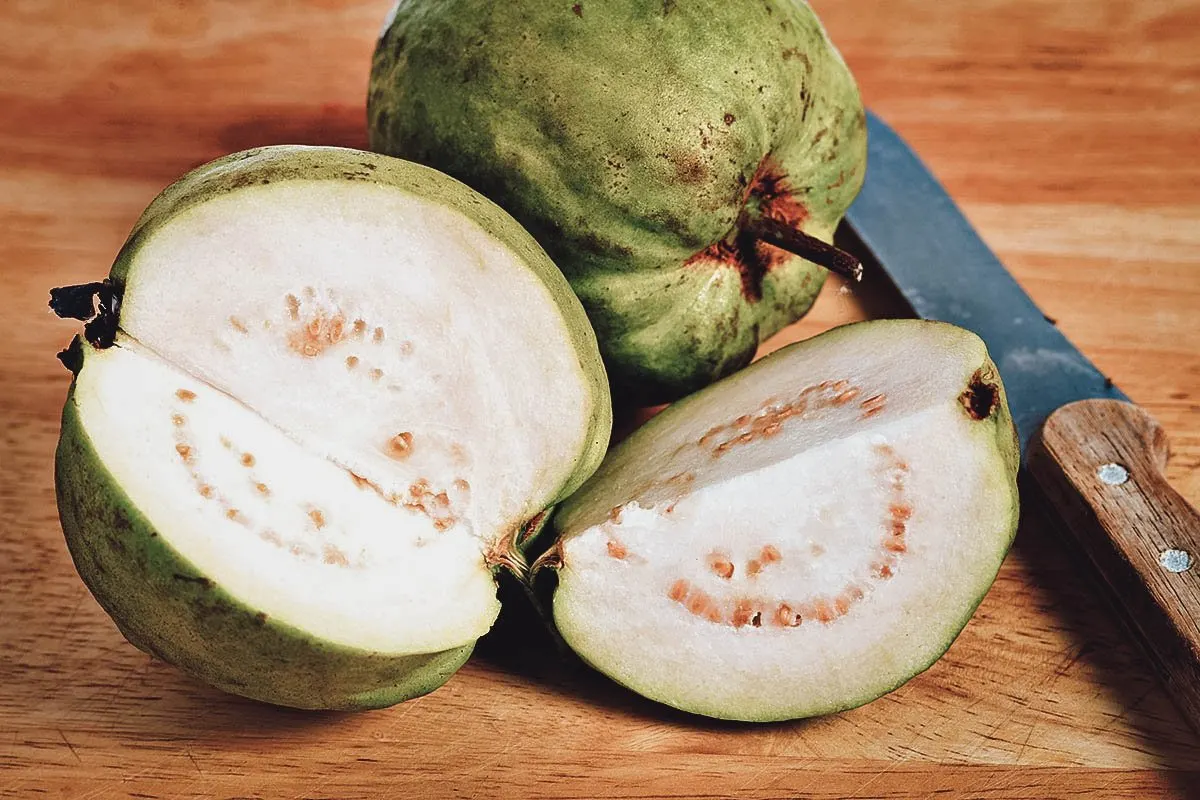
Native to Central America and the West Indies, Thai guavas are among the most common fruits you’ll find at a sidewalk fruit stall. Available year-round, they’re about the size of an apple with white flesh and many small seeds inside. Guavas can be eaten ripe though they’re more commonly eaten raw with salt or sugar mixed with dried chili.
Interestingly, the Thai word for guava is “farang”, which is the same word used to describe foreigners. No one really knows the reason for this but it may stem from the fact that guavas were introduced to Thailand by European traders sometime in the 17th century.
PRO TIP: You may come across farang that seem unnaturally bright green in color. These may have been dipped in a sugar dye solution so it’s best to avoid them and buy more normal-looking guavas from a reputable fruit shop.
Scientific name: Psidium guajava
Thai name: Farang (à¸à¸£à¸±à¹ˆà¸‡)
Guava season in Thailand: Year-round