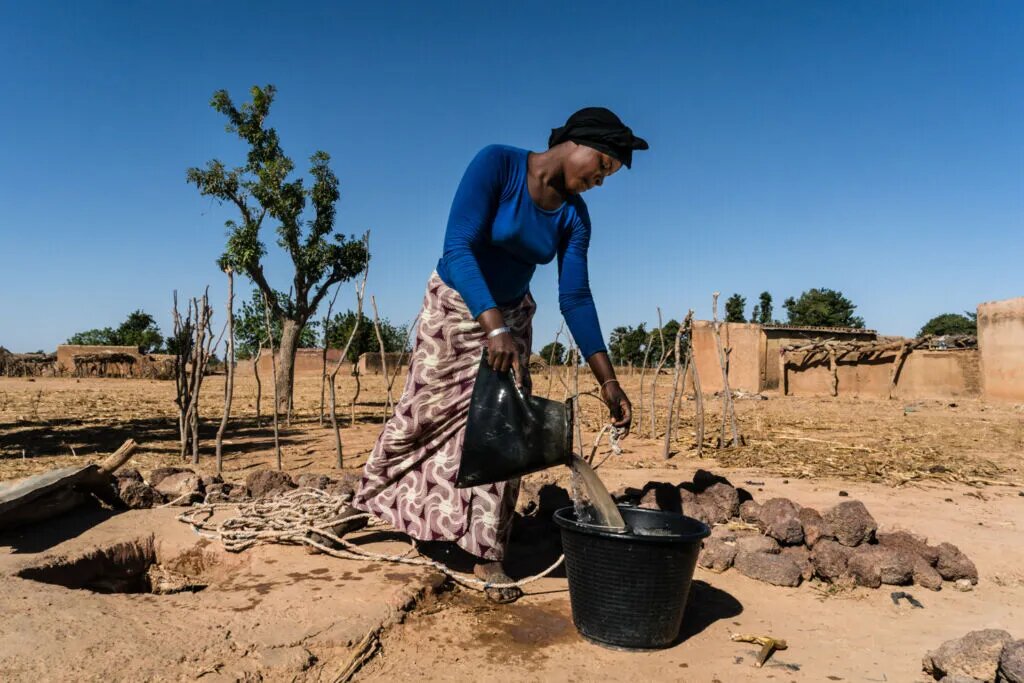
Ruminant livestock in Mali: Nana Sangaré Dembélé’s story
-
 Loading...
 - Camara Meryem
- 02 Feb 2023
- 60 Views
- 0 Like
- 0 Comment
In Mali, professionalising the fattening of small ruminants by women, serves a double purpose: on the one hand, household incomes are increased, and on the other hand, the resilience of family farms to climate change is improved. Nana Sangaré Dembélé was trained in these techniques and became a trainer herself.
In two years, I acquired four oxen and it is thanks to this activity that I was able to enrol two of my children in a private school and secure a better future for them,” explains Nana Sangaré Dembélé, a farmer from Mali‘s Koulikoro region.
“My training in animal husbandry and farm management techniques has enabled me to diversify my sources of income. In addition to cattle rearing, I was able to generate new income through the production and sale of lickstones, which I learned to make during this training. ”
In Mali, an agricultural country, 30% of the population earns its income from livestock or crops. The sector represents 14% of GDP. For more than three decades, however, the country has faced frequent crop failures.
To alleviate this problem and make the population more resilient to the changed situation, Mali and its partner countries have looked for techniques that can be adopted by agro-pastoralists. Fattening is one of the techniques favoured by the interested parties. This is a form of fattening of sheep, goats and cattle that increases the income of farmers.
It can be practised both around large cities and in rural areas. As the activity requires far less travel than nomadic livestock rearing, more and more women like Nana want to get trained to diversify their household income and become more independent. Read More…