Scientists discover a new fuel-eating bacterium below car tank lids
-
 Loading...
 - Paula Dawson
- 13 May 2022
- 314 Views
- 0 Like
- 0 Comment
Around 99% of the microbes of the trillion species of bacteria, protozoa and fungi (not including viruses) that inhabit the Earth remain undiscovered, according to research led by Kenneth J. Locey of Rush University Medical Center that was published in Pnas six years ago. This means that any investigation in an unstudied environment has a good chance of finding a new piece of this enormous biological puzzle. And that’s exactly what happened when Spanish researchers from the Institute of Integrative Biology (I²SysBio) in the Valencia region looked for microorganisms below the lids of the fuel deposits of diesel and gasoline cars. Not only did the team discover “specific micro niches for microbial life,” but they also found that these sites contain an unknown species of bacteria of the genus Isoptericola with “great potential for fuel biodegradation of diesel or gasoline-contaminated environments.”
Bioremediation is a process that uses natural elements, such as microorganisms, plants and microbes, to detoxify contaminants in soil and other environments. Researchers, including Erko Stackebrandt, a microbiologist at the University of Munich, among others, had discovered that bacteria of the genus Isoptericola could be used for bioremediation. But until now, these strains had been studied in places where fuel or oil spills had occurred. The latest Spanish study, published in the Nature publication Npj Biofilms and Microbiomes, however, looked for possible fuel eaters in everyday environments where the presence of gasoline and diesel is permanent. The objective was to find microorganisms that do not show their bioremediation potential in accidental scenarios such as oil spills, but those have adapted to everyday environments, meaning they will be more effective in decontamination projects.
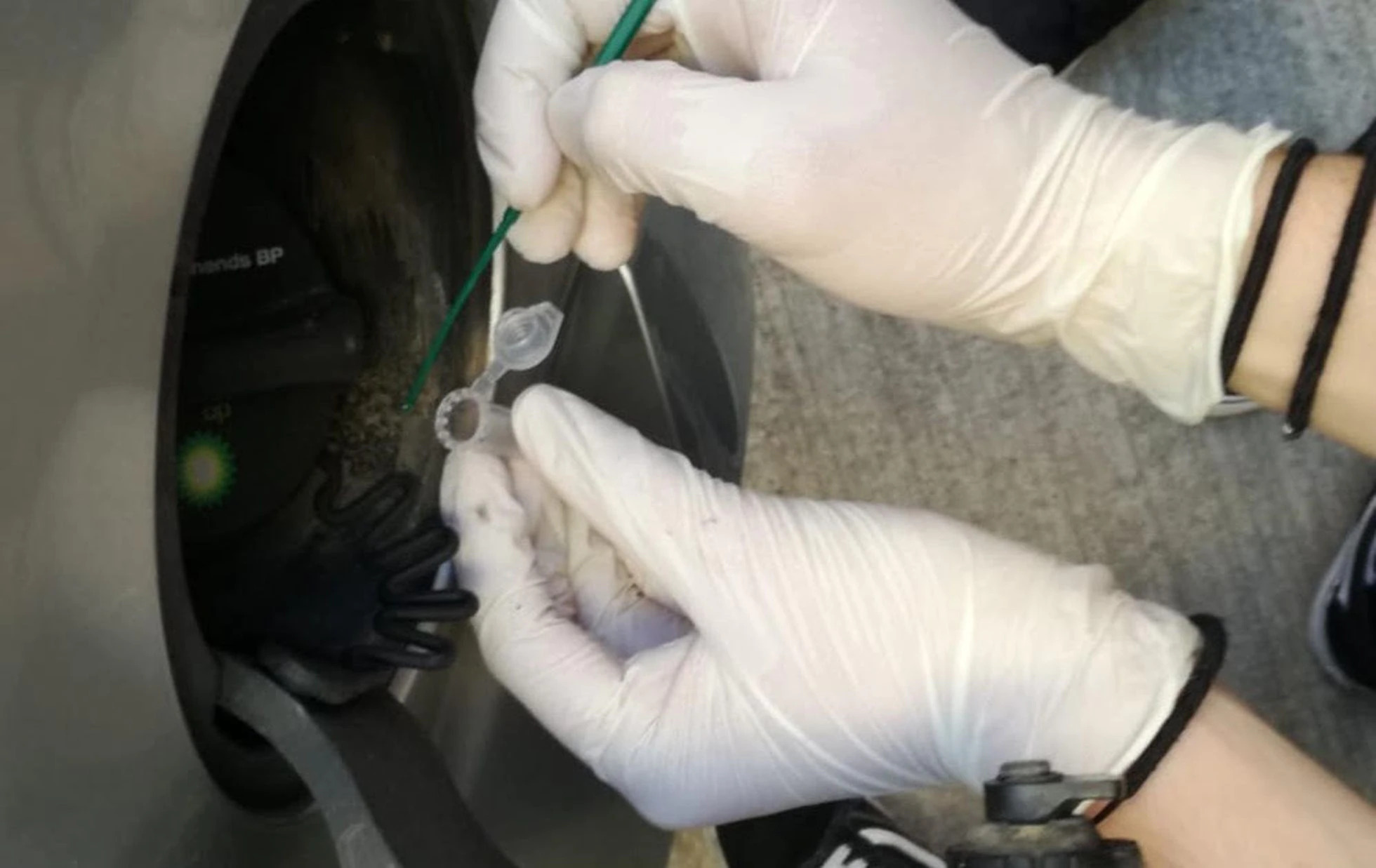
Biologist Manuel Porcar Miralles, the co-author of study, explains: “I always say that we are a bit like José Saramago in his novels: we start from the premise of ‘what would happen if?’ In this way, we think about what might exist in a site that has not been studied until now.” This theory led them to the surface of automobile tank lids, a hostile and extreme environment where the microbial community must survive almost exclusively on fuel residue.
The study identified the presence of strains belonging to a dozen genera. All showed potential for fuel degradation. “We cultivated several microbial strains that degrade between 50% and 60% of the fuel in a few weeks,” says Miralles. Among the bacteria, the researchers found an unknown species of the genus Isoptericola with a great potential to eliminate contamination.
The study states that “fuel leaks and spills are one of the main causes of soil and groundwater contamination.” To address this problem, the team – backed by extensive research on microbes – turned to bacteria. The research paper explains: “Bacteria have evolved for billions of years, and, as a result, they have developed a very diverse range of metabolic pathways that makes them capable of obtaining energy from virtually every organic compound. Their ubiquity in nature, metabolic diversity, high growth rates, and their ability for horizontal gene transfer, shapes them into perfect candidates for bioremediation of pollutants, including fuels.”
The researchers knew the problem – contamination – and they had a possible solution. But the team thought they could get the best results if they investigated a previously unstudied environment i.e. vehicles. “Combustion cars are still the most used vehicles, but they have not previously been seen as a source of biotechnologically relevant bacteria,” the study states. Read More…