Scientists Discover Shallowest Red Hydrocoral Forest in Chile
-
 Loading...
 - Adio Tarek
- 12 Dec 2024
- 46 Views
- 0 Like
- 0 Comment
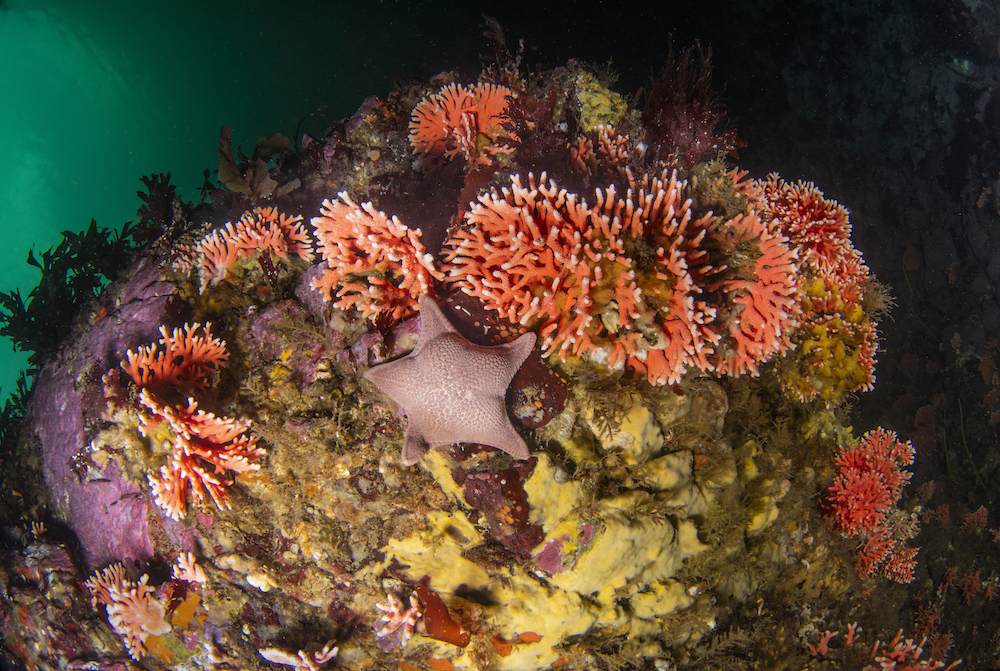
A team of researchers from the Chilean non-profit Fundación Rewilding Chile and the Spanish Institute of Oceanography has made a groundbreaking discovery in the Kawésqar National Reserve, a marine protected area in Chile's extreme south. The team found a large number of red hydrocorals, a species that resembles but is distinct from coral, at a depth of just 1.2 meters (3.9 feet) below the surface of the water.
The discovery is significant because it is the shallowest and southernmost documented red hydrocoral forest in the world. The team's findings were published in the journal Scientific Reports in April.
The researchers used a combination of traditional and modern methods to locate the hydrocorals, including analyzing previous marine investigations and interviewing local residents familiar with the territory. They then sent divers and underwater robots to explore the area and collect samples.
The red hydrocorals, known as Errina antarctica, were found to cover up to 28.5% of the substrate of Angostura Toms, a sound in the Strait of Magellan, at depths ranging from 1.23 meters to at least 33 meters (4 to 108 feet). This is a significant departure from other documented red hydrocoral forests, which are typically found at much greater depths.
The researchers believe that the unique oceanographic characteristics of the Kawésqar National Reserve, including the mixing of saline water masses from the Pacific, Atlantic, and Southern oceans, may have contributed to the ability of the red hydrocorals to colonize this area.
The discovery of the red hydrocoral forest has important implications for the conservation of marine biodiversity in Chile's Patagonian waters. The researchers note that the presence of these hydrocorals indicates the good health of the ecosystem, but also highlights the need for conservation actions to protect the area from threats such as pollution, eutrophication, and the introduction of invasive species.
The team's findings also underscore the importance of generating more information about the marine ecosystem in order to design effective and sustainable management programs. The researchers are calling for the establishment of no-extraction zones and the removal of aquaculture concessions in protected areas to ensure the long-term conservation of biodiversity in the region.
The discovery of the red hydrocoral forest is a significant contribution to our understanding of the marine ecosystem in Chile's Patagonian waters, and highlights the need for continued research and conservation efforts to protect this unique and fragile environment.