South Korea's second space rocket launch successfully puts satellites in orbit
-
 Loading...
 - Minato Fuji
- 21 Jun 2022
- 230 Views
- 0 Like
- 0 Comment
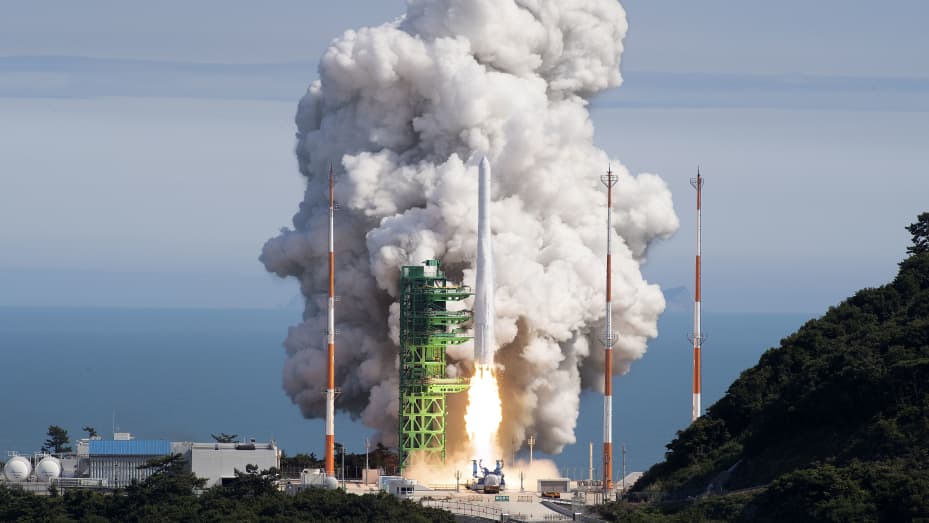
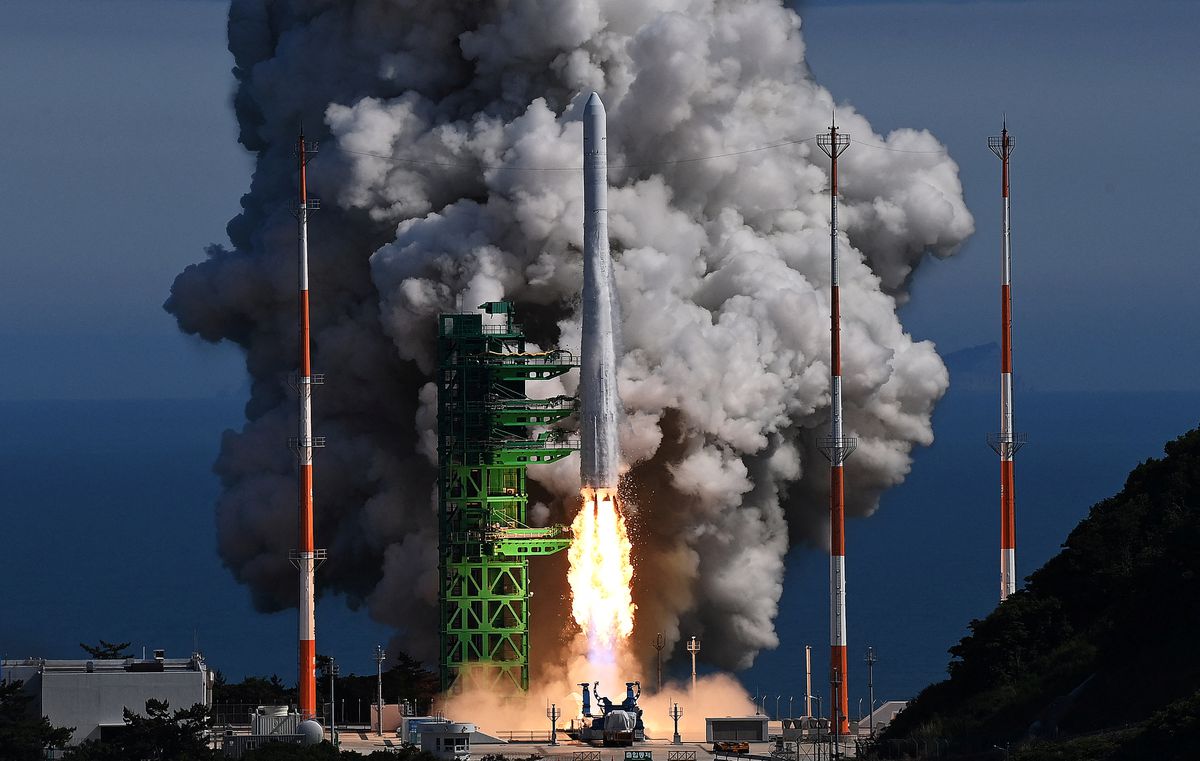
South Korea's second test launch of its domestically produced Nuri rocket successfully placed several satellites in orbit on Tuesday, officials said, taking a major step in efforts to jumpstart its space programme after a first test failed last year.
The rocket lifted off from Naro Space Center on the southern coast of South Korea at 4 p.m. (0700 GMT). A 162.5-kg (358 lb)satellite designed to verify the rocket's performance successfully made contact with a base station in Antarctica after entering orbit, officials said.
The rocket also successfully placed a 1.3-ton dummy satellite and four small cube satellites developed by universities for research, into orbit.
"The sky of the Korean universe is now wide open," Science and ICT Minister Lee Jong-ho told a briefing. "Our science and technology has made great strides."
The three-stage KSLV-II Nuri rocket, designed by the Korea Aerospace Research Institute (KARI) to eventually put 1.5-ton payloads into orbit 600 to 800 km (370 to 500 miles) above the Earth, is a cornerstone of the country’s ambitious goals for 6G networks, spy satellites, and even lunar probes.
It uses only Korean rocket technologies, and is the country's first domestically built space launch vehicle. South Korea’s last booster, launched in 2013 after multiple delays and several failed tests, was jointly developed with Russia.
President Yoon Suk-yeol watched the launch from his office and thanked everyone involved as he was briefed by Lee and others about the success, vowing to keep an election pledge to create a new agency to take charge of space affairs, according to a statement by his office. Read More...