Stalking and saving the banded dotterel in KaikÅura
-
 Loading...
 - Charlotte Brown
- 01 Jun 2022
- 281 Views
- 0 Like
- 0 Comment
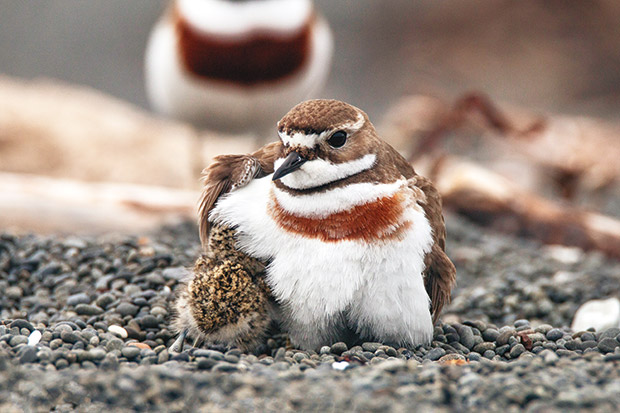
To say Ailsa McGilvary-Howard loves the banded dotterel is an understatement. She literally wears one on her heart — on a necklace.
Ailsa’s first encounter with the pom-pom-like native bird was during hard times. She and her husband Ted had been married for 20 years when he was diagnosed with cancer and told he only had a few months to live. Says Ailsa: “I sought solace to deal with the possibility of losing my husband. I’d always been drawn to birds, so naturally, the beach became a place to reflect on what was happening to us.”
One evening, as Ailsa watched the sunset from South Bay on the dramatic coastline south of KaikÅura, she looked down and there, by her foot, was one of the hardest to spot of all New Zealand’s birds. “The little dotterel was just sitting on its eggs,” she recalls.
She began monitoring the dotterels and their nests along the 500-metre stretch of beach. After going out of town for a weekend, she came home to find that the first nest of eggs she’d seen had disappeared. To Ailsa, it felt like a cry for help from the species.
“People are inclined to think: ‘God, those birds are so dumb. Why are their nests on the ground?’ Perhaps they don’t realize that the dotterel evolved in this habitat when the country was inhabited only by birds.” Predators — mainly cats — cause devastation to this vulnerable bird population. Ted (who miraculously beat the odds of his terminal diagnosis) and Ailsa believe New Zealanders need to step up to the responsibility of helping to save these birds.
The impact of cats has been a surprise to them, too. It turns out that free-roaming cats pose more risk to their beloved dotterel than hedgehogs. “Predation really impacts how the birds act. Instead of blinking at you with their big, bold eyes, they become very skittish and anxious if they sense cats around,” says Ailsa. It’s these types of revelations that encourage the couple. “We’ve just been making it up as we go,” says Ailsa.
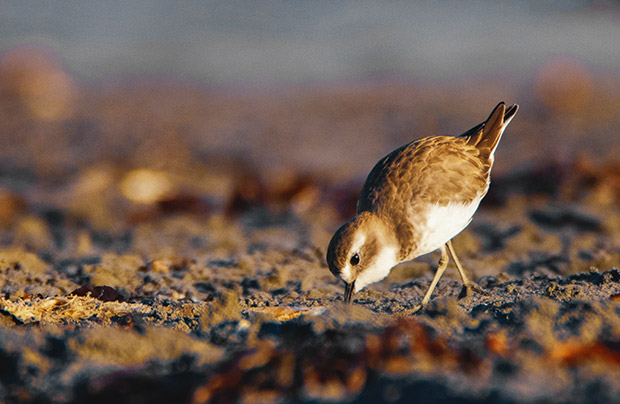
The pair are at the beach from 5am to 6pm every day during the breeding season, monitoring the nests and eggs. They use the rest of their time using thermal scopes, trapping predators, tracking flightpaths, advocating for cat containment, and much more.
Ailsa’s first encounter with a brooding dotterel changed both their lives. Ted compares starting their work saving the birds to pulling a thread of a sock. “Before you know it, the whole sock comes undone,” he says. Seven years later, their contribution has earned them each a Queen’s Service Medal.
The medals are well deserved. Ailsa and Ted follow the birds from nested eggs to their incubation period and beyond. They have been tracking some for years. “When they die, there is such heartache. When you work with a species that won’t replace itself, if a bird dies, there isn’t one to step up to its place,” says Ailsa.
The breeding season for banded dotterel begins in July, and this year will be Ailsa and Ted’s eighth season.
Over the years, their monitoring has extended from 500 metres to a six-kilometre stretch of beach. There’s no doubt that this distance will continue growing as long as Ted and Ailsa are involved. “We know what’s important to us. And our experience with Ted and cancer made us both want to give back.”
WHY THE BANDED DOTTEREL NEEDS HELP
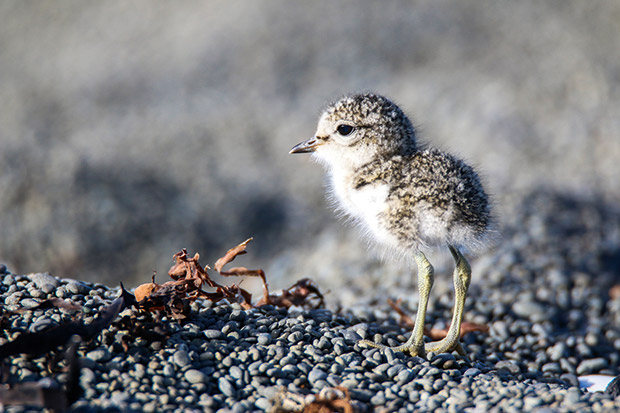
The banded dotterel, also known as the tūturiwhatu, was once as common as a sparrow. But its status is now threatened, with only about 2500 birds throughout the country, mainly in coastal areas.
Their nests are often destroyed by predators such as hedgehogs, cats, and careless beachgoers.
The couple encourages people using the beach to obey conservation signs. They’re there for a reason — to protect the species, which is not used to modern predators. Read More...