Biodiversity spotlight: grey and common seals
-
 Loading...
 - Oliver Smith
- 01 Jun 2022
- 270 Views
- 0 Like
- 0 Comment
There’s been no shortage of big storms landing in Ireland over the past few years. There’s been Ophelia, Emma and Ciara – to name a few. They’ve wreaked havoc on different parts of the country – and because of climate change they are set to be more severe over time.
There’s also a chance that you or somebody you know has been badly affected by the storms here in recent years. But a population you might not think of has also been negatively impacted: seals.
After hurricane Ophelia, Seal Rescue Ireland received over three hundred phone calls in a single week for seals all over the coastline. There were some seal rookeries that lost up to 80% of their pups during the storm.
Seal Rescue Ireland in Courtown, Wexford, is Ireland’s only seal rescue centre. They are a charity that focuses on the rescue, rehab, and release of sick, injured, and orphaned seals.
Even with just one rescue centre in the Republic of Ireland that has been active for the past 12 years, the whole coastline is covered by the organisation thanks to over 800 trained volunteers from all over the country.
2020 was record-breaking with 170 intakes in a single year. During lockdown, people were out exploring their beaches and happened upon them.
“It is great that people were using that as an opportunity to appreciate nature, but it also meant that there were lots of opportunities for disturbance,” said Melanie Croce, executive director at Seal Rescue Ireland.
“Unlike whales and dolphins, seals have to come up on land. When people are on the beach walking their dogs or if there’s any sort of jet skis or developments or noise, they’re going to be frightened off and that does result in a lot of orphans.”
However, there was a “bright side” to more people out on beaches for seals, according to Ms. Croce.

“The majority of seals that needed help was getting reported to us just because there more eyes and ears out there. It’s getting harder and harder to deny that there is a climate and biodiversity crisis, therefore more people are trying to do their part in helping wildlife,” she told The Green News.
Seal pups & storms
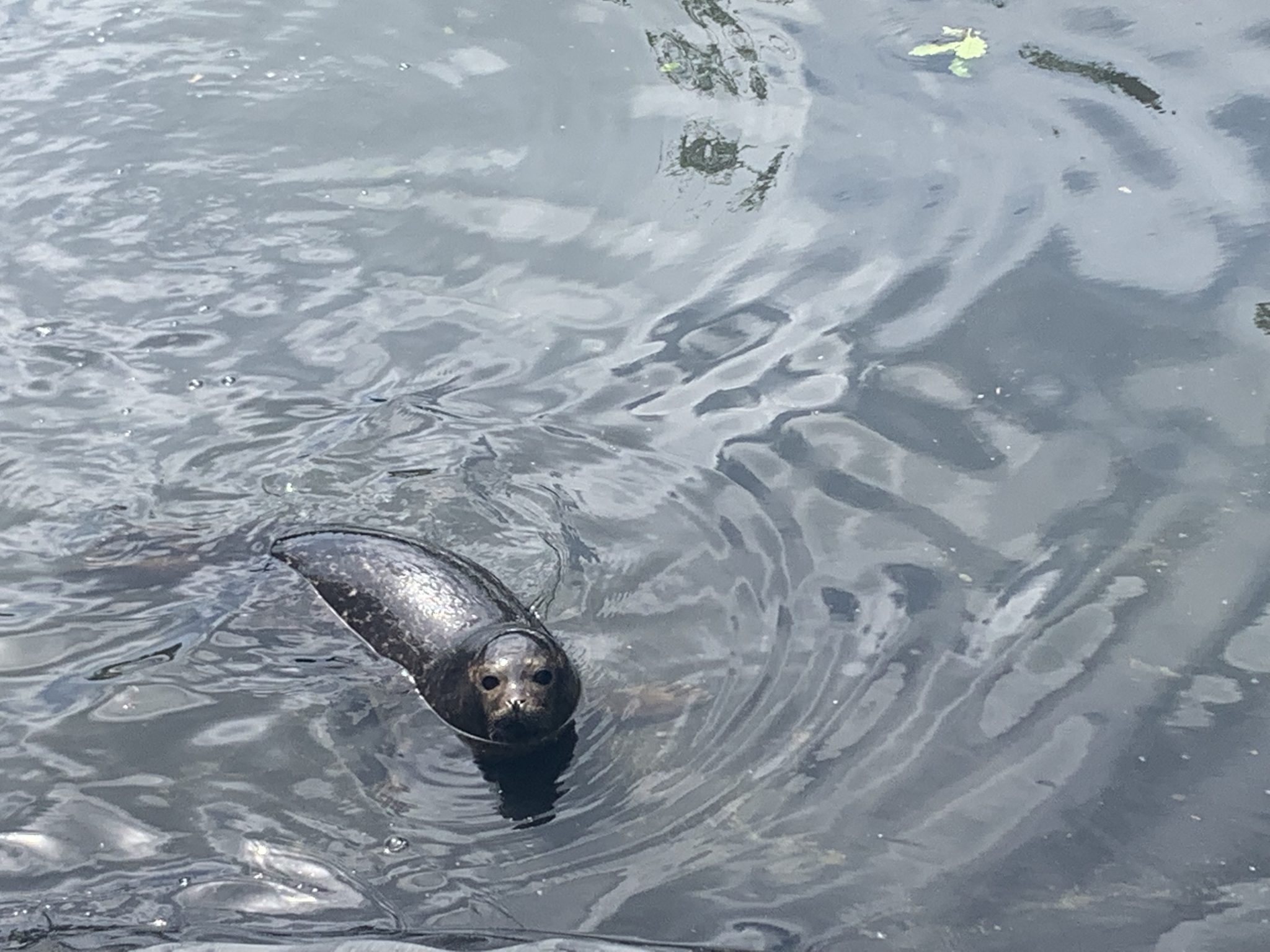
There are two species of seal in Ireland, the grey seal, which breed during autumn and winter, and the common seal which breed during summer months.
Seal Rescue Ireland are at their busiest near the breeding seasons. Big storms coincide with the grey seal pupping season, causing concern for the pups: they can get separated from their mothers prematurely, they could drown, they get washed out to sea, and they could get injured.
“There are only about 3000-4000 common seals left in Irish waters and the numbers are on a decline. That means every individual that we are able to rescue, rehab, and release back into the wild population is really crucial to that overall population,” said Ms. Croce.
The grey seal pups have a fluffy white coat when they are born so they need to stay on the beach for the first 2-3 weeks as they put on blubber and develop a waterproof coat.
They learn everything based on instinct; they have parental care for only the first couple of weeks of their lives as they grow and are then left by the mother to figure out life on their own, and many do not survive their first year.
Common seals are born with their waterproof coat, so they are in the water straight away and learn from their mother how to hunt, survive and interact with other seals. If a common seal is separated from its mother too soon, it doesn’t get the chance to learn natural behaviours, as they lack the built-in instincts that the greys have.
“It doesn’t know how to eat, it doesn’t know how to hunt, and it would starve to death if they became separated before these skills are learned.
That is why common seals are a bit harder to rehab, it takes longer because we have to teach them how to eat, it’s called fish school,” Ms. Croce said. Read More...