Study: Climate Change is Increasing Frequency of Fish mass Die-Offs
-
 Loading...
 - Francesco Ricci
- 25 Oct 2022
- 79 Views
- 0 Like
- 0 Comment
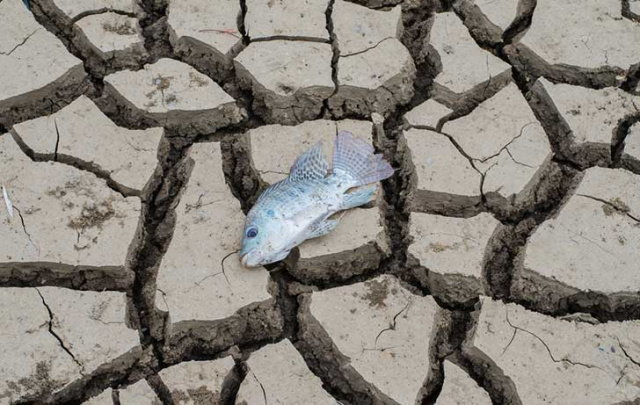
Using data collected from more than 500 previous fish die-offs from lakes across Wisconsin and Michigan, researchers use modeling to predict the increasing frequency of mass die-offs as a result of climate change.
Those are the findings of a recent paper co-authored by two members of the University of Arkansas Department of Biological Sciences: doctoral student Simon Tye and associate professor Adam Siepielski, along with several of their colleagues. The paper, "Climate warming amplifies the frequency of fish mass mortality events across the north temperate lakes," compiled 526 documented cases of fish die-offs that occurred across Minnesota and Wisconsin lakes between 2003 and 2013. The researchers determined there were three main drivers of these events: infectious diseases, summerkills and winterkills.
The researchers then narrowed their focus to summerkills -- fish mortalities associated with warm temperatures. They found a strong relationship between local air and water temperatures and the occurrence of these events, meaning they increased in frequency as temperature increased. Moreover, their models that used either air or water temperature provided similar results, which is important because air temperature data is more widely available than water temperature data across the world.
Finally, with a historical baseline established, the team used air and water temperature-based models to predict frequencies of future summerkills.
The results were sobering. Based on local water temperature projections, the models predicted an approximate six-fold increase in the frequency of fish mortality events by 2100, while local air temperature projections predicted a 34-fold increase. Importantly, these predictions were based on temperature projections from the most severe climate change scenario, which was the only scenario with the necessary data for these analyses. Read More...