Swinging on a Star
-
 Loading...
 - Ervin Sera
- 12 Apr 2022
- 309 Views
- 0 Like
- 0 Comment
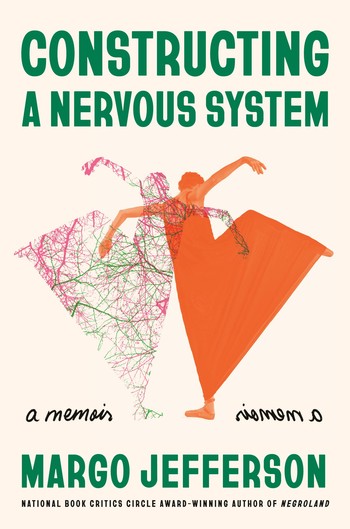
Thrall is a Jeffersonian word. In Constructing a Nervous System, the critic Margo Jefferson is enthralled by or to: her mother, her father, Bing Crosby. She suspects Condoleezza Rice is enthralled by or to George W. Bush, and Ike Turner by or to “manic depression and drug addiction, to years of envy, . . . to a Mississippi childhood that was a trifecta of domestic abuse, sexual treachery and racist violence.” A young James Baldwin enthralled the Harlem faithful. Nina Simone refused the thrall of “warring desires.” It’s the last that clarifies the stakes. Thrall, some time after it meant “slave” to Northern Europeans, found a new Gothic use. Dracula, through hypnosis and sheer erotic power, holds his servants and whole towns in his thrall, the better to protect him while he hides from the sun.
Those enthralled submit totally, pleasurably. Influence doesn’t always have to provoke anxiety. There is danger of losing oneself, of being absorbed by the force of another’s will and gaze and magnetism, and that’s before they seize upon your neck. But there’s a reason Dracula persists. Beneath our regimens of self-help, self-care, and self-improvement, we might think briefly of annihilation and find it sweet.
Margo Jefferson’s previous book, Negroland (2015), danced more furtively along the border between pleasure and self-destruction. It, too, is a cultural memoir, but one that uses her family as the lens onto, and reflection of, a society. She, the Jefferson of the book, is a dramatically interesting character because she is born of the Chicago black bourgeoisie, a significant but oft-misrepresented (if represented at all) sector of American society.
The raising of a young, black woman of means is one of the richest narrative veins the country has to offer. It is rife with contradiction, self-deception, vigor, and, depending on the situation, power. There is a common way to tell this story and it is purely celebratory.
For so long as it has existed, the black bourgeoisie has been cast and cast itself as the leaders of a people so diverse and factionalized that the very idea would be laughable even if class struggle were a yet-unrealized term. What can a doctor in Bronzeville or a real estate speculator in Harlem do to lead a factory worker in Watts, a nurse in Cairo, or a farmer in Macon? It would take an expansive, emancipatory politics to stitch them together. Doctors do stitch, but rarely so well.
Negroland was remarkable because it interrogated this position and refused paeans to an easy solidarity. It went further and refused emotional indulgence, too. “It’s too easy,” she wrote of both race and unhappy memories, to “bask in your own innocence. You revere your grief. You arrange your angers at their most becoming angles.”
Constructing a Nervous System takes up the same character and the same milieu, but conceives of autobiography differently. Rather than using her life’s narrative to structure the book, she organizes her becoming through her models. Who, she asks herself, were those people she secreted away?
In whose eyes did she see herself reflected? The collection is unorthodox. (“We look for expedient muses,” she says.) Her list includes: the aforementioned Bing Crosby, Bud Powell, George Eliot, Ike Turner (not Tina), W. E. B. Du Bois, Willa Cather, and Ella Fitzgerald. Jefferson resented the strictures of “a race ruled lesser” and “a sex ruled lesser.” She writes: “I craved imaginative compensations. License. I wanted to play in private with styles and personae deemed beyond my range.” When she inhabits Bing Crosby, she thinks: “I can get away with anything. I’m entitled to everything.”
She is rich, a woman, and black. Money protects, but not absolutely. She could never move through a room, dancer though she was, like Bing Crosby. Just before the close of World War II, Bing Crosby won the Oscar playing a priest from East St. Louis who comes to New York and saves a church from ruin through the power of music.
There is never a hint that any clergyman from that city and of that age would have lived through the East St. Louis race riots. You see him singing “Swinging on a Star” and history slides right off him. There are some people, Jefferson’s book contends, to whom history always sticks. Imagine, though, if it were as simple as singing a song to step out and make it as you please.
Memoir, the highest form of autofiction, is an unmannerly genre. Its appeal lies in its indecency. Jefferson’s indecency lies in her honesty about the contortions into which black intellectuals have long been forced. Black unity has demanded a popular front. But behind the line a niggling thought sometimes explodes. Jefferson wonders, “How long did it take the average black woman of my generation to become fully aware that we too had been lynched?” Their fight against lynching “made us ancillaries, not martyrs and sufferers,” and the martyrs loom large in the black American cosmos. True, Jefferson acknowledges, the murder of black women was ignored, but rape was not. Still, this did not grant them entrance to the pantheon of the tormented, because even the suffering of black women rarely belonged to them. Sexual violence “was unceasingly denounced and lamented: by our men and by us.
Somehow, though, the language of lament and denunciation made the rape as much a crime against them as against us. Black men had been deprived of their right to possess and protect the most compelling symbol of success besides money: women.” There is an entire lineage of ostensibly emancipatory rhetoric in the black freedom movement that is undone by these few lines. Read More...