Tove Ditlevsen's Fiction Is Bleak and Claustrophobic — Mostly in a Good Way
-
 Loading...
 - Sylvie Payet
- 12 Apr 2022
- 315 Views
- 0 Like
- 0 Comment
Tove Ditlevsen’s “The Copenhagen Trilogy” was one of last year’s major books. It’s a set of three slim memoirs — “Childhood,” “Youth” and “Dependency” — originally published in her native Denmark between 1967 and 1971. They’re told simply but are brutal and lonely, lonely, lonely. It’s as if Ditlevsen were probing a series of aching tooth cavities.
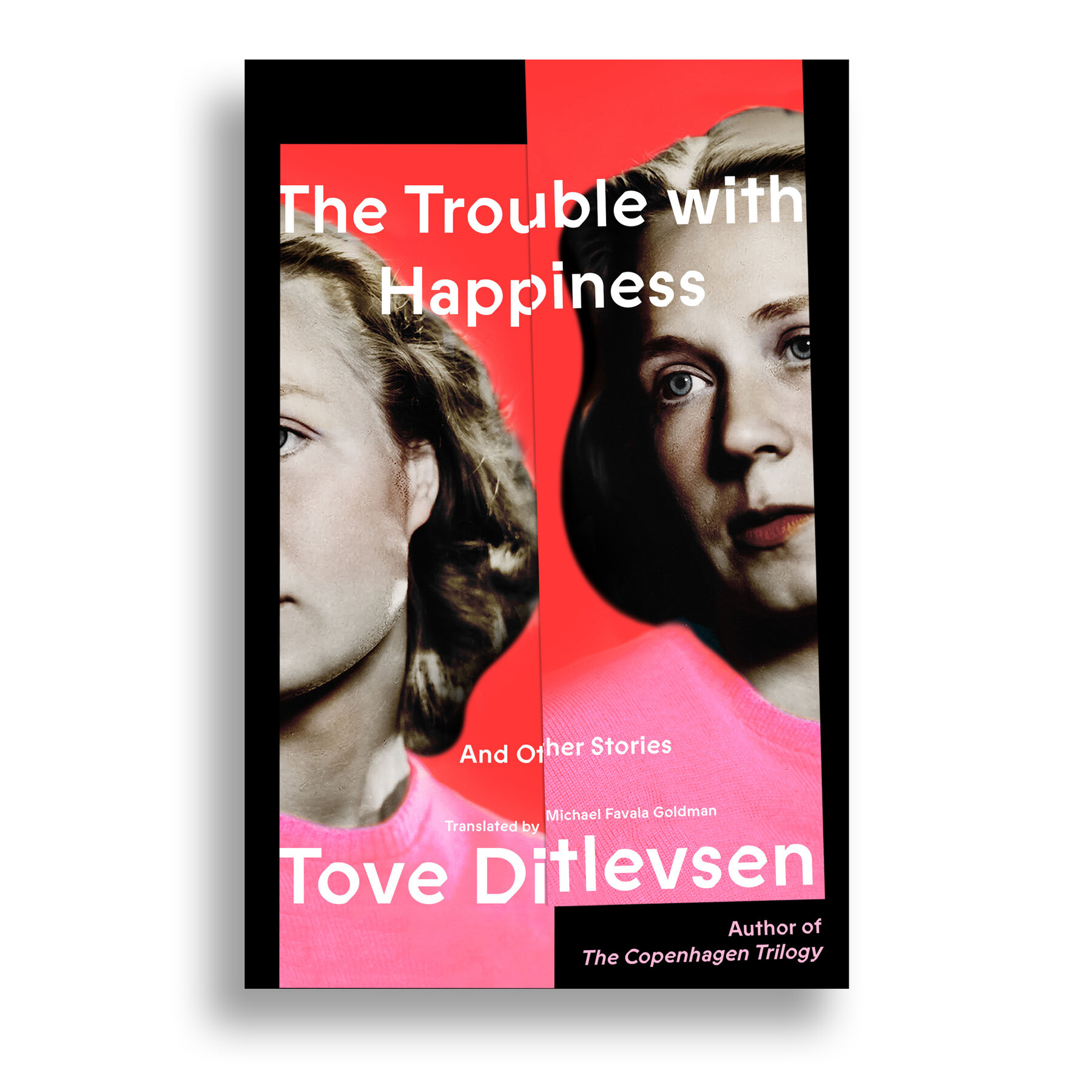
Two more of her books are out now in translation from the Danish: “The Trouble With Happiness,” a collection of stories, and “The Faces,” a novel. These consolidate but don’t greatly extend her reputation; neither quite makes the claims on you that the memoirs do.
Ditlevsen (1917-76) wrote the stories in “The Trouble With Happiness” in the 1950s and ’60s, and readers of the trilogy will recognize much of the physical and mental furniture: distant parents; lumpen apartments; faithless men who lie around all day, as if couches were symbolic mothers they must reject.
Love’s never a merry, four-move chess design in Ditlevsen’s work; it is one move, and a blunder. “Behind each of these women was the shadow of a man,” a woman in an unlicensed abortion clinic thinks, “a tired husband who toiled for a throng of children, and whose income couldn’t bear the strain of another child; a disloyal chap with pomaded hair who was already a thing of the past, an ephemeral, hasty tryst that had little to do with love.”
These stories are about what people settle for as opposed to what they want. Even when Ditlevsen’s women have found a measure of artistic success, there’s a quality of meltdown, of wall-to-wall apprehension. Most are indefatigably antisocial. None of them are going to get a nice call from a trust and estate lawyer; they’re more likely to inherit something like a used catheter.
It’s easy to make these stories sound even bleaker than they are. One begins: “Hanne was only 7, but she already possessed a great deal of formless anxiety.” Another first sentence: “Helene woke early in the morning, feeling that her entire life was one big failure.”
Yet as Martin Amis said, “Achieved art is quite incapable of lowering the spirits.” You sense, in these stories about miscarriages, cheating men, dinner parties gone wrong and frightened children, a writer pulling from a deep well, returning to familiar themes out of a deep compulsion, and that compulsion squeezes us too, in a kind of claustrophobic bliss-out, as if we’ve been inserted into one of Temple Grandin’s deep-pressure hug machines.
The stories aren’t microfiction but, translated by Michael Favala Goldman, they’re really short — five or six pages each, somehow an ideal length.

“The Faces” was originally published in Denmark in 1968. It’s appeared in English before, in an edition from Fjord Press in 1991. That translation, by Tiina Nunnally, is reprised here. This is a lurid crackup novel, too heavy-handed for my tastes, but I suspect a lot of readers will respond to it. Read More...