Taiwan offers hope in battle to save vulnerable pangolin

Tougher laws and changing attitudes to nature have helped the island’s Formosan pangolin population recover.
Set against the forested hills and tea plantations around Taiwan’s capital city, the Taipei Zoo is dealing with an unusual situation with its Formosan pangolins.
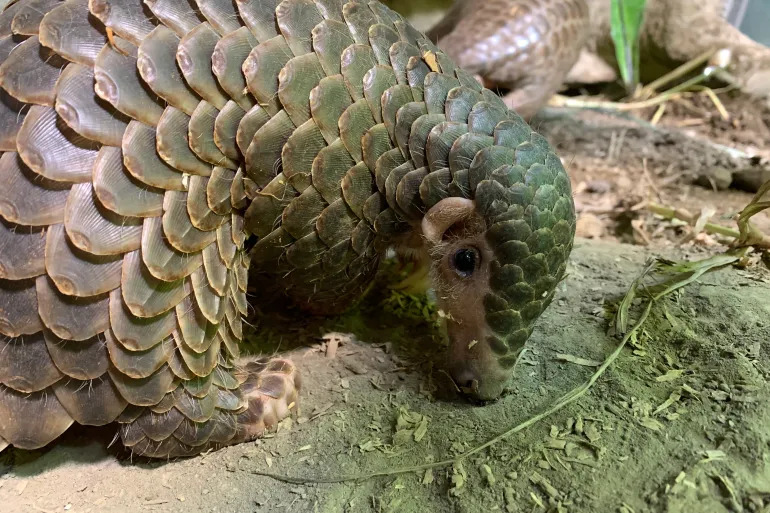
The zoo has about 13 of the scaly anteaters, a subspecies of the Chinese pangolin, who take turns to amble about in the public-facing exhibit space.
But as the wild pangolin population in the surrounding forests slowly recovers from years of hunting, they too are venturing into the zoo’s grounds in search of their favourite food – ants.
“Sometimes you can see wild pangolins wandering around the zoo at night,” Cai Yun-ling, who heads the zoo’s African animal section, told Al Jazeera.
“It’s quite strange because they’re still out in the wild but considered an incredibly vulnerable species. You can only find a few wild Chinese pangolins in other countries, so Taiwan is sort of the last resort for the wild ones.”
It is a remarkable turn of events for Taiwan, which just a few decades ago was exporting the pangolin’s distinct leathery scales for use in the global fashion industry and traditional Chinese medicine even though there was – and is – no evidence of any medicinal benefit.
The Pokémon-like mammal was also hunted as bush meat to supplement the diets of rural Taiwanese in a society with limited social services.
Since their near disappearance decades ago, the local pangolin population is slowly growing, according to experts like Kurtis Pei, one of Taiwan’s foremost conservationists. This is in contrast to the situation elsewhere in Asia and Africa where all eight species of pangolins are under pressure and some, including the Chinese pangolin, are critically endangered. Read More…