Taiwan Stars Talk Cultural Differences, Challenges of International Productions
-
 Loading...
 - Citra Wati
- 07 Nov 2024
- 83 Views
- 0 Like
- 0 Comment
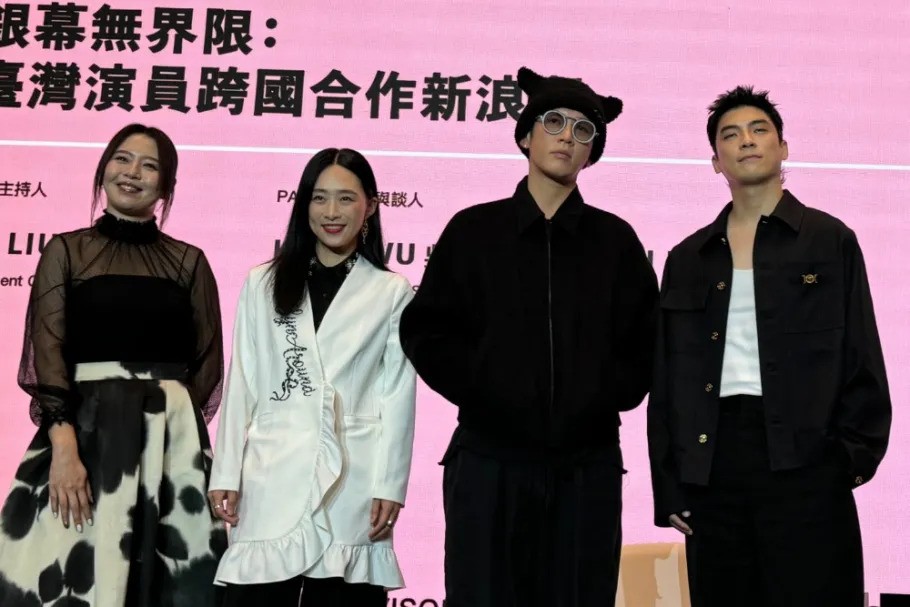
At the Taiwan Creative Content Fest, prominent Taiwanese actors Wu Ke-Xi, J.C. Lin, Kai Ko, and Esther Liu shared their experiences and insights regarding the challenges and cultural differences encountered while working on international co-productions. The discussion highlighted various aspects, from language barriers to the nuances of filming intimate scenes across different cultures.
Wu Ke-Xi recounted her experience working on the Berlinale title “Black Tea”, directed by Abderrahmane Sissako. She described the unique challenges posed by the French-language production, which involved shooting in both Taiwan and Africa. “The director only had a rough script and wanted to incorporate the actors’ ideas,” Wu explained. This approach necessitated constant translation between French and Chinese, which sometimes led to cultural disconnects. Wu, who had previously learned Burmese and Thai for Midi Z’s “Road to Mandalay,” also studied a local version of Portuguese for her role as a Chinese restaurant owner in Cape Verde, although those lines were ultimately cut from the final production.
In discussing contract negotiations, Wu emphasized her proactive approach, particularly in the U.S. market. She noted that her agency arranged meetings with studio heads, ensuring that everything was handled professionally. For her role in Constance Tsang’s Cannes-debuting U.S. production “Blue Sun Palace,” Wu included a clause in her contract that allowed her to revoke intimate scenes up until the day of release, showcasing her commitment to maintaining her comfort and artistic integrity.
J.C. Lin, who recently completed a Taiwan-French co-production, highlighted the cultural contrasts in communication styles between Taiwanese and French teams. “In Taiwan, the Chinese culture emphasizes listening to others before expressing our own opinions,” Lin observed. He noted how the direct communication style of a young French leading actress influenced the dynamics on set. Lin also shared a valuable lesson from his experience in the Taiwan-India co-production “Demon Hunters,” where an Indian actor taught him the importance of treating religious props with respect, further illustrating the cultural learning that occurs in international collaborations.
Kai Ko, reflecting on his role as a jury member at the BiFan festival, noted that shared aesthetic sensibilities often transcend language barriers. He discussed the varying approaches to intimate scenes across cultures, stating, “Foreign teams have fewer rules. They want to be spontaneous.” He contrasted this with the more conservative guidelines in Taiwan, where he was advised against sticking his tongue out during kissing scenes. “If you don’t stick your tongue out, it feels like two birds pecking,” he humorously remarked, highlighting the differences in expectations and artistic expression.
Esther Liu, who moderated the panel and stars in Netflix’s “At The Moment,” shared her own experiences, including a surprising moment during a French production where the director placed a pillow between her and her co-star during an intimate scene without prior communication. “This was not communicated to us before,” Liu noted, emphasizing the importance of clear communication in international productions.
The panel discussion underscored how Taiwanese talent is increasingly adept at navigating the complexities of international productions. The actors shared valuable insights into balancing cultural differences while upholding professional standards and artistic integrity. As Taiwan continues to expand its presence in the global film industry, these experiences reflect the evolving landscape of international collaboration in the arts.